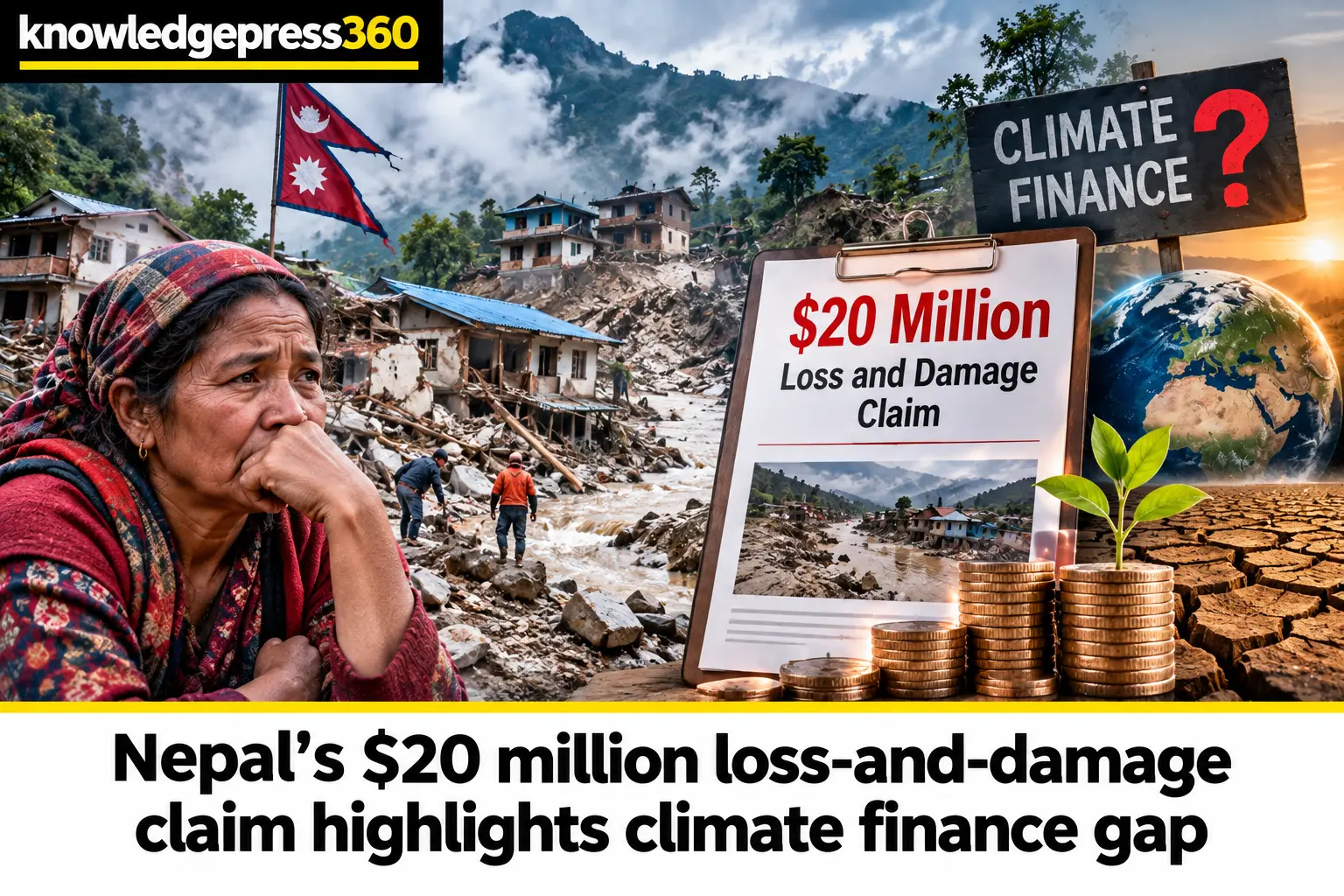
As global climate discussions intensified in early September 2026, scientific analysis and tangible policy developments laid bare the urgent necessity of treating methane emissions as an immediate, distinct emergency. While carbon dioxide reduction remains the backbone of long-term climate strategies, recent research published in Communications Earth & Environment demonstrates that relying solely on unified carbon-equivalent metrics obscures methane's staggering near-term warming impact [1]. Without dedicated and stringent methane cuts, peak global temperatures will surpass 1.85°C above pre-industrial levels, even if the world successfully achieves ambitious net-zero carbon dioxide targets [1]. Concurrently, high-profile interventions in Central Asia and catastrophic ecological disasters in the Himalayas have underscored both the feasibility of rapid emission mitigation and the devastating human cost of failing to act swiftly [3, 5].
Flaws in Carbon Equivalent Metrics and the Case for Decoupling Methane Strategy
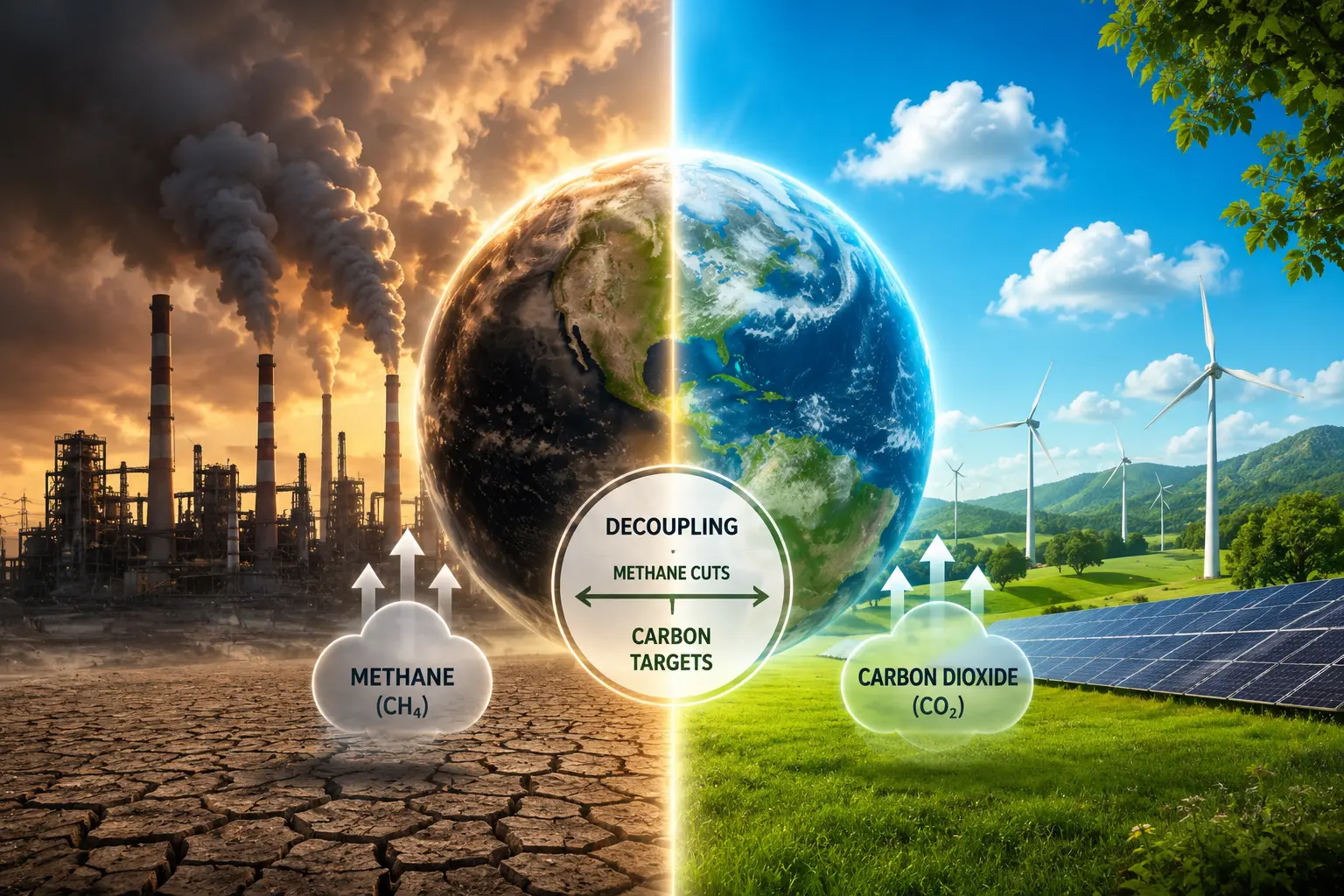
Traditional climate modelling and national net-zero pledges frequently bundle greenhouse gases into a single category known as carbon dioxide equivalent [1]. This standard practice relies on conversion metrics such as GWP100 or GWP20 to equate the warming potency of gases with drastically different atmospheric lifespans [1]. Methane traps heat in the atmosphere far more efficiently than carbon dioxide, though it breaks down within a few decades rather than lingering for centuries [1, 5]. By combining these gases, standard accounting can mask the unique challenges and opportunities presented by short-lived climate pollutants [1].
Researchers arguing for a paradigm shift suggest decoupling carbon dioxide and methane reduction frameworks, using temperature limits as the direct starting point for necessary interventions . When climate models account for methane independently, the data reveals that ambitious carbon dioxide reductions alone are insufficient to safeguard the global climate system . Failing to target methane directly guarantees that peak warming will exceed 1.85°C, jeopardising international agreements designed to hold global temperature increases well below 2°C . Consequently, policymakers face mounting pressure to reform national accounting methods so that short-term methane mitigation runs parallel to long-term decarbonisation .