Nepal files $20 million loss‑and‑damage claim
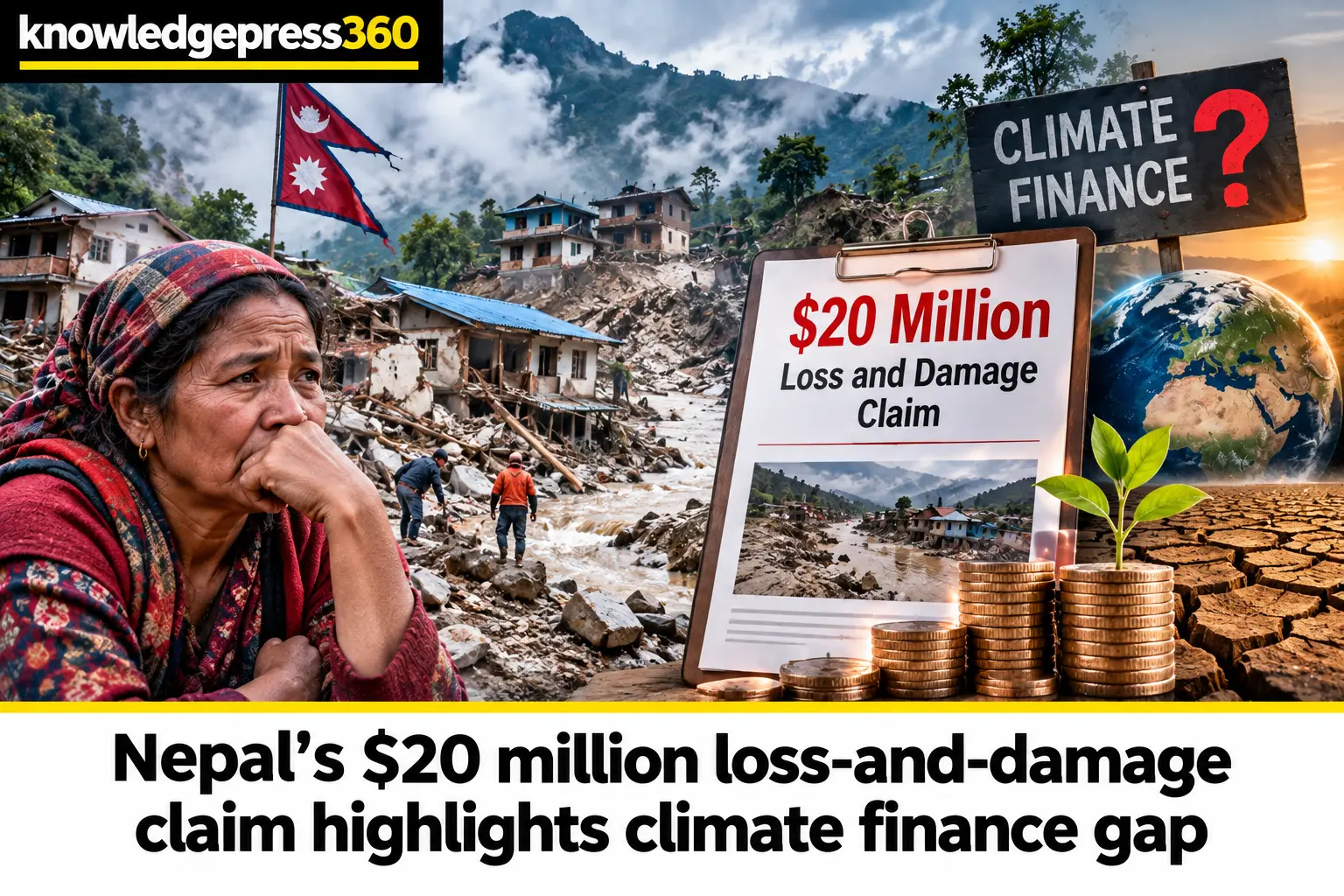
In late August, a catastrophic flash flood triggered by a partial Himalayan glacier collapse devastated large swathes of Nepal. More than 1,400 people lost their lives, thousands remain missing, and the government estimates physical damage and direct economic losses at $2.7 billion. Within days of the disaster, Prime Minister Balendra Shah addressed the United Nations General Assembly and formally requested $20 million from the newly created UN loss‑and‑damage fund, representing the maximum amount allowed for a single project. The claim is intended to provide urgent, grant‑based assistance for rebuilding critical infrastructure such as roads, bridges, schools and homes, without adding to Nepal’s debt burden.
Claim covers a fraction of real costs
The $20 million request represents a mere 0.7% of the $2.7 billion Nepal has quantified as direct damage, and only about 0.3% when broader reconstruction needs, estimated at roughly 10% of the country’s gross domestic product, or $4.8 billion, are taken into account. Even as Nepal’s appeal would make it the fourth‑largest claimant to the fund, the UN loss‑and‑damage mechanism, launched in 2023, has yet to disburse any assistance. Developing nations have collectively submitted 176 applications demanding over $2.8 billion, yet donor countries have pledged just $822 million, a shortfall of more than three‑fold. This mismatch raises serious questions about the fund’s capacity to respond swiftly to emergencies of Nepal’s scale.
International aid remains piecemeal
Beyond the UN fund, other actors have mobilised limited resources. The World Bank announced up to $170 million in emergency financing, while the United States contributed $31 million in direct aid, bringing its total assistance to $36 million. These contributions, though valuable, are still dwarfed by the total loss estimates. Moreover, Nepal’s Prime Minister warned that reliance on loans or fragmented grants leaves vulnerable nations exposed to unsustainable debt. He called for a grant‑based financing model and urged the creation of a Himalayan mechanism for satellite monitoring, glacial‑lake surveillance and coordinated early‑warning systems involving Nepal, India and China.
Donor commitment and recovery uncertainties
The principal uncertainty surrounding Nepal’s recovery is whether donor nations will increase the capitalisation of the UN loss‑and‑damage fund. Developed countries have so far pledged less than $1 billion, far short of the $2.8 billion already requested by developing states. Negotiations at upcoming UN climate forums will test the political will of major emitters to close this gap. Without a substantial boost in pledges, the fund risks remaining a symbolic instrument rather than a functional safety net for climate‑driven disasters. Additionally, the final total of missing persons from the disaster remains undetermined as recovery operations continue across affected districts.