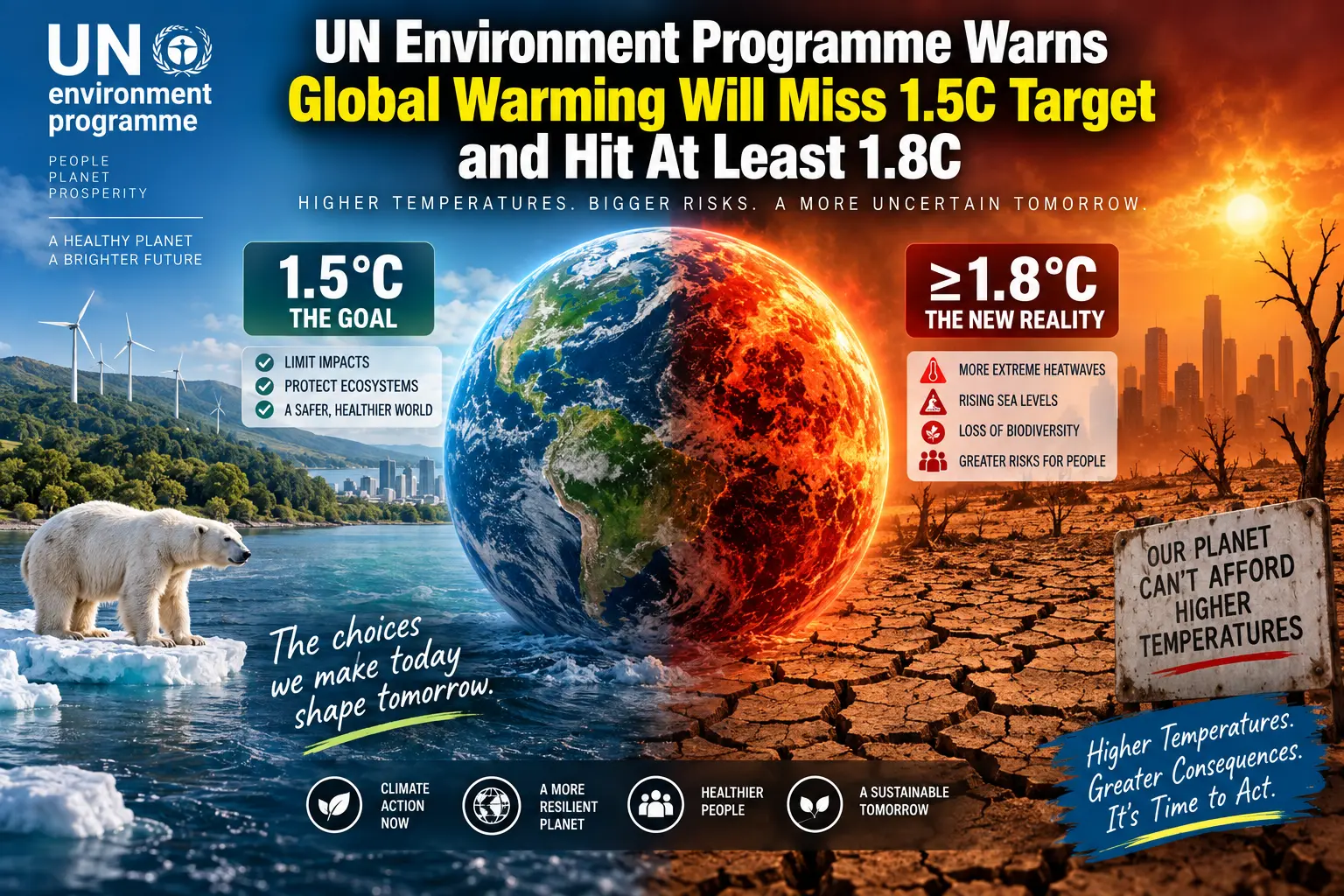
A landmark assessment published by the United Nations Environment Programme on September 2, 2026, has delivered a sobering evaluation of international climate efforts, concluding that temporary or prolonged breaches of the 1.5°C threshold established in the Paris Agreement are now unavoidable. The Nairobi-based agency warns that even under the most optimistic emissions reduction scenarios, global heating will reach at least 1.8°C above pre-industrial levels before any meaningful recovery can begin. This official acknowledgment marks a critical transition in global climate policy, shifting focus from pure prevention to managing an inevitable overshoot period while simultaneously working to bend the global temperature curve back down. This revelation matters profoundly because it forces governments, industries, and civil society to confront the reality of living through severe climate disruptions while racing to deploy large-scale remediation technologies.
The Limiting Overshoot Findings Released by the United Nations Environment Programme
The comprehensive report, titled Limiting Overshoot, details how decades of delayed action and persistent greenhouse gas emissions from fossil fuel combustion have locked the planet into a warming trajectory that current national pledges cannot halt. Global average temperatures have already risen by approximately 1.4°C, with annual averages having temporarily exceeded 1.5°C for the first time in 2024. Extrapolating current trends, scientists suggest that sustained warming of 1.5°C could become the permanent baseline around the end of this decade. Under current government policies alone, projections indicate that global warming could escalate to 2.6°C by 2100. The UNEP evaluation stresses that every five years of high emissions adds approximately 0.1°C to the eventual peak warming level, making immediate administrative and industrial interventions imperative to cap the ultimate temperature ceiling.
Severe Environmental Consequences of Surpassing the Paris Agreement Threshold
International researchers and UN officials are unified in the assessment that there are no good outcomes above 1.5°C, as every fraction of additional warming severely magnifies destructive weather extremes, severe heatwaves, catastrophic wildfires, and rapid glacier retreat. Unmitigated warming could lead to alpine glaciers losing more than a quarter of their total mass by 2100, subsequently driving global sea levels up by as much as 13 centimetres and threatening vulnerable low-lying island nations and coastal metropolitan areas with partial or total submersion. Furthermore, agricultural productivity faces severe threats, with global food production projected to decline by up to 14 percent by 2050 unless robust and comprehensive adaptation strategies are rapidly implemented across vulnerable regions. Ecosystems face irreversible damage, including the near-total destruction of warm-water coral reefs, which act as vital nurseries for marine biodiversity and sustain millions of livelihoods worldwide.