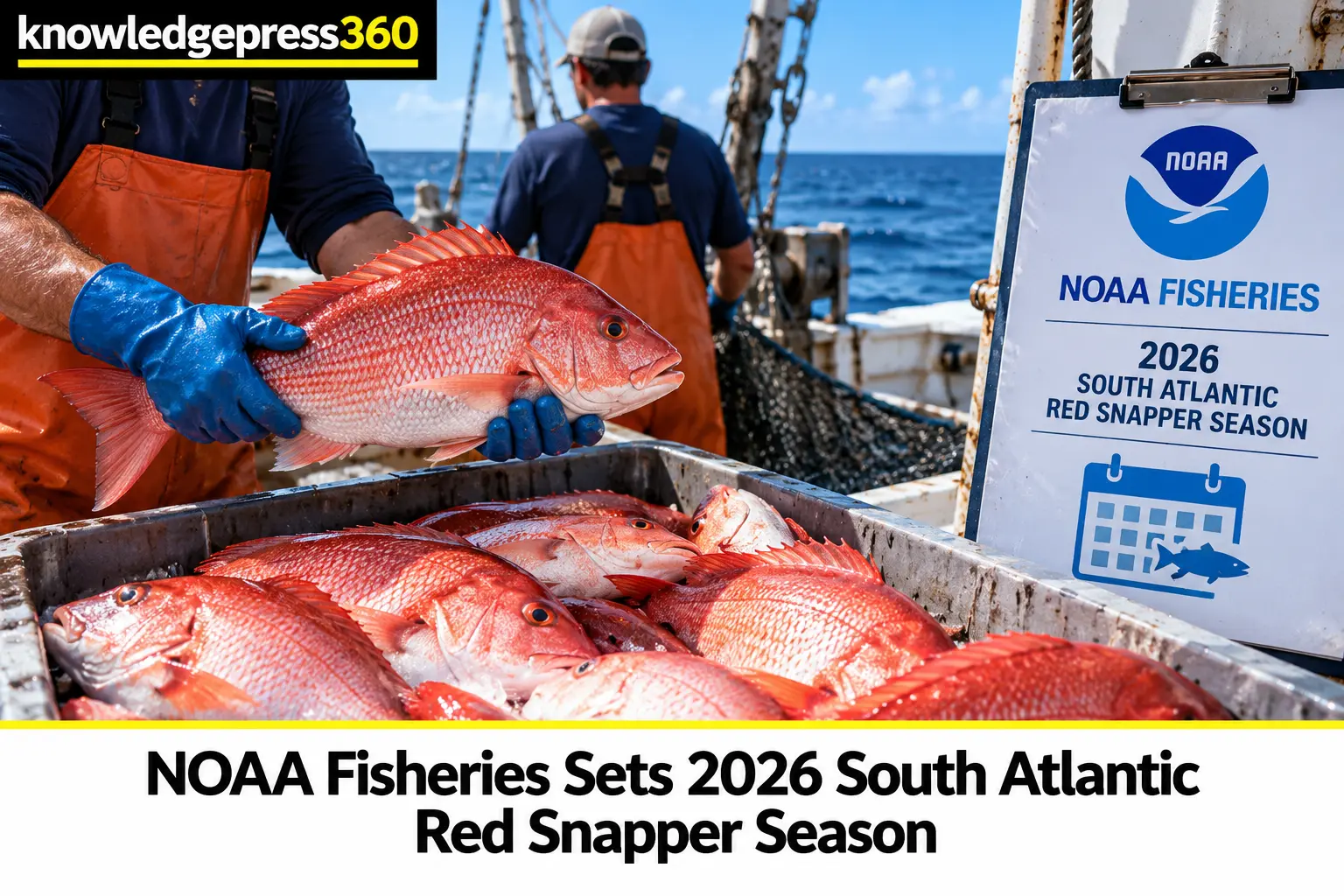
Federal fisheries regulators have announced the structured framework for the 2026 recreational red snapper season in the South Atlantic, balancing angler access with stock recovery goals. The announcement includes a designated federal fishing window alongside targeted exempted fishing permits for regional state agencies. This cooperative management approach aims to refine local data collection methodologies while offering controlled harvest opportunities across participating jurisdictions.
Federal Season Structure And Limits
The standard federal recreational red snapper fishing season in the South Atlantic will open for three days, operating from 12:01 a.m. local time on October 9 through 12:01 a.m. local time on October 12, 2026 [1, 5]. This schedule represents a modest one-day extension compared to the previous year's two-day federal allowance [1]. Throughout this brief maritime window, regulations maintain a strict bag limit of one fish per person per day, with no minimum size limit enforced [1].
Fishery managers intend this compressed timeframe to allow recreational participation without placing undue pressure on recovering fish populations. The overarching objective remains the careful stewardship of marine resources in federal waters, ensuring that cumulative catches do not exceed pre-established biological thresholds. Anglers operating during these three days must adhere strictly to federal bag limits and reporting protocols established by oversight bodies.
State Exempted Fishing Permits
Alongside the general federal season, NOAA Fisheries has issued modified Exempted Fishing Permits to the state wildlife agencies of Florida, Georgia, and South Carolina [1, 5]. These specialised permits authorise extended recreational red snapper fishing spans for eligible participants, running from October 9 through October 22, 2026 [1, 5]. This fourteen-day framework allows state authorities to pilot innovative local data collection programs and evaluate alternative management strategies .