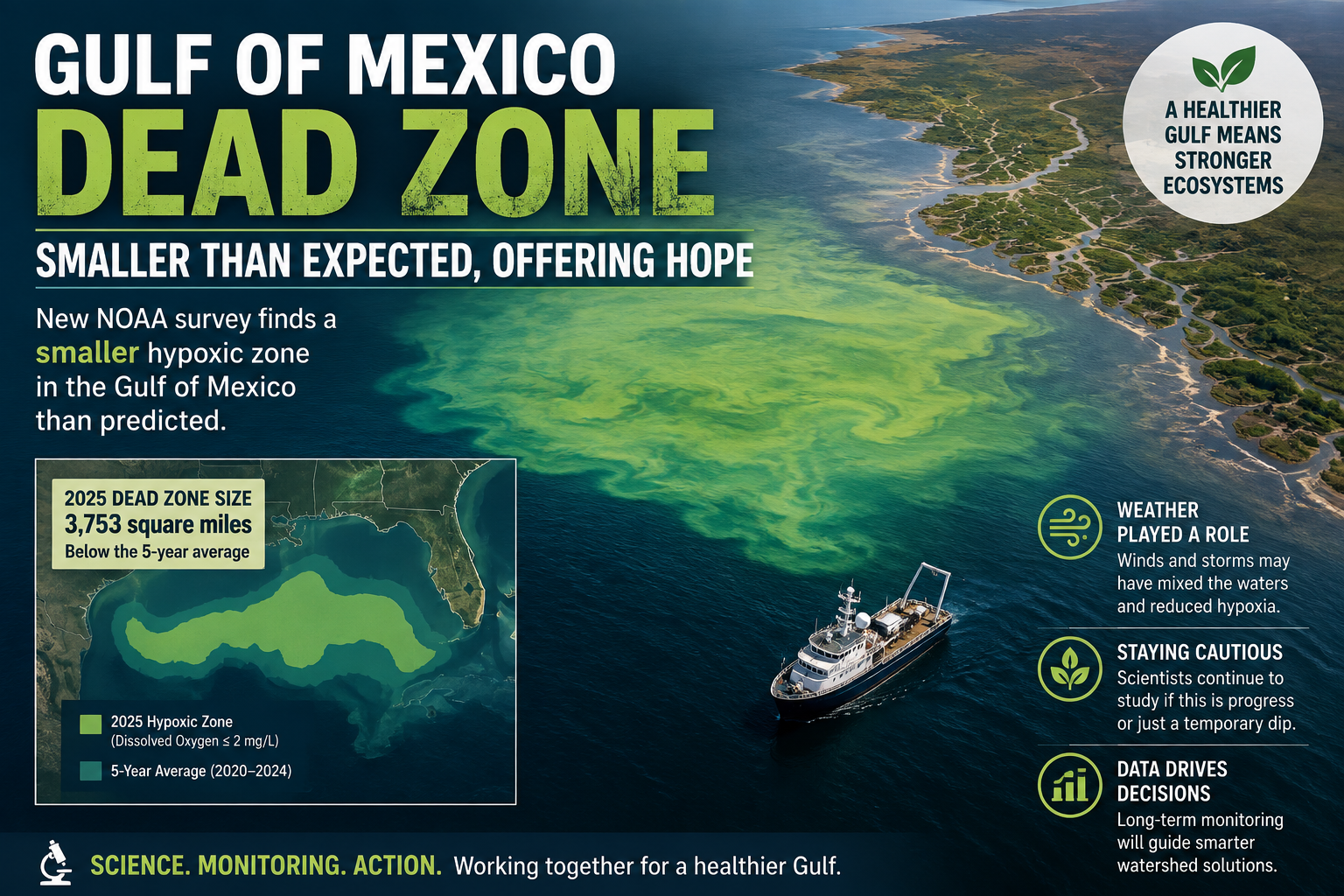
Recent scientific surveys conducted by the National Oceanic and Atmospheric Administration alongside academic partners have revealed a surprisingly smaller hypoxic zone in the Gulf of Mexico than initial models projected. Often termed the dead zone, this expanse of oxygen depleted water represents a central environmental challenge for North America's aquatic ecosystems. Understanding why this year footprint measures below expectations provides crucial insights into the complex dynamics governing marine health, agricultural runoff, and watershed management across the entire Mississippi River basin.
The annual formation of the Gulf dead zone is fundamentally tied to human activity and natural water cycles spanning a vast geographic area. Nutrients such as nitrogen and phosphorus, primarily originating from agricultural fertilizers and urban wastewater, wash into the Mississippi River system and drain southward into the Gulf of Mexico. These chemical inputs stimulate massive proliferations of microscopic algae. When these algal blooms eventually die and sink, decomposing bacteria consume vast quantities of dissolved oxygen in the water column, creating conditions where most marine life cannot survive and must flee or suffocate.
While this season measurement brings encouraging news for fisheries and coastal economies, researchers emphasize caution when interpreting the underlying causes. Marine scientists and meteorologists continue to investigate the precise drivers behind the reduced square mileage. Unpredictable meteorological events, such as persistent summer winds and unusual tropical storm activity, frequently mix the water column and temporarily disrupt hypoxic conditions. Consequently, experts remain divided on whether this smaller footprint reflects genuine progress in upstream nutrient reduction strategies or merely represents a temporary seasonal anomaly driven by transient weather patterns.
Tracking these yearly fluctuations remains essential for evaluating the effectiveness of long-term conservation and environmental policies. Watershed management initiatives depend on accurate data to determine if voluntary and regulatory measures aimed at curbing fertilizer runoff are yielding measurable results. Without sustained monitoring, distinguishing between weather induced fluctuations and permanent improvements in water quality becomes exceedingly difficult, complicating efforts to hold stakeholders accountable for watershed health.
Looking ahead, the scientific community will focus on comprehensive nutrient loading data and detailed analyses of summer weather impacts to understand the full picture. Researchers will scrutinize whether upstream agricultural practices are shifting or if atmospheric conditions simply masked a heavier influx of nutrients. Subsequent reports on fisheries recovery and ongoing water quality assessments will determine if this smaller dead zone marks a turning point for Gulf marine preservation or simply an unusual chapter in an ongoing environmental struggle.