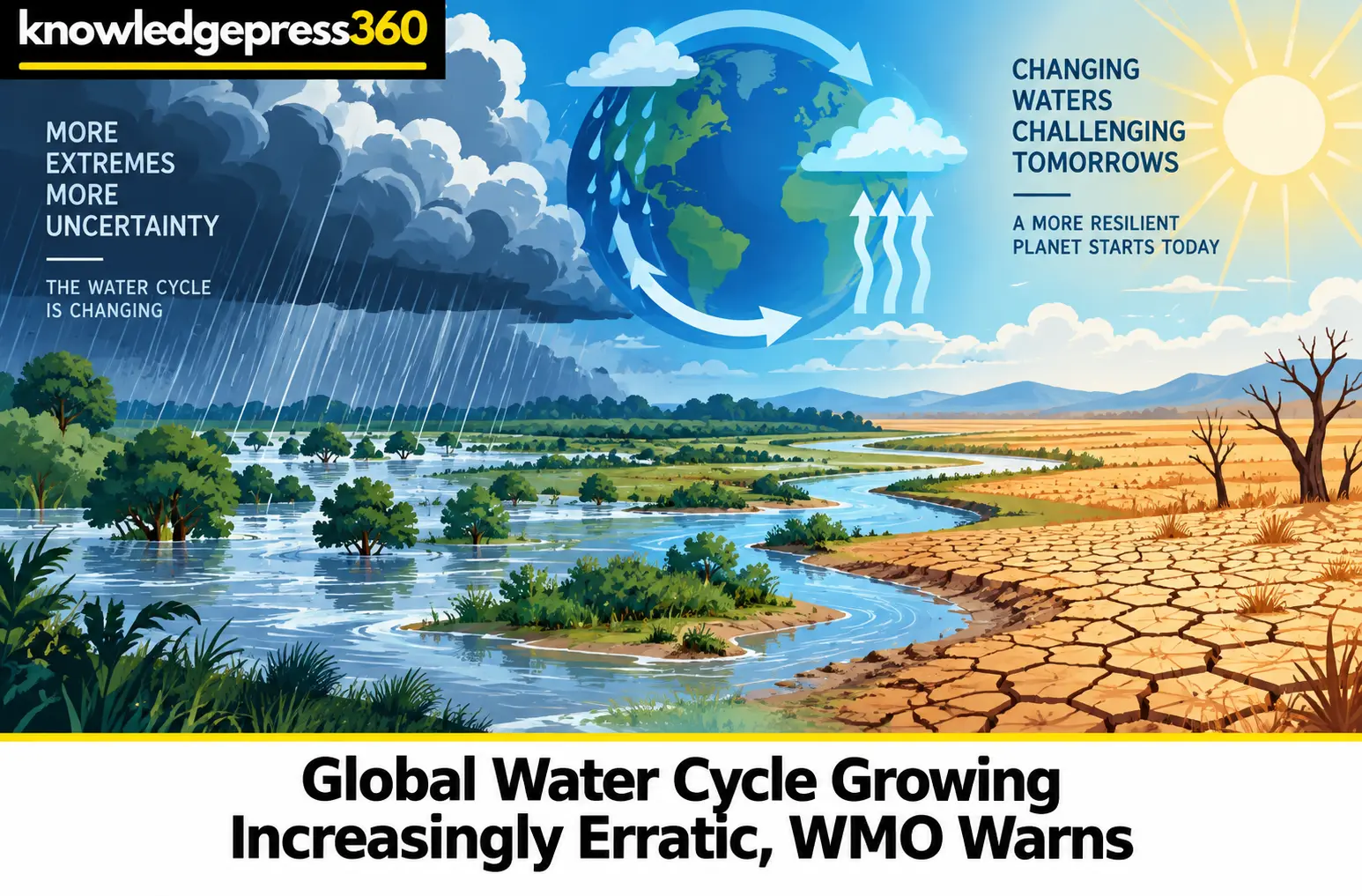
The global water cycle has become visibly more erratic and unpredictable, threatening human livelihoods and economic stability worldwide. Speaking at the official launch of the World Meteorological Organization flagship report in Geneva, senior officials cautioned that humanity is steadily exhausting its long-term natural water reserves. This development matters urgently because vital buffers such as groundwater basins and mountain glaciers, which have historically absorbed prolonged dry spells, are shrinking at an unprecedented pace. Understanding these changes requires examining both the unprecedented scale of the data now available and the profound systemic risks confronting vulnerable populations across continents.
Expanded Monitoring Reveals Widespread Reserve Depletion
The State of Global Water Resources report represents a massive expansion in international scientific observation. While initial publishing cycles relied on sparse inputs from a handful of nations, the latest assessment draws upon observational data compiled from 68 countries and over 3,000 river stations. This collaborative monitoring effort provides a detailed picture of planetary hydrology, mapping both rapid response components like daily precipitation and slow variables like deep subterranean aquifers. According to the findings presented by the international weather agency, global terrestrial water storage has exhibited a persistent downward trajectory since the mid-2010s. This ongoing contraction confirms that withdrawals consistently outpace natural replenishment rates across major drainage basins, signaling a systemic strain on planetary resources.
Four Consecutive Years of Glacier Ice Loss
Among the most alarming findings in the assessment is the relentless shrinkage of Earth's frozen reservoirs. The publication marks the fourth consecutive year of widespread ice mass loss across all major glaciated regions on the globe. Between recent observation cycles, the volume of melted glacier ice is estimated to equal roughly 560 million Olympic-sized swimming pools, a staggering figure that equates to a significant fraction of total annual global freshwater withdrawals. As these frozen towers disappear, local communities lose a vital natural reservoir that regulates downstream river flows during dry summer months. Without these dependable seasonal releases, downstream agricultural sectors face escalating uncertainty and heightened vulnerability to severe crop failures during prolonged droughts.
Disproportionate Impacts Across Vulnerable Regions
The human cost of hydrological instability is distributed unevenly, with developing economies bearing the heaviest burden. Over the past five years, Asia and Africa accounted for at least half of all recorded hydrological extreme events and over 80 percent of associated fatalities. These stark figures expose critical gaps in local forecasting capabilities and highlight the urgent need for expanded early warning systems. While meteorological networks have improved dramatically in certain areas, many high-risk communities still lack the infrastructure required to anticipate sudden floods or prepare for severe multi-year droughts effectively. Addressing these vulnerabilities requires sustained international cooperation and targeted financial investments to bolster local resilience against shifting weather patterns.