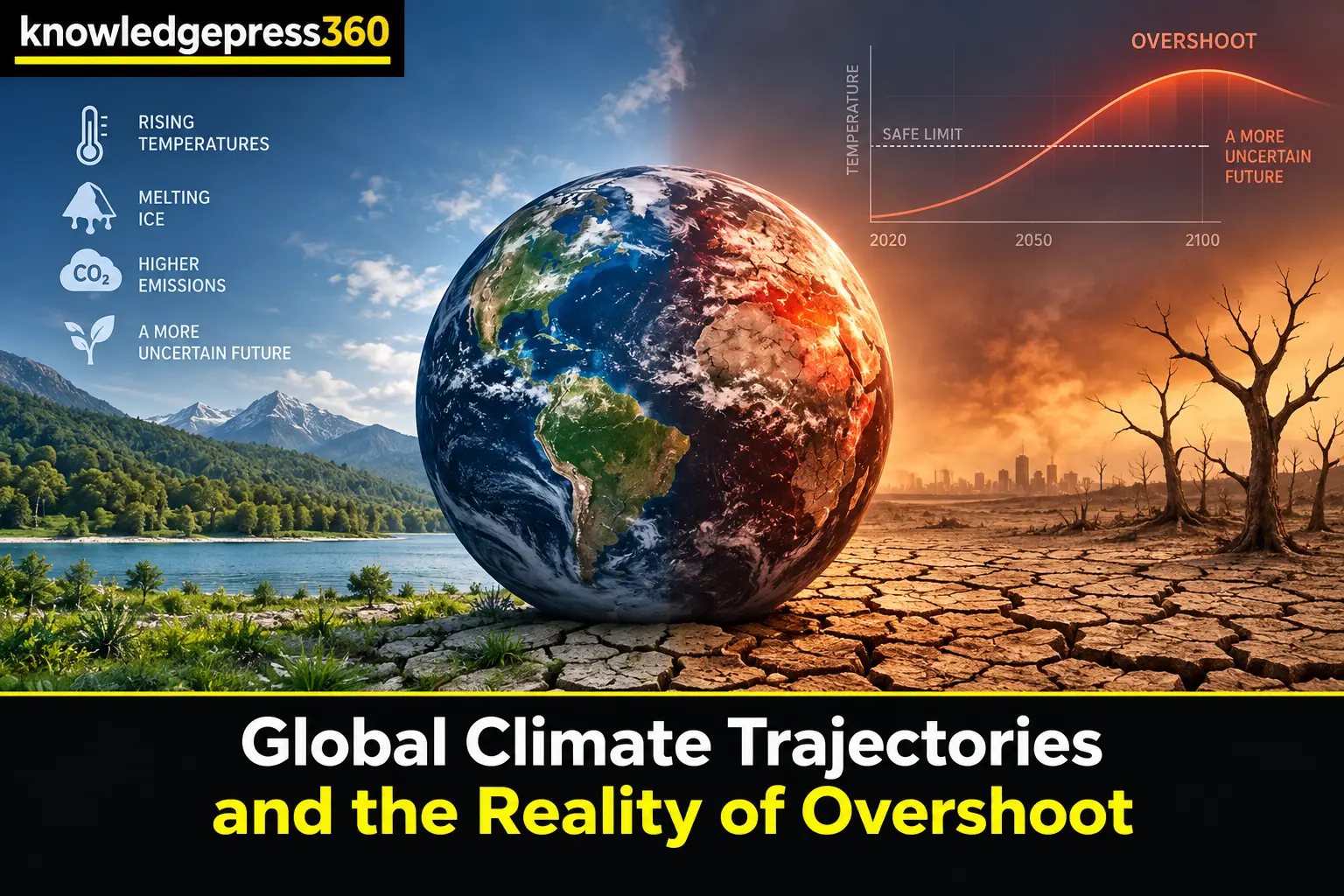
International climate science has reached a sobering juncture as new empirical assessments underscore the growing probability that global average temperatures will temporarily breach the vital threshold established by international agreements. For decades, policymakers and scientists have centred their mitigation efforts on keeping long-term warming below 1.5°C relative to pre-industrial levels. However, recent authoritative findings indicate that historical emissions and current trajectories make an overshoot scenario increasingly difficult to avoid. This development carries profound implications for ecosystems, human health, and economic stability across vulnerable regions worldwide, signalling that the global community must simultaneously prepare for heightened environmental stress while redoubling mitigation efforts.
United Nations Warning on Overshoot
On September 2, 2026, the United Nations Environment Programme released a comprehensive evaluation titled Limiting Overshoot, which articulates a stark reality for the coming decade. The report warns that long-term global warming is likely to exceed the Paris Agreement target within the next few years, creating a period where temperatures remain elevated above safe limits for an extended duration before potentially dropping back down. Even under the most optimistic mitigation scenarios modelled within the UNEP framework, global temperatures are projected to peak at approximately 1.8°C above pre-industrial baselines. More pessimistic pathways suggest that emissions trajectories could push planetary warming well beyond 2°C, triggering compounded environmental feedbacks.
This temporary or extended breach is not merely an academic concern but an active driver of atmospheric disruption. Climate change has already doubled the frequency of global heatwaves between 2024 and 2025, while unleashing severe droughts, intensifying floods, and deepening water shortages across vulnerable continents such as Africa. Developing regions and Small Island Developing States find themselves on the front lines of these crises. Despite contributing a minimal fraction of historical greenhouse gas emissions, these nations face disproportionate devastation to agricultural yields, public infrastructure, and local livelihoods.
Early Warnings and Regional Vulnerability
Recognising the urgent need to protect exposed populations from intensifying extremes, international bodies have stepped up efforts to bolster local resilience. On September 7, 2026, the World Meteorological Organization issued the Addis Ababa Call to Action, focusing squarely on the imperative to accelerate multi-hazard early warning systems across Africa. Framed under the overarching Early Warnings for All initiative, the declaration emphasises that no community should face a predictable climate hazard without the institutional capacity to anticipate danger, receive timely alerts, and act before lives are lost.