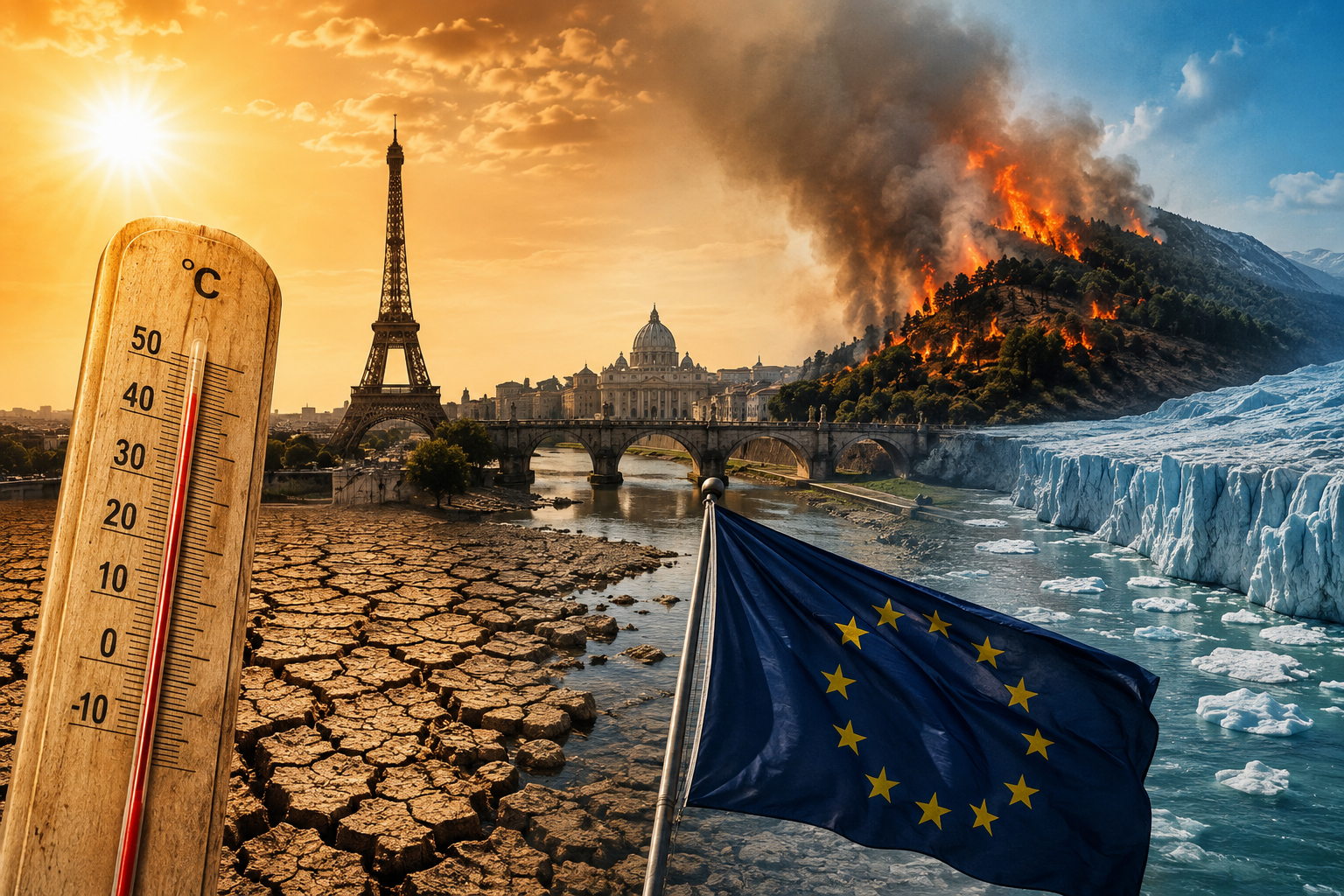
Europe is currently confronting a profound climate adaptation crisis as recurring extreme heatwaves, severe droughts, and widespread wildfires place unprecedented strain on the continent's water, energy, and agricultural systems. Recent comprehensive findings from the European State of the Climate report, compiled collaboratively by the World Meteorological Organization and the Copernicus Climate Change Service, highlight that the continent is warming at roughly twice the global average rate. This accelerated warming is driven by amplified land warming, Arctic ice melt, and shifting atmospheric jet-stream patterns, forcing policymakers to reconsider long-term resilience strategies beyond traditional emissions mitigation.
What happened
The compounding impacts of this rapid warming have manifested across multiple environmental sectors, affecting regions from the sub-Arctic to the Mediterranean. According to the assessment, at least 95 percent of Europe experienced above-average annual temperatures, while glacier regions suffered continuous net mass losses, including Iceland recording its second-largest glacier loss on record. Snow cover across the continent remained significantly below historical averages, and the annual sea surface temperature for the European region reached record highs. Within this marine environment, roughly 86 percent of monitored areas experienced strong marine heatwaves, threatening fragile aquatic ecosystems and contributing to broader weather volatility.
What the evidence shows
Statistical monitoring from independent scientific bodies and national authorities underscores the human and infrastructural toll of these climatic shifts. In major economies such as Spain, intense summer heatwave conditions prompted the health ministry's daily mortality monitoring system to record 1,029 excess deaths attributable to heat. At the peak of the heatwave, tens of millions of people were exposed to significant health risks. Furthermore, widespread river flow deficits affected approximately 70 percent of European rivers, while record-shattering wildfire footprints exceeded one million burned hectares, severely disrupting domestic infrastructure, commercial navigation, and regional energy production.
Why Europe Is Struggling to Adapt
Historically, European nations have focused heavily on greenhouse gas emissions mitigation rather than structural preparation. Experts and municipal leaders now emphasise an urgent imperative to pivot toward structural adaptation, which involves upgrading urban planning, redesigning water-energy-food nexus management, retrofitting critical infrastructure, and preparing civil protection agencies for recurring seasonal emergencies. However, significant uncertainties persist regarding the exact economic costs of future cascading climate shocks and the precise speed at which localized municipal governments can implement necessary climate-resilient retrofits without overextending public finances.