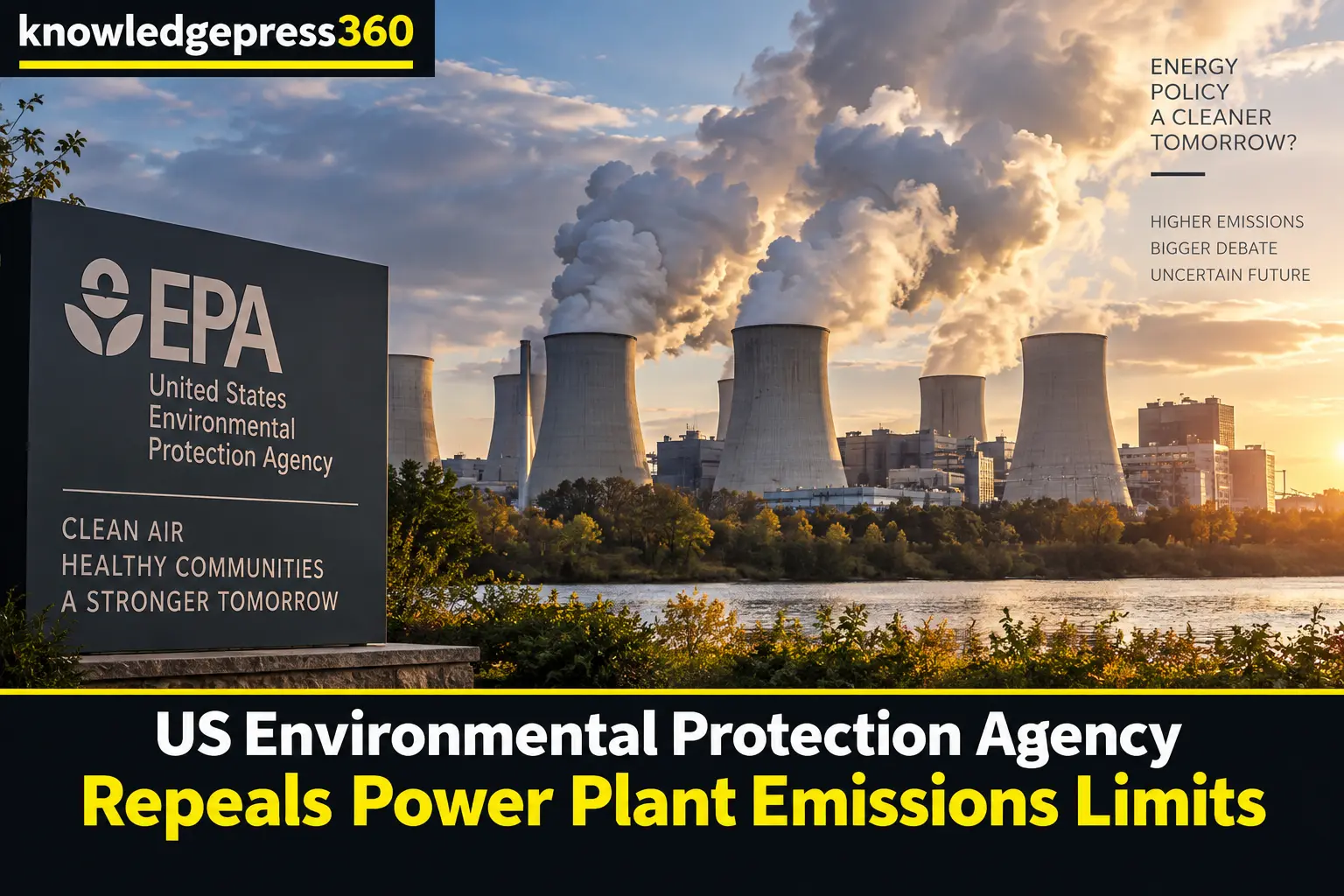
The United States Environmental Protection Agency has initiated a profound pivot in national environmental policy by officially announcing the repeal of federal limits on greenhouse gas emissions from coal- and gas-fired power plants. This sweeping regulatory rollback dismantles the stringent 2024 standards established under the Biden administration, which previously mandated that major energy facilities implement carbon capture and sequestration equipment. By dismantling these climate-focused mandates, the agency seeks to recalibrate the balance between federal environmental oversight and domestic energy production, creating immediate repercussions across the American energy sector and triggering fierce opposition from environmental advocates. The announcement signals a complete reversal of prior federal decarbonisation pathways, altering the trajectory of industrial pollution controls for the foreseeable future. Understanding the full scope of this decision requires examining the specific policy mechanisms deployed by federal regulators, the intense financial arguments driving the rollback, and the looming courtroom battles that will determine its ultimate viability.
Sweeping Rollback in Houston
The formal announcement was delivered by EPA Administrator Lee Zeldin during a high-profile G20 ministerial meeting centred on energy abundance in Houston. Surrounded by key administration figures, Zeldin declared that the agency is officially rescinding the rules that limit planet-warming greenhouse gas emissions from power plants fuelled by coal and natural gas. This action directly overturns the previous administration’s framework, which forced power producers to adopt technological upgrades or face retirement. The agency further proposed eliminating all other greenhouse gas emissions rules for stationary sources, asserting under a reimagined interpretation of the Clean Air Act that it lacks the statutory authority to regulate emissions contributing to global climate change. This move mirrors earlier federal rollbacks that removed vehicle emissions standards and dismantled underlying legal conclusions supporting federal climate oversight. By targeting the second-biggest source of domestic greenhouse gas emissions, the administration has enacted one of its most aggressive challenges to federal environmental regulations to date. Industry advocates welcomed the announcement, arguing that it frees utilities from burdensome federal constraints and allows operators to make pragmatic economic choices for regional ratepayers.
Multi-Billion Dollar Savings
Defending the controversial policy shift, federal officials emphasised the substantial economic relief the deregulation is projected to deliver to the domestic energy sector. The EPA stated that repealing the power plant rule would remove more than 300 billion dollars in compliance and operational costs for the industry. Proponents argue that lifting these constraints will preserve the domestic coal fleet, prevent the premature closure of aging power stations, and support robust grid reliability amid surging electricity demand driven by data centres and artificial intelligence expansion. Trade organisations, including America’s Power, praised the decision, asserting that it unshackles American energy production and protects consumers from soaring electricity tariffs. However, this economic justification has met with fierce resistance from public health experts and environmental coalitions. Critics point out that removing these pollution limits will inevitably lead to heightened particulate and greenhouse gas emissions, exacerbating respiratory illnesses and accelerating environmental degradation in vulnerable communities near major industrial facilities. Independent academic analysts note that while utilities may experience short-term financial savings, the long-term societal costs associated with degraded air quality and unmitigated climate impacts remain unquantified and deeply concerning.