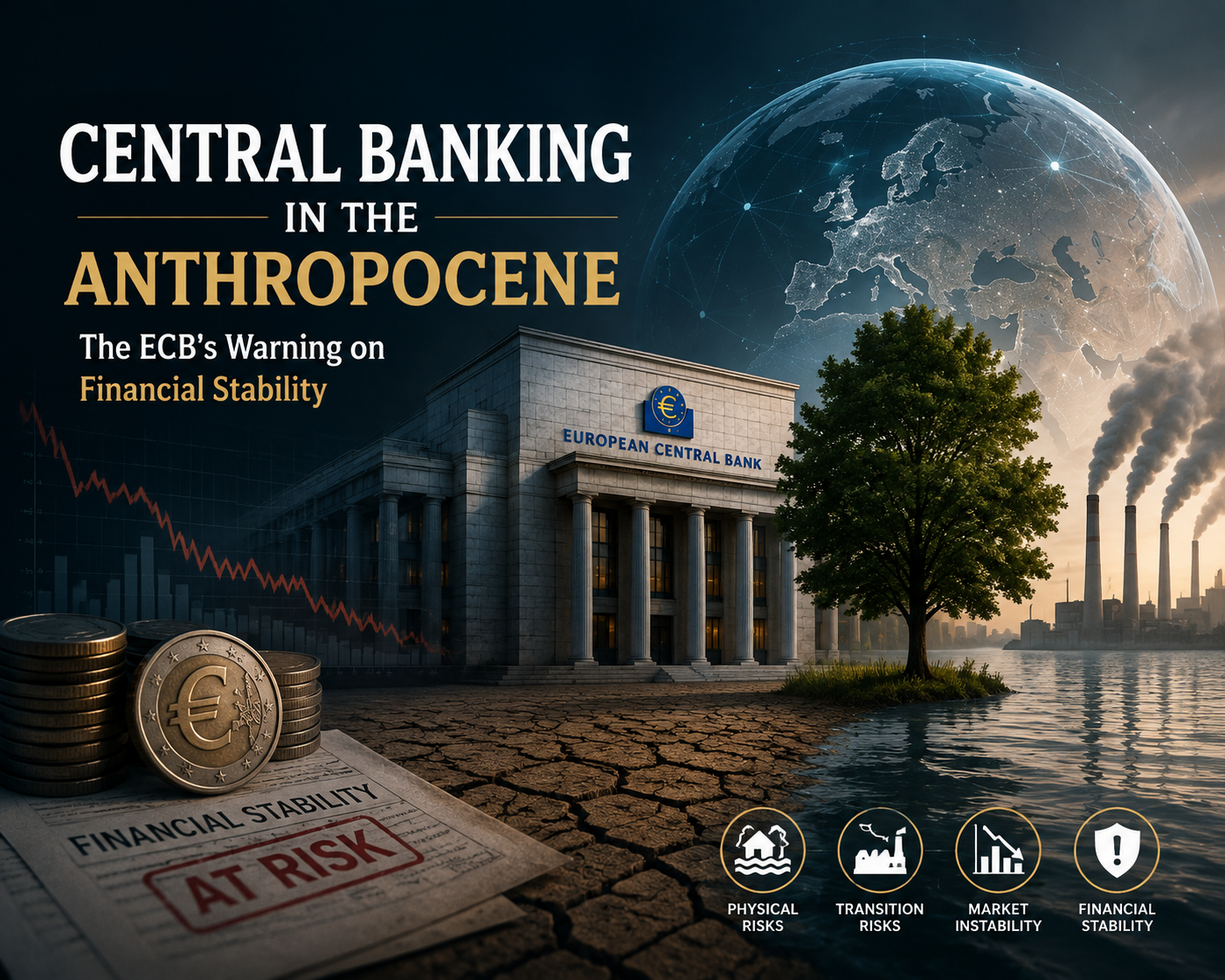
The boundary between ecological disruption and economic viability has grown increasingly thin, forcing central banks to confront environmental hazards that extend far beyond traditional monetary concerns. A recent intervention by a senior European Central Bank official highlights an urgent shift in perspective: the escalating climate crisis is no longer viewed merely as a long-term environmental challenge, but as an immediate and acute threat to core financial stability. This stark assessment brings the hidden vulnerabilities of global banking systems into sharp focus, raising critical questions about how financial institutions measure, price, and mitigate risks that have no historical precedent.
The Evolution of Systemic Environmental Risk
For decades, financial regulation treated environmental degradation as an external concern, leaving ecological matters to policymakers and conservationists while central banks focused on inflation, interest rates, and employment. However, the accelerating frequency of extreme weather events and systemic ecological shifts has upended this traditional division. Physical risks, such as catastrophic floods, prolonged droughts, and severe storms, now directly threaten corporate assets, agricultural productivity, and residential real estate values. At the same time, transition risks arising from rapid policy shifts and technological adjustments to curb carbon emissions can trigger sudden asset devaluation. When commercial banks hold large portfolios tied to carbon-intensive industries or vulnerable geographic regions, these compounding pressures threaten the solvency of individual institutions and the liquidity of the broader financial ecosystem.
Integrating Climate Scenarios into Supervision
Recognising these dangers, supervisory authorities have spent recent years attempting to integrate climate scenarios into traditional stress-testing frameworks. These models try to simulate how various temperature trajectories and policy pathways might affect commercial bank balance sheets over multi-decade horizons. Yet, traditional economic models often struggle to capture the non-linear, compounding nature of climate change. Unlike standard financial cycles, ecological breakdowns can trigger abrupt, irreversible tipping points that shatter market assumptions. The recent central bank cautions underline a persistent friction within the financial sector: while risk modellers are growing more sophisticated, the speed and unpredictability of environmental degradation routinely outpace conventional risk assessment tools.
The Dilemma of Market Pricing and Policy Enforcement
A central debate among economists and market analysts centres on whether global financial markets are reacting swiftly enough to these long-term threats. While institutional rhetoric has undoubtedly shifted toward sustainability, capital allocation often continues to reward short-term profitability over long-term resilience. Investors frequently misjudge the timing of climate-driven asset repricing, leading to potential market bubbles in vulnerable sectors. Furthermore, uncertainty remains regarding the specific regulatory mandates that central banks will ultimately deploy. While public warnings establish the gravity of the situation, enforcing mandatory capital requirements or lending restrictions to curb climate exposure involves complex political and economic trade-offs that commercial regulators have been hesitant to fully implement.