Deep in the rugged terrain of Kashmir's Pulwama district, the fight against one of humanity's most debilitating viruses depends on a pair of worn rubber sandals and an insulated cool box. While global headlines often focus on high-tech medical breakthroughs, the sustained eradication of polio relies on an extraordinary human effort. Across difficult mountainous landscapes, frontline workers undertake arduous journeys to ensure that isolation does not mean exclusion from vital public health infrastructure. This grassroots mobilisation underpins a massive national achievement, yet it exposes the quiet sacrifices demanded of the individuals who form the backbone of the public health system.
The Scale of the Immunisation Effort
India has maintained its official polio-free certification since 2014, a milestone anchored by the registration of its last confirmed wild poliovirus case in January 2011 in West Bengal. Preserving this status requires constant vigilance. The national immunisation campaign is powered by an army of approximately 2.5 million frontline health workers who navigate dense urban centres and punishing rural geographies alike. Supporting them is an extensive surveillance network comprising 60,000 health workers who diligently monitor tens of thousands of reporting sites for acute flaccid paralysis, ensuring that any potential resurgence is detected immediately.
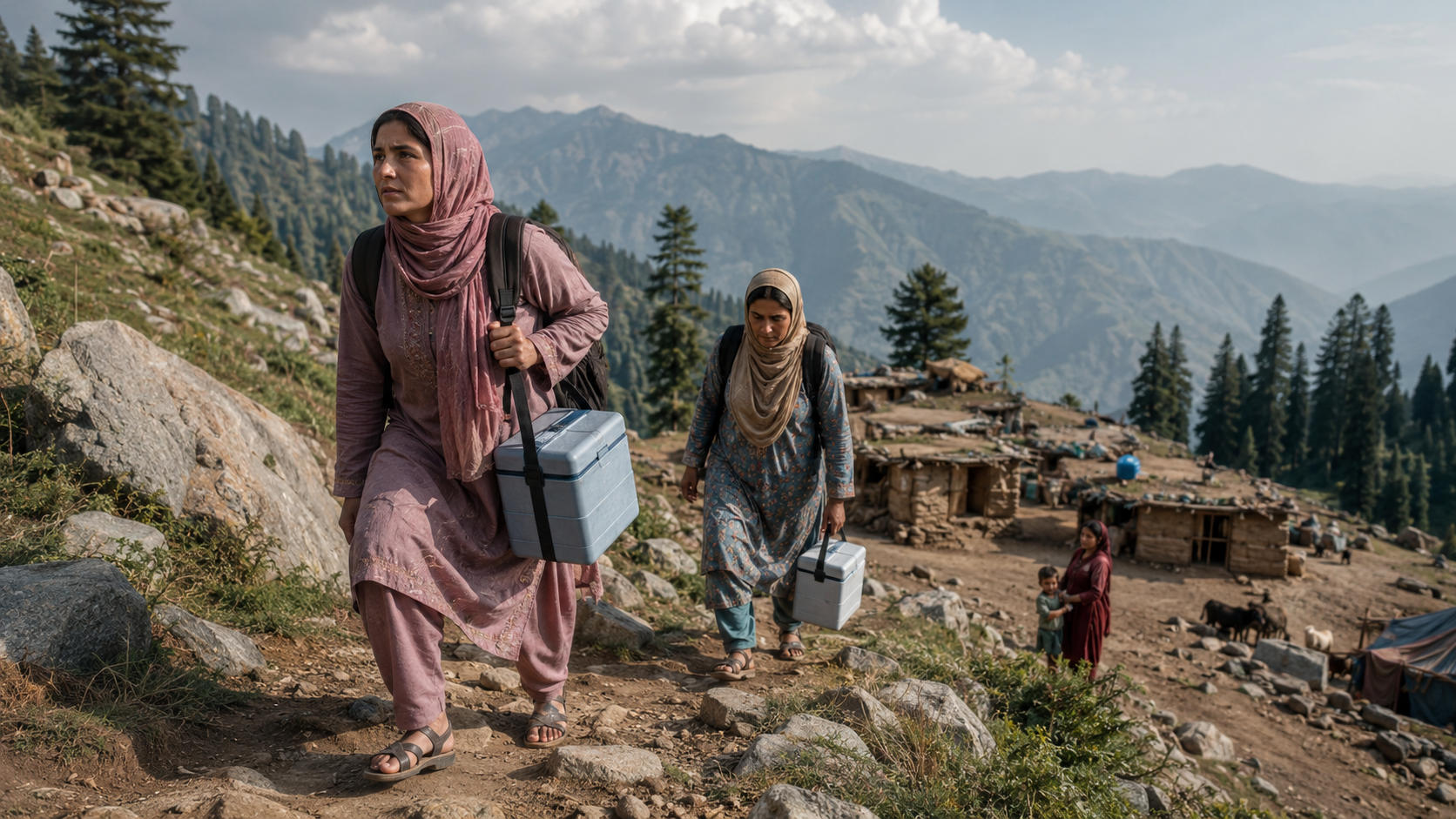
In mountainous regions like Pulwama, geography presents formidable obstacles to routine healthcare delivery. Vaccinators such as Shameema and Tanzeela regularly hike up to 12 miles across rugged pine forests and dirt tracks to reach isolated nomadic Gujjar and Bakarwal communities. These families live in seasonal mud-and-stone dwellings known as dhokas scattered across remote hillsides. Carrying heavy containers that must maintain strict cold-chain temperatures between two and eight degrees Celsius, these workers ensure that the oral polio vaccine—a live weakened virus formula originally developed by Albert Sabin in the late 1950s—remains viable until it is administered as two drops on a child's tongue.
Economic Realities and Institutional Challenges
Despite carrying out life-saving public health interventions, frontline vaccinators operate under significant economic constraints. In many regions, state governments compensate these workers with modest baseline stipends of around 125 rupees per day, roughly equivalent to one pound sterling, for multi-day immunisation campaigns conducted several times a year. This vast disparity between the monumental responsibility carried by these women and their financial remuneration highlights ongoing structural vulnerabilities within grassroots healthcare models.
Furthermore, health authorities must contend with persistent logistical access barriers and localised pockets of vaccine hesitancy. Reaching nomadic populations requires flexible scheduling that aligns with seasonal migration patterns across high-altitude pastures. While public health messaging has largely succeeded in building community trust over decades, maintaining high immunisation coverage demands continuous engagement by trusted local workers who understand regional languages and cultural norms.