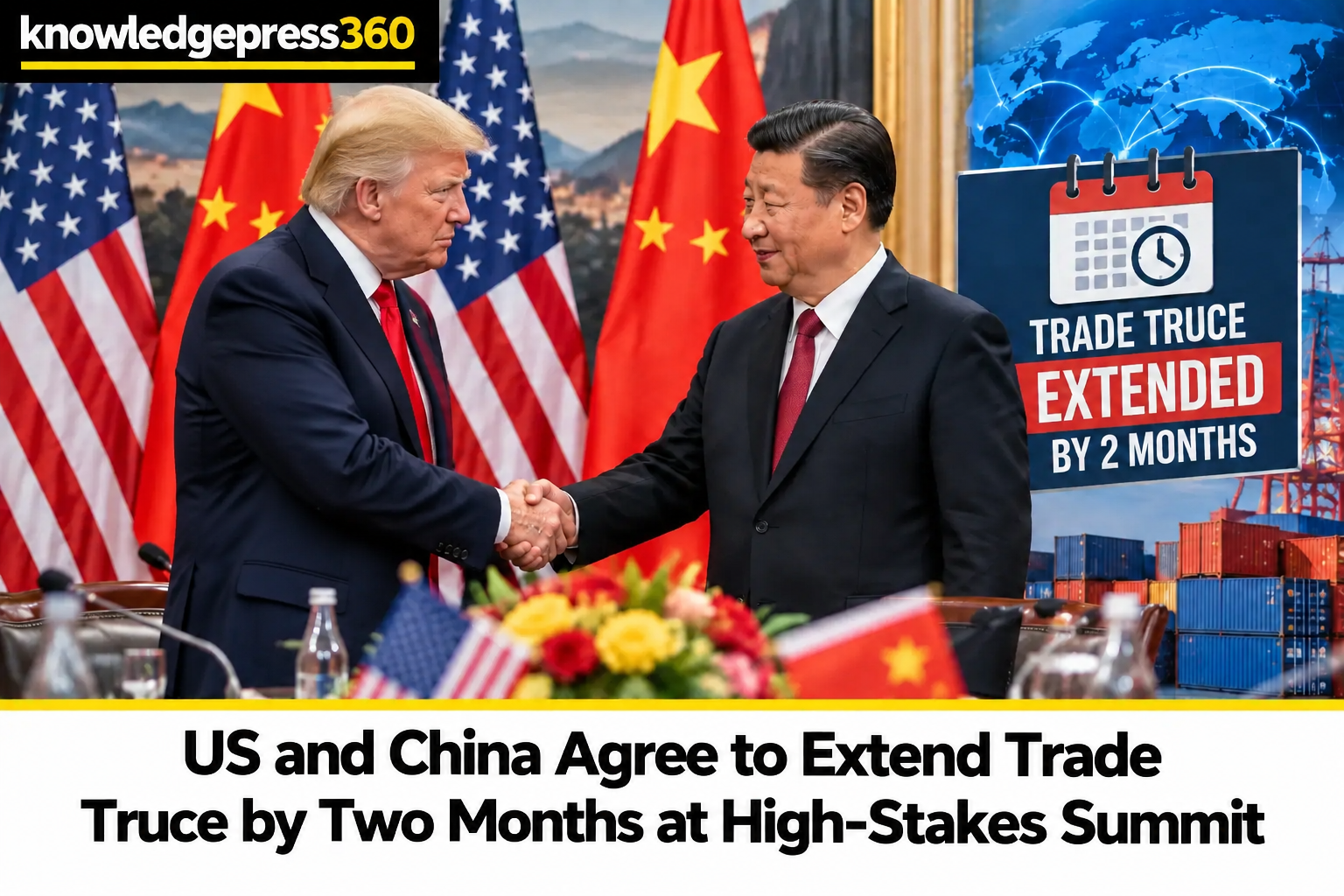
The United States and China have officially agreed to extend their bilateral trade truce by two months, providing both economic superpowers with critical breathing room to negotiate a comprehensive long-term economic package. The diplomatic breakthrough coincides with Chinese President Xi Jinping’s arrival in Washington, District of Columbia, for a high-stakes three-day state visit. This development carries profound implications for global market stability, supply chain resilience, and the broader geopolitical alignment between the world's two largest economies.
Trade Truce Extended Through January
U.S. Treasury Secretary Scott Bessent confirmed to media outlets that the two nations agreed to prolong the existing economic détente, known as the Busan Agreement, beyond its original November 10 expiration date through January 10, 2027. This extension offers negotiating teams vital extra time to finalize technicalities on a broader economic pact. Such an arrangement could potentially incorporate financial services agreements, targeted agricultural purchases, and selective tariff reductions on non-critical goods.
While outlining the parameters of the extended truce, Treasury Secretary Scott Bessent stated that China has fulfilled commitments to buy 25 million tons of soybeans, though other agricultural pledges still lag behind schedule. The extended timeline is specifically designed to help bridge these implementation gaps without plunging the bilateral relationship back into open tariff hostility. Negotiators face intense pressure to ensure both sides meet their stated quotas before the newly established January deadline expires.
Historic Airport Reception in Maryland
The announcement served as a strategic backdrop for an unprecedented display of personal diplomacy. U.S. President Donald Trump took the rare step of greeting Xi directly upon his arrival at Joint Base Andrews in Maryland. Complete with military honors, a red-carpet escort, an overhead B-1 Lancer bomber flyover, and displays of fighter jets, the welcome marked the first time in over a decade that an American president has personally greeted a foreign leader at the military base.
Political analysts noted that the high-profile welcome signals the immense strategic value Washington ascribes to its relationship with Beijing. During the arrival ceremony, the leaders shook hands, exchanged remarks, and posed for photographs while military bands played. In subsequent written statements, Xi emphasised that the two global powers should function as partners rather than rivals, suggesting that the national aspirations of both nations can complement each other to benefit the international community.
Complex Negotiations and Unresolved Disputes
Beneath the commercial negotiations, the two administrations continue to address friction points including export controls on advanced semiconductors and rare-earth minerals, artificial intelligence safeguards, Taiwan policy, and geopolitical dynamics surrounding regional conflicts in Iran and Ukraine. Significant uncertainties remain regarding whether negotiating teams can successfully bridge deep structural divergences on technology transfer and intellectual property within the compressed two-month window.