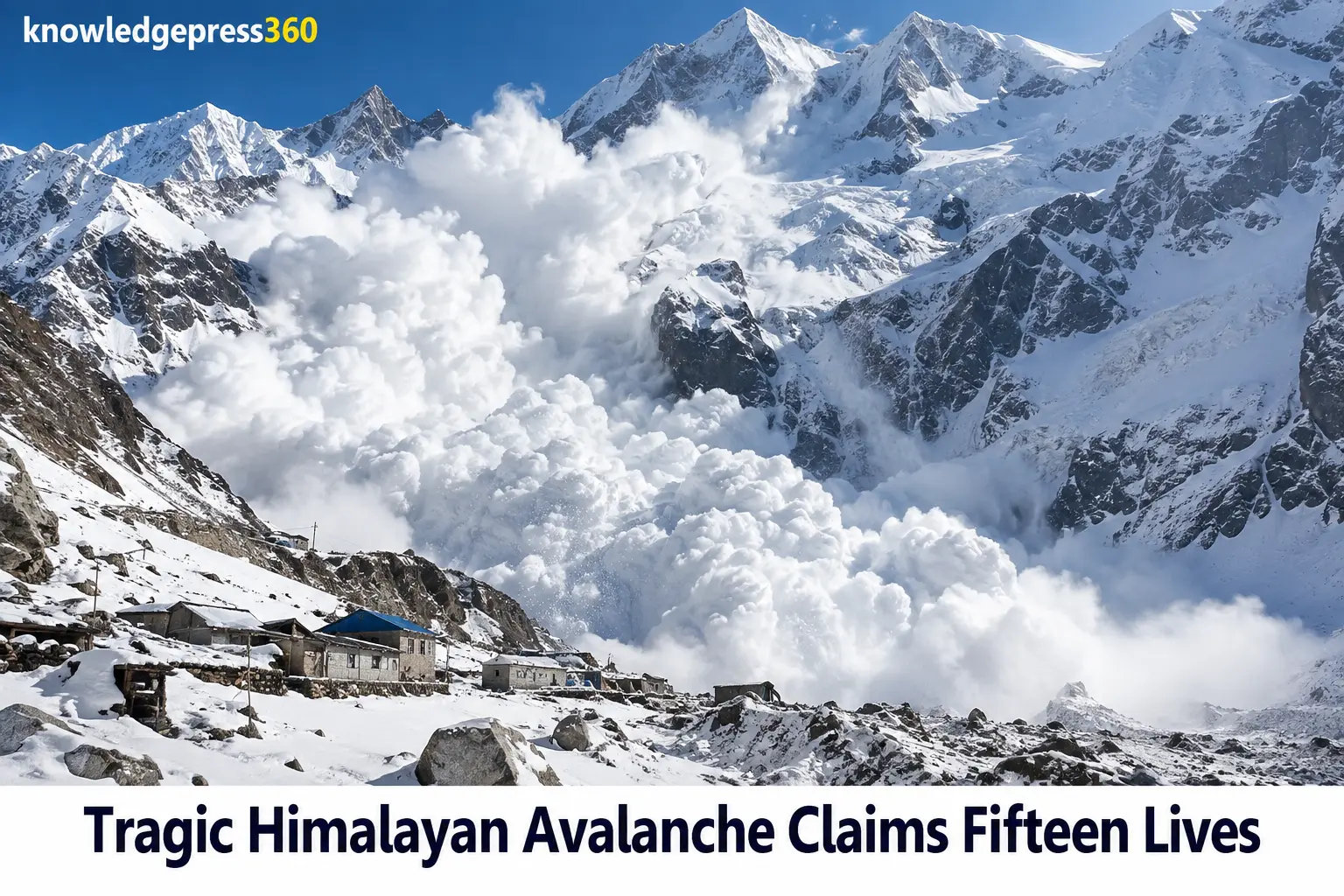
The treacherous weather systems shaping the Himalayan region have once again demonstrated their lethal potential, claiming the lives of at least fifteen expedition workers following a catastrophic avalanche in central Nepal. The disaster underscores the extreme hazards faced by local support staff who venture ahead of commercial climbing groups to establish infrastructure in remote, high-altitude environments. As families mourn and authorities reassess safety protocols during a volatile meteorological cycle, the incident highlights the persistent vulnerabilities entwined with the nation's premier tourism sector. Emergency responders, international observers, and local communities are now grappling with the profound human cost of this recent catastrophe.
Avalanche Strikes Himlung Peak Base Camp
The disaster unfolded on a Sunday morning when a massive sheet of snow tore down the slopes of the 7,126-meter Himlung peak, situated within the Manang district near the Tibet border. Measuring approximately fourteen feet in depth, the avalanche engulfed the base camp area, burying tents and trapping Nepalese nationals who were working as expedition staff, guides, and kitchen crew. These workers had arrived ahead of foreign climbers to prepare routes, pitch shelters, and fix ropes for the upcoming autumn expeditions. Initial reports estimated that roughly a dozen individuals were missing beneath the heavy snowpack, triggering urgent calls for specialized assistance. Poor weather conditions, freezing temperatures, and unstable snowpacks severely hampered early intervention, preventing helicopters and ground teams from reaching the remote disaster zone immediately.
Rescue Operations and Rising Death Toll
Following the initial delay, an elite team of experienced mountain guides and rescuers was dispatched from Kathmandu to combat the perilous conditions at the site. Manual excavation proved arduous and dangerous as rescuers dug through meters of packed snow to locate the buried workers. Recovery operations proceeded incrementally over the course of the week, yielding two bodies on Sunday, two kitchen staff on Monday, and three additional victims by Tuesday. The operation reached a milestone on Thursday when search teams recovered eight more bodies from the debris. Tul Singh Gurung, president of the Nepal National Mountain Guide Association, confirmed that the death toll had risen to 15 workers, while search efforts continued for the single remaining missing individual. Foreign climbers had fortunately not yet reached the base camp when the catastrophe struck, sparing international visitors from the direct impact of the avalanche.
Severe Weather Strains Regional Safety
This devastating event occurs against the backdrop of a severe monsoon and post-monsoon weather cycle characterized by persistent heavy rains and snow across Nepal's mountainous districts. These turbulent meteorological conditions have triggered widespread floods and landslides, placing immense strain on the country's tourism-dependent economy and compounding national trauma following previous regional tragedies. The Himlung disaster ranks among the worst mountaineering accidents in recent years, invoking memories of previous catastrophic avalanches and seismic disasters. Officials and mountain safety experts must now confront mounting questions regarding the adequacy of early warning frameworks and seasonal risk assessments for local workers operating in increasingly unpredictable high-altitude environments.