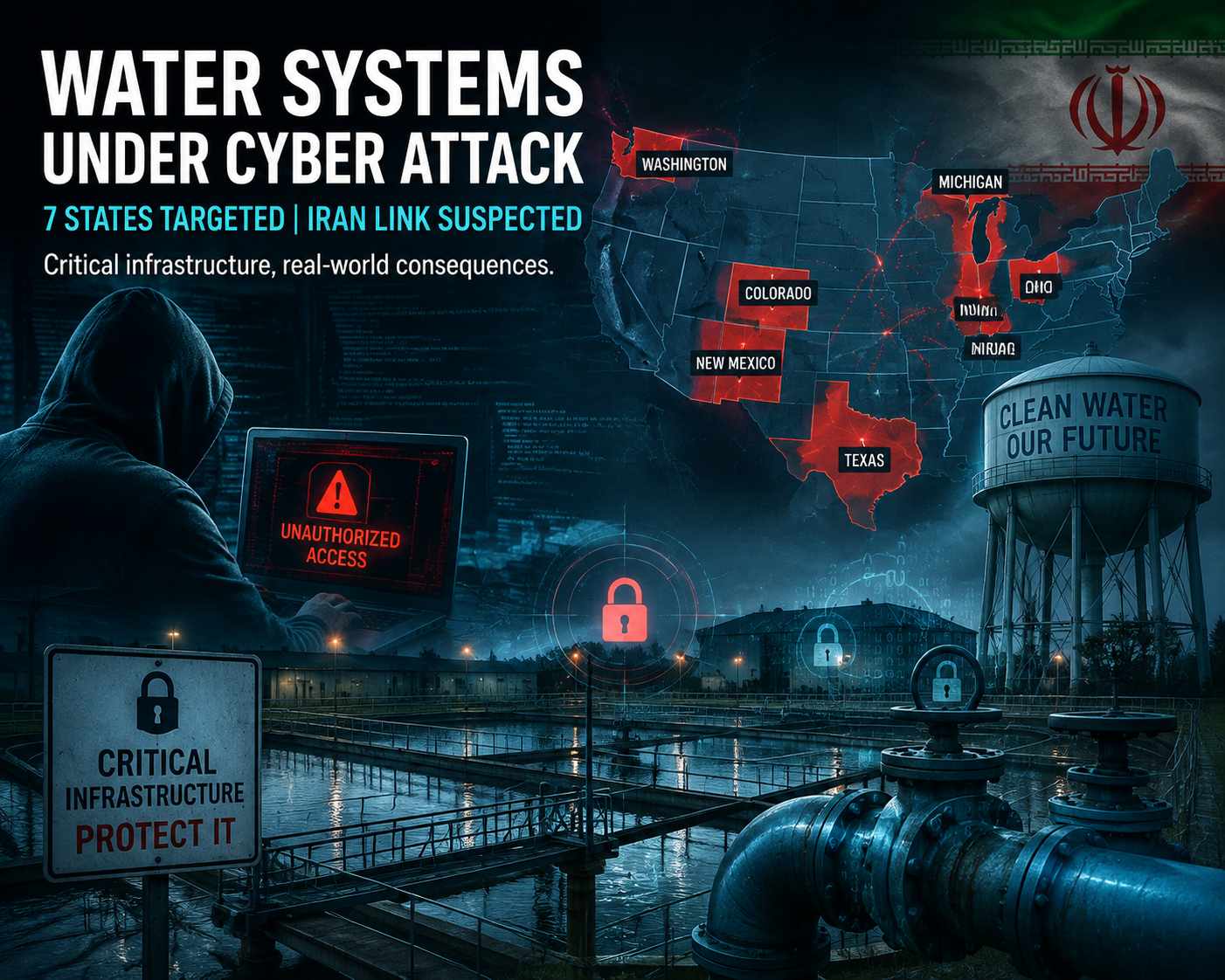
A hidden threat to an essential service
The reliability of clean water is a cornerstone of modern life, yet recent investigations reveal that this vital service has become a target for sophisticated cyber adversaries. Over the past month, water utilities in seven U.S. states reported unauthorised access to their supervisory control and data acquisition (SCADA) systems – the digital nervous system that monitors pumps, valves and chemical dosing. While the breaches have not yet caused widespread service disruption, the potential for manipulation of water quality or supply underscores a growing vulnerability in municipal infrastructure.
The pattern emerging across state lines
The states affected – Colorado, Indiana, Michigan, New Mexico, Ohio, Texas and Washington – share little in common geographically, but the technical fingerprints of the intrusions are strikingly similar. forensic analysis by the FBI and the Cybersecurity and Infrastructure Security Agency (CISA) identified identical malware families, command‑and‑control server addresses and attack timelines. The intrusion vectors largely involved phishing emails that delivered credential‑stealing tools, which were then used to log into remote access portals that many utilities still operate with legacy authentication methods.
Iranian involvement: evidence and implications
U.S. authorities have not formally assigned blame, but senior officials have hinted at a likely link to Iran’s cyber‑espionage apparatus. The rationale rests on three pillars: first, the malware variants match those previously attributed to the Iranian APT34 group; second, the command‑and‑control infrastructure is hosted in ranges historically used by Iranian actors; third, the timing of the attacks coincides with heightened diplomatic friction over nuclear negotiations, a pattern observed in earlier Iranian cyber campaigns targeting energy and transportation sectors.
While the evidence is compelling, it remains circumstantial. No public indictments have been filed, and Iran has denied involvement. Nevertheless, the attribution signals a shift in Iranian tactics toward targeting civilian infrastructure that, while less politically symbolic than power grids, can still inflict public anxiety and economic costs.
The weak points in municipal cyber defences
The attacks expose several systemic shortcomings. Many water utilities still rely on outdated operating systems and unpatched software, a legacy of budget constraints and the long life cycles of industrial control hardware. Remote access solutions, often deployed during the COVID‑19 pandemic to enable off‑site monitoring, were frequently configured without multi‑factor authentication or network segmentation, creating a single point of failure.