Military exchanges between the United States, Iran, and aligned regional factions have escalated sharply, pushing international benchmark Brent crude oil prices back above one hundred dollars a barrel for the first time since July [2, 3, 5]. This latest surge in geopolitical hostility threatens to complicate global economic stability, putting renewed pressure on central banks striving to tame persistent inflation [2]. As maritime transit corridors face severe disruptions and regional security deteriorates, policymakers and financial markets alike are forced to reckon with the widening aperture of a conflict that has now entered its sixth month [2].
Maritime Strikes and Tanker Destruction
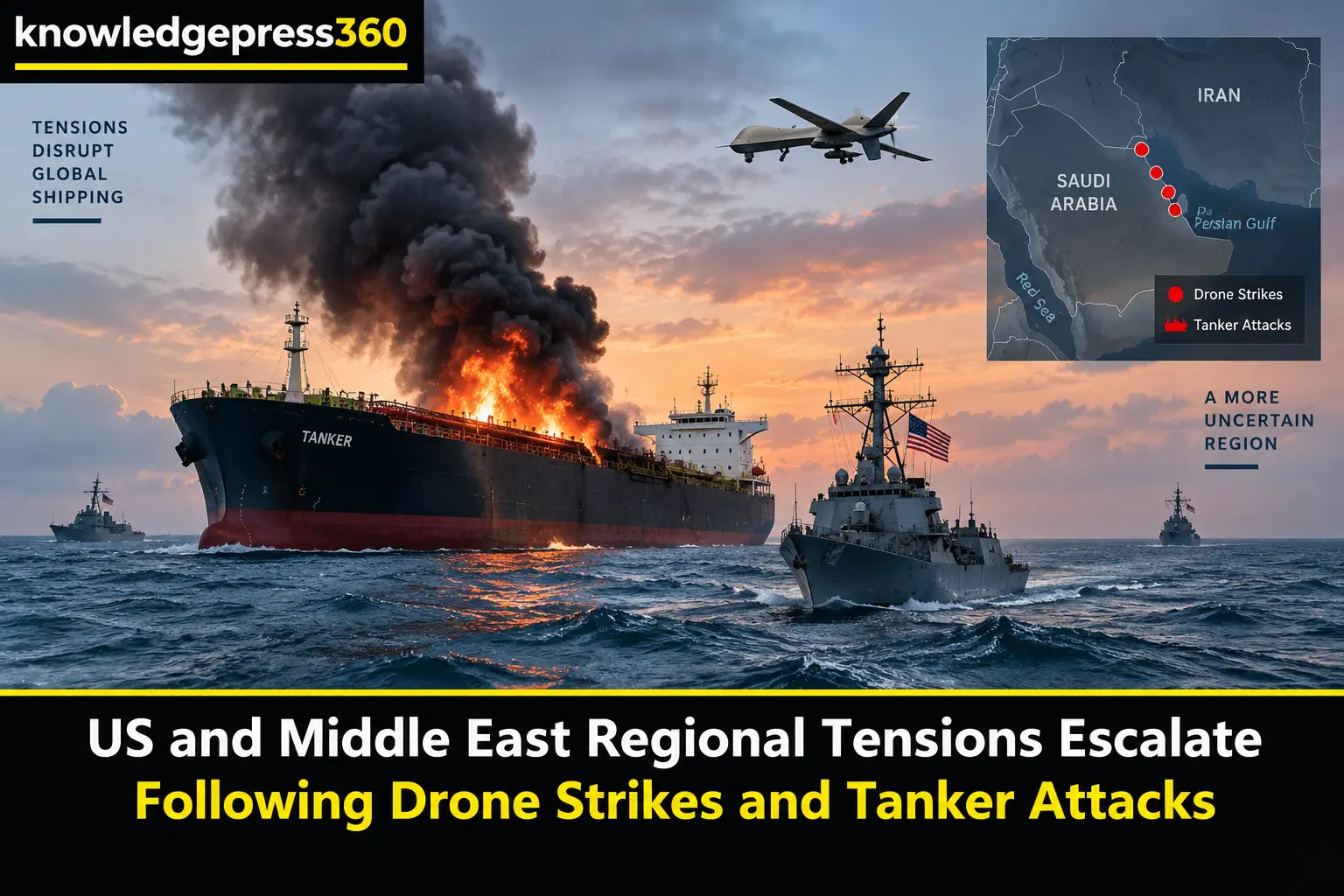
The most recent cycle of violence ignited after United States Central Command reported destroying five Iranian oil tankers, identified as the Kaviz, Charminar, Horizon 1, Riesco, and Derya [2, 5]. This military action was executed in direct retaliation for preceding missile attacks directed at a United States Navy warship operating in the region [2, 5]. In response to the sinking of its vessels, Iran's Islamic Revolutionary Guard Corps claimed responsibility for launching retaliatory missile strikes targeting the Muwaffaq Salti Air Base in Jordan [2, 5]. Jordanian armed forces confirmed that they successfully intercepted twenty incoming missiles, though two landed in unpopulated areas without causing casualties [5].
Concurrently, Yemen's Iran-aligned Houthi movement expanded the theater of operations by striking southern Saudi Arabian cities, including Khamis Mushait, Abha, Najran, and Jazan, using a barrage of drones and missiles . According to Saudi coalition statements, these raids wounded seventy-three civilians and triggered substantial fires at vital energy installations and utility sites . The conflict has severely restricted maritime traffic through the Strait of Hormuz, a critical global choke point carrying roughly twenty percent of worldwide oil and liquefied natural gas shipments . Furthermore, the Islamic Revolutionary Guard Corps announced controversial plans to enforce a new prohibited zone for commercial shipping extending past the strait into the Arabian Sea .