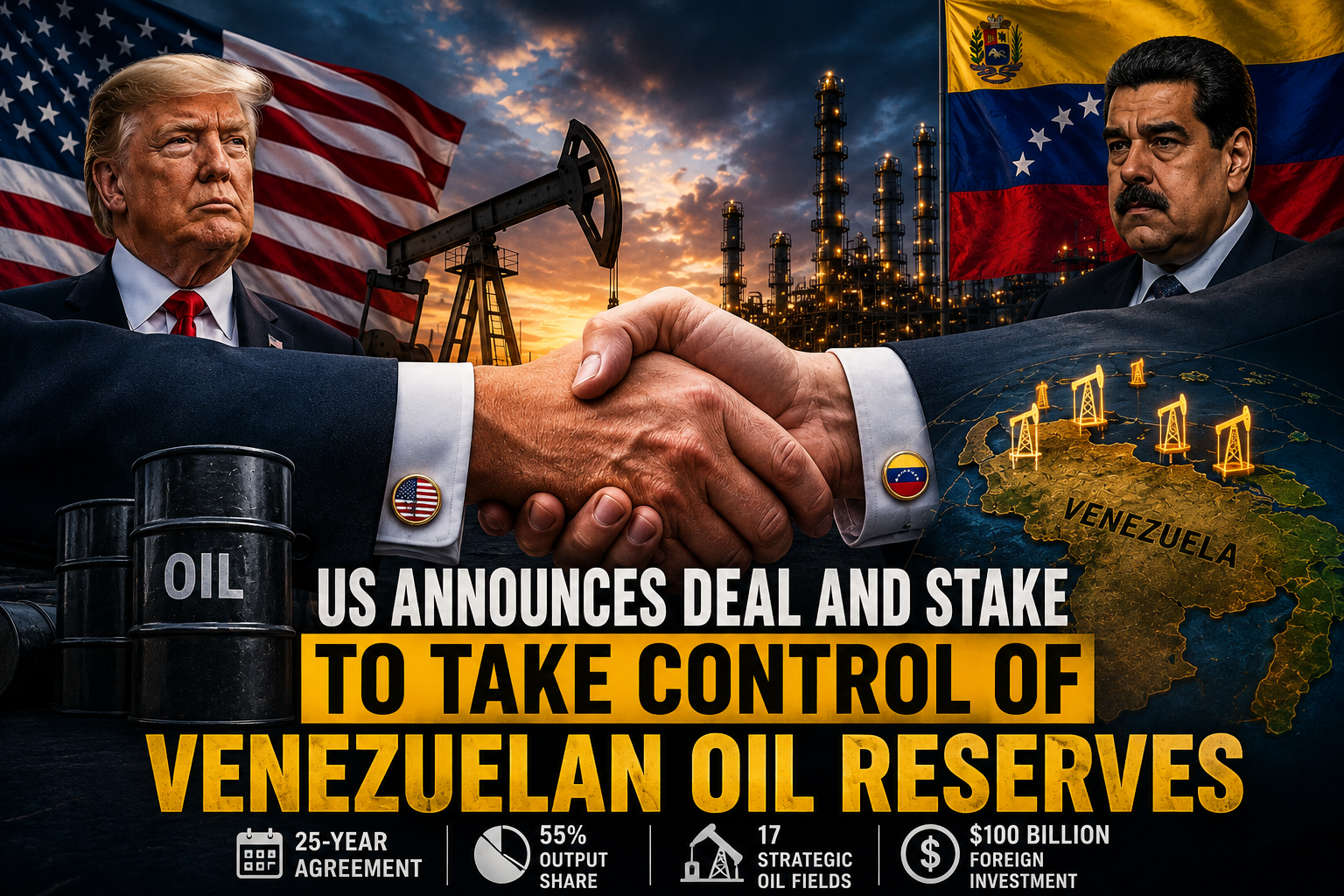
The United States administration has unveiled a landmark 25-year energy pact with Venezuelan interim authorities that grants Washington significant operational leverage over seventeen strategic oil fields. President Donald Trump promoted the arrangement as a historic milestone, orchestrated through high-level diplomacy involving Secretary of State Marco Rubio, Defense Secretary Pete Hegseth, and Venezuelan acting President Delcy Rodríguez. This major geopolitical and economic pivot arrives as the White House faces intense domestic pressure over elevated fuel prices and depleted national reserves, creating an urgent imperative to stabilize domestic energy markets. By securing a dominant foothold in South America, the administration aims to reshape global petroleum flows and alleviate consumer burdens amid ongoing international supply disruptions.
Terms of the Strategic Energy Pact and the 17 Venezuelan Oil Fields
The newly declared arrangement centers on seventeen specific oil fields estimated to hold a proven potential of sixty-five billion barrels of reserves. According to statements released by the White House and Venezuelan interim authorities, the pact establishes a novel corporate structure designed to channel massive capital into the region. Venezuelan officials have projected that the framework will attract approximately one hundred billion dollars in foreign investment while generating over two hundred and nine billion dollars in tax revenues for Caracas. A confidential U.S. official confirmed that the arrangement creates a new private enterprise partnering Washington with an unnamed operator, affording the venture a century-long development right. Under these parameters, the United States is positioned to command a fifty-five percent effective output share, which incorporates both an equity ownership stake and guaranteed rights to acquire petroleum at cost.
Geopolitical Pressures and Domestic Energy Constraints Driving the White House Strategy
This high-stakes agreement materializes nearly nine months following a decisive U.S. military intervention that removed former leader Nicolás Maduro from power. The urgency behind the pact is heavily compounded by challenging domestic economic indicators, including U.S. retail gasoline prices averaging approximately four dollars and nine cents per gallon toward the end of August. These pricing pressures have been drastically intensified by a protracted six-month conflict with Iran, which severely disrupted maritime transit through the critical Strait of Hormuz and drained U.S. strategic petroleum reserves to under three hundred million barrels. President Trump has maintained that tapping into Venezuelan crude will ultimately rebuild national stockpiles, insulate the domestic economy from foreign shocks, and lower everyday costs for American consumers.