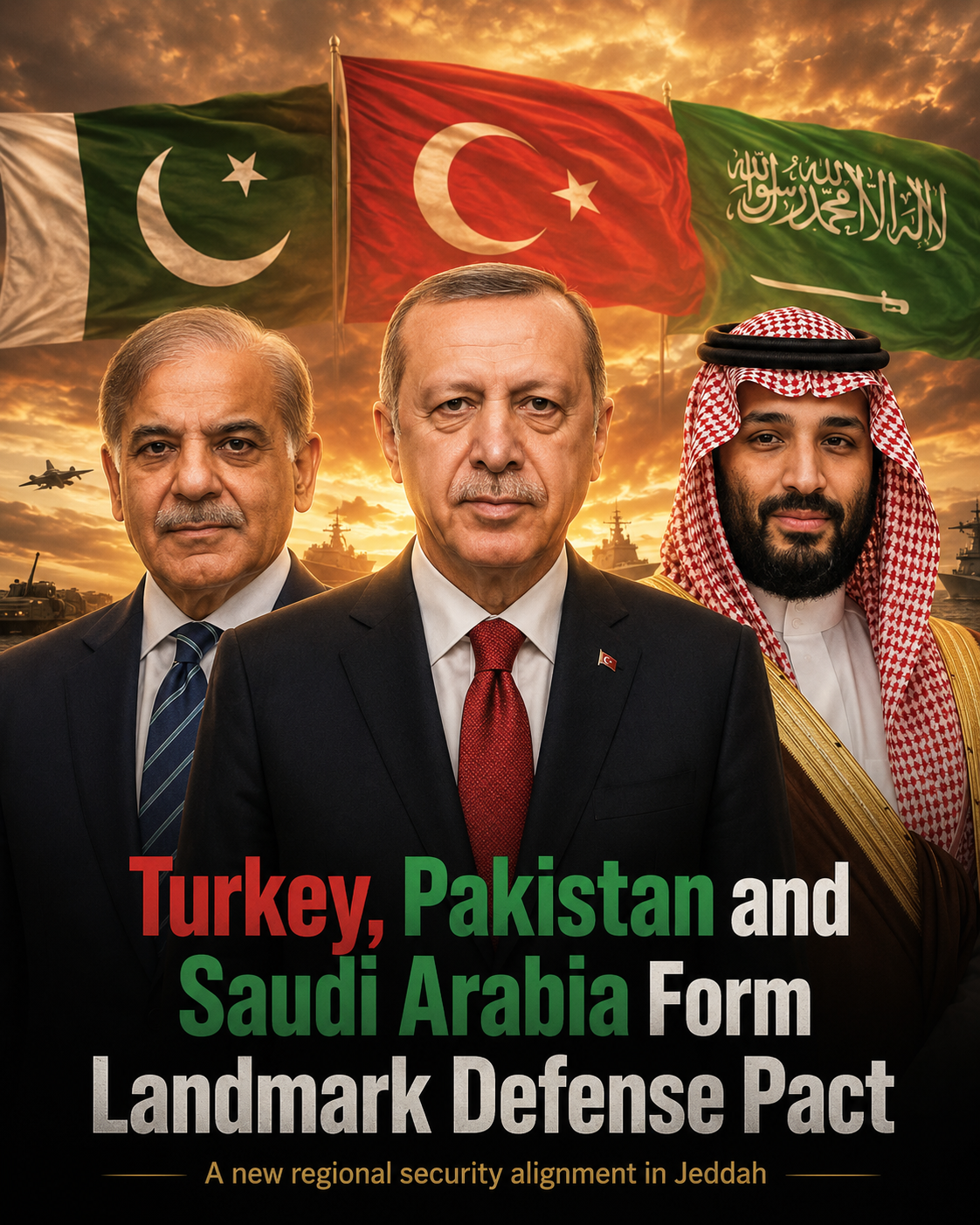
A significant realignment of international security is currently underway following the formalization of a landmark defense pact between Turkey, Pakistan, and Saudi Arabia. Signed in the strategic hub of Jeddah, the agreement binds three influential military powers across South Asia and the Middle East into a formal mutual defense framework. Turkish officials have drawn explicit parallels between the new accord and the collective security provisions found in the North Atlantic Treaty Organization, specifically referencing a model comparable to Article 5, where an attack on one signatory is treated as an attack on all. This unprecedented tripartite arrangement has immediately captured the attention of foreign ministries, defense analysts, and international relations experts worldwide, as it fundamentally challenges established security paradigms in an increasingly volatile global landscape.
The genesis of this defense pact reflects a shifting geopolitical environment where traditional alliances are being re-evaluated. For decades, regional security architectures in the Middle East and South Asia relied heavily on bilateral security arrangements or Western-led coalitions. By forging a direct alliance among themselves, Ankara, Islamabad, and Riyadh are charting an autonomous course. Saudi Arabia brings immense economic heft and strategic depth to the coalition, while Turkey contributes advanced defense manufacturing capabilities, drone technology, and a formidable military apparatus. Pakistan, a recognized nuclear-armed state with extensive conventional military experience, adds a crucial pillar of deterrence. Together, these nations create a formidable geopolitical bloc capable of projecting influence far beyond their immediate borders.
Despite the clear ambitions of the signatories, substantial uncertainty remains regarding the practical implementation of the treaty. Defense analysts note that significant questions linger about how operational command structures will function in practice. Coordinating military doctrines, communication systems, and intelligence-sharing protocols among three distinct armed forces with varied histories of cooperation presents a formidable logistical challenge. Furthermore, the mechanics of mutual defense obligations require precise definitions of what constitutes an act of aggression, how joint responses would be authorized, and who would hold ultimate strategic command during a crisis. Without transparent frameworks addressing these operational details, the pact risks remaining a powerful political statement rather than an immediately deployable military deterrent.
The broader international reaction to the Jeddah agreement is characterized by watchful caution. Regional rivals and global superpowers are carefully analyzing the long-term implications of the pact for ongoing conflicts and diplomatic balances in the Middle East. While proponents argue that the alliance will serve as a stabilizing force and a deterrent against external aggression, critics worry that it could heighten regional tensions, provoke counter-alliances, and further complicate delicate diplomatic equations. The involvement of diverse geopolitical actors means that any military friction involving one signatory could rapidly draw the other two into a wider conflagration, raising the stakes for regional stability.