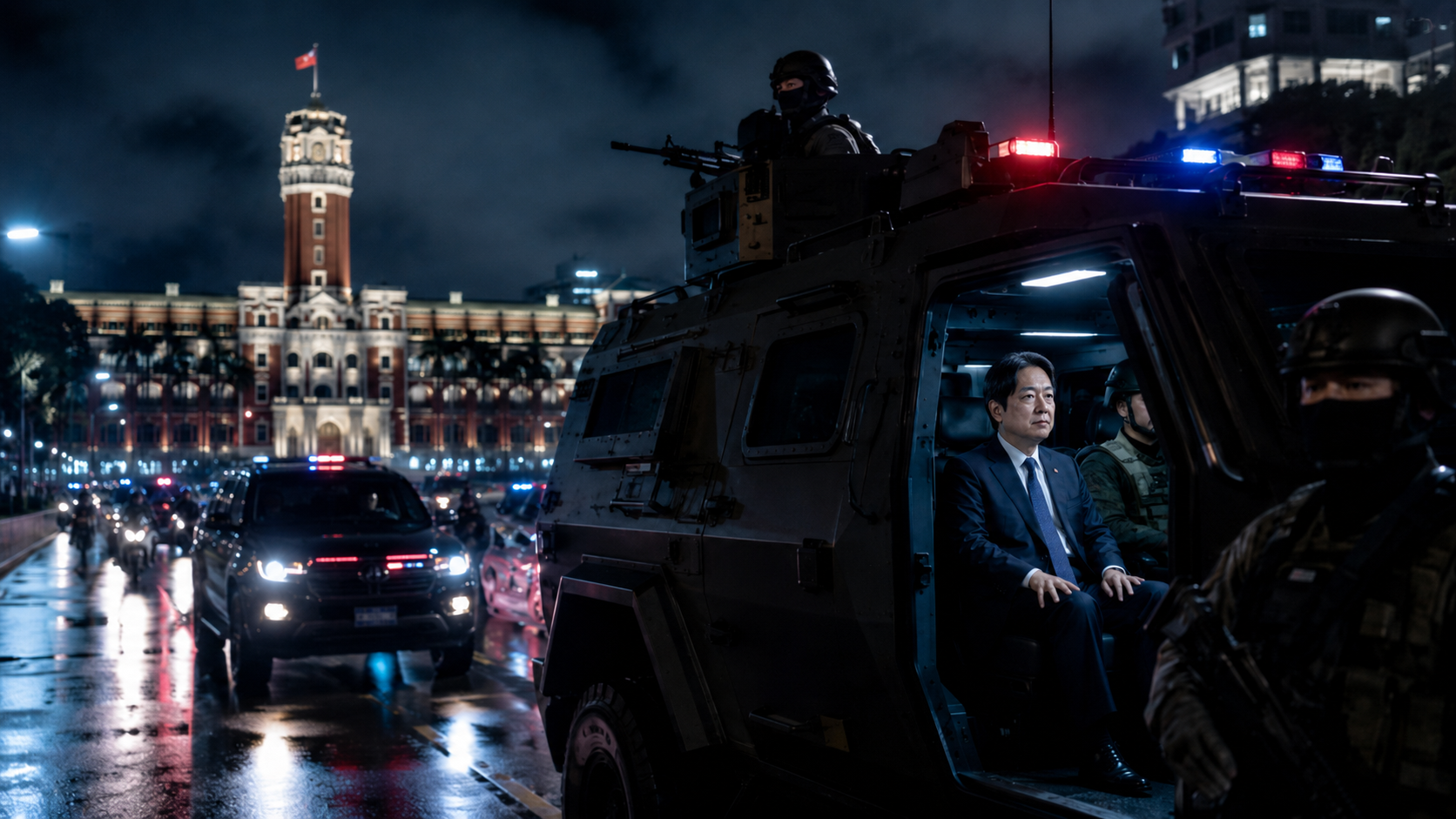
Taiwanese authorities have executed a high-stakes, overnight military evacuation drill featuring direct participation from the nation's president, highlighting an intensifying focus on leadership continuity and crisis management. This emergency simulation comes against a backdrop of escalating regional security concerns and persistent geopolitical posturing from Beijing. As security dynamics across the Taiwan Strait shift, testing the operational readiness of the highest levels of government has become an urgent priority for Taipei's defense planners.
Simulating Emergency Continuity of Government
The nocturnal exercise was specifically structured to evaluate the responsiveness and resilience of the presidential office and its integrated security apparatus during a sudden kinetic contingency. By embedding the head of state directly into the wartime protocol, defense architects aimed to validate evacuation pathways and command-and-control safeguards under realistic pressure conditions. Such simulations are critical for ensuring that executive functions can migrate seamlessly to secure secondary locations if primary command centers are compromised.
While routine civil defense operations frequently test public readiness, exercises focused strictly on the executive branch require meticulous coordination between military units, intelligence services, and internal security details. The overnight nature of the drill added an extra layer of complexity, forcing participants to navigate tactical movements under reduced visibility and compressed decision-making timeframes. These measures underscore a strategic shift toward hardening executive infrastructure against rapid-onset asymmetric threats.
Broader Defense Context and Recurring Drills
Taiwan routinely undertakes comprehensive civil-military exercises to prepare both leadership and the civilian populace for potential maritime blockades, targeted air strikes, or amphibious incursions. In recent years, the frequency and visibility of these drills have expanded markedly in response to sustained military pressure and frequent incursions into Taiwan's air defense identification zone by mainland forces. Leadership evacuation drills form a vital component of a layered deterrence strategy, signaling to regional adversaries that the government remains prepared for worst-case scenarios.
Despite the clear tactical intentions behind the exercise, certain operational vulnerabilities remain difficult to quantify. Defense analysts note that while high-level continuity plans are essential, scaling these protective measures to safeguard the wider civilian population presents a formidable logistical challenge. The seamless integration of executive protection protocols with broader urban evacuation frameworks requires continuous refinement and transparent public communication.