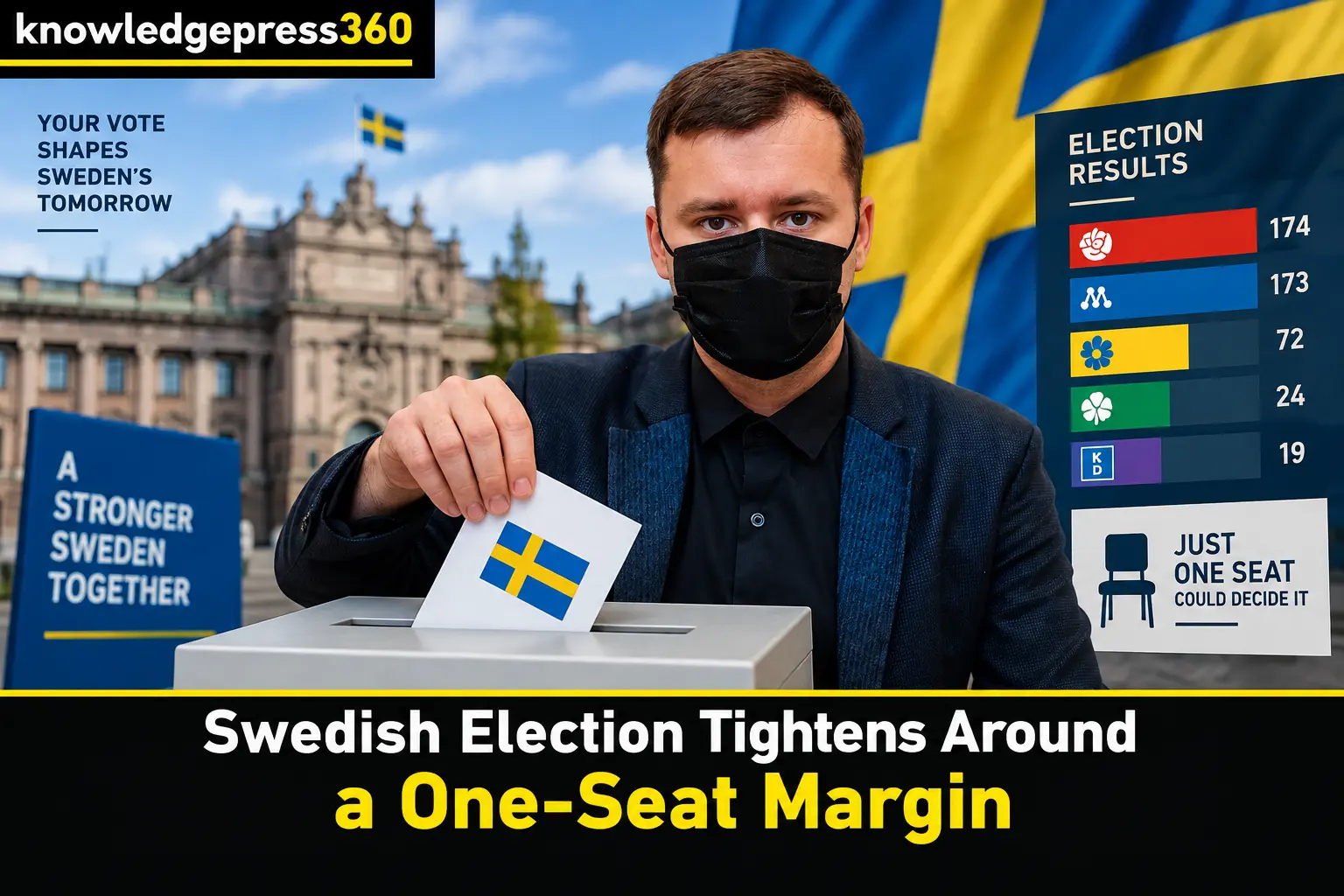
Sweden’s parliamentary election has entered its most critical phase as the nation watches a projected one-seat majority swing between the centre-left opposition and the incumbent right-wing alliance. With the vast majority of votes already counted, the Swedish Election Authority forecasts 176 seats for the Social Democratic-led bloc and 173 for Prime Minister Ulf Kristersson’s coalition. The narrow margin makes every remaining postal and overseas ballot a potential factor, and the outcome will shape Sweden’s policy direction on domestic and foreign issues.
Centre-Left Opposition Bloc Lead
The latest official update from the election authority shows the opposition coalition, headed by former prime minister Magdalena Andersson, edging ahead with a projected 176 seats in the 349-member Riksdag. This estimate is based on votes from the vast majority of Sweden’s election districts, leaving only a small number of districts and overseas votes uncounted. Andersson told supporters that, should the current trend hold, Sweden would get a new government. Her party, despite the lead, is on track for its lowest vote share in more than a century, hovering around 28 percent of the national vote.
Right-Wing Governing Alliance Ground
Prime Minister Kristersson’s four-party bloc is projected to secure 173 seats. The alliance has relied heavily on parliamentary support from the nationalist Sweden Democrats to achieve a majority, a partnership that has drawn substantial political attention. Kristersson acknowledged the tight race, stating that once the final tally is certified he will explore possible coalition configurations. He emphasised that a clear non-socialist economic majority still exists, suggesting that government formation remains open as counting proceeds.
Uncertainties From Overseas Ballots
The decisive factor now lies in the remaining postal and overseas ballots, which are not expected to be fully processed until later in the week. Analysts and election officials note that final certified tallies will determine whether the single-seat margin holds or shifts. Both political camps have urged patience while vote counting continues across the country, highlighting that the exact distribution of seats will only become clear once all districts and late arrivals are fully accounted for.
Coalition Talks and Negotiations
Regardless of which side ultimately secures the majority, Sweden faces a period of intensive coalition negotiations. Party leaders have noted that future government formation will require complex discussions once final numbers are certified. The upcoming talks will determine how parliamentary alliances are structured and how the country addresses key policy areas, including migration and economic management, under the next administration.