Precise, long-term observational records of the upper troposphere and stratosphere are fundamental to modern atmospheric science, serving as the empirical bedrock for understanding global climate shifts. When international researchers convene to evaluate orbital monitoring equipment, the outcomes directly influence how scientists track trace gases and particulate matter high above the Earth. Recent gatherings of specialized instrument teams highlight the continuous refinement required to maintain high-fidelity datasets that inform predictive models and environmental policy frameworks worldwide. As planetary systems experience pressures from natural and anthropogenic events, the ability to secure accurate, vertically resolved measurements becomes increasingly urgent for researchers attempting to forecast future atmospheric conditions.
Ninth Annual Science Team Meeting
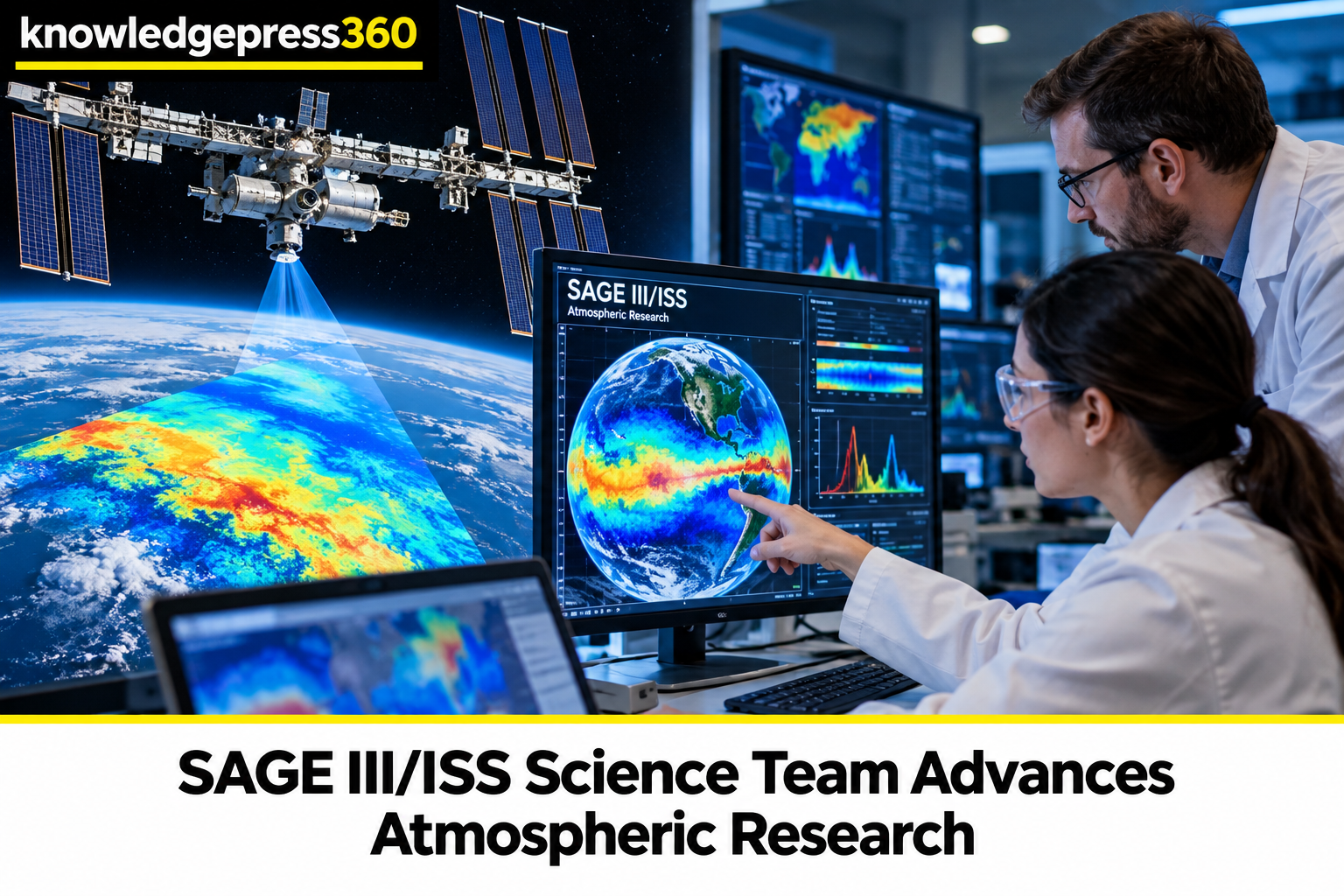
The ninth annual science team meeting for the Stratospheric Aerosol and Gas Experiment III on the International Space Station brought together approximately 60 scientists and engineers. Held from August 19 to 20, 2026, at NASA Langley Research Center in Hampton, Virginia, the hybrid gathering facilitated comprehensive evaluations of instrument performance, data processing pipelines, and algorithm refinement. Participants represented a broad coalition of institutions, including NASA Langley, the Goddard Space Flight Center, the Jet Propulsion Laboratory, and various National Oceanic and Atmospheric Administration laboratories, alongside academic bodies such as the University of Saskatchewan and the Royal Belgian Institute for Space Aeronomy. This collaborative environment enabled experts to assess ongoing mission achievements and discuss optimization strategies for continuous spaceborne observation.
Expanding Aerosol Product Capabilities
Central to the discussions in Virginia were significant updates regarding mission data outputs and calibration schedules. The mission is actively progressing toward releasing expedited aerosol products within calendar year 2026, followed by comprehensive standard product improvements designated as version 6.1, slated for release in calendar year 2027. Furthermore, researchers are currently developing a specialized nighttime lunar occultation aerosol product designed to effectively augment the existing solar aerosol dataset. By leveraging moonlight to probe the atmosphere, the mission aims to broaden its observational window and capture dynamic chemical and physical processes that occur away from direct sunlight, thereby enhancing the overall depth of stratospheric records.
Cross Instrument Data Integration
Beyond standalone mission achievements, the observational datasets generated by the orbiting instrument serve as a critical anchor for broader atmospheric investigations. SAGE particle-size information is increasingly utilized by researchers to refine aerosol retrieval algorithms across a diverse suite of complementary international instruments, including OMPS-LP, OSIRIS, and systems aboard STRIVE, HAWC, and ALTIUS. Vertically resolved measurements remain indispensable for detecting long-term shifts in atmospheric ozone, water vapor, and particulate concentration. Major natural perturbation events, such as the 2022 Hunga eruption and the extensive 2020 Australian fires, have functioned as vital natural laboratories, allowing scientists to cross-validate these satellite observations against balloon payloads and ground-based monitoring networks.