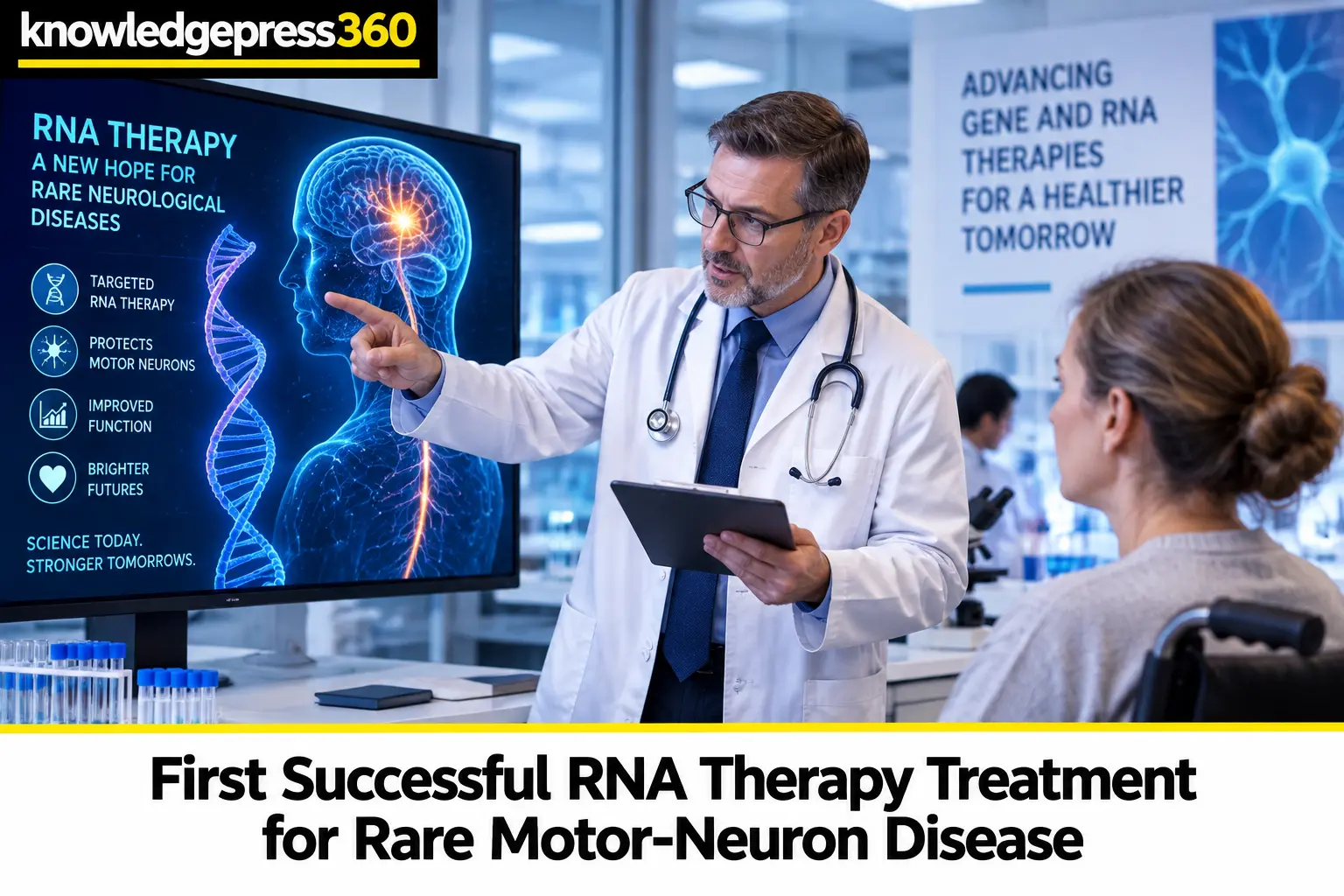
Amyotrophic lateral sclerosis remains one of the most devastating neurological conditions known to modern medicine. With average life expectancies hovering between two and five years post-diagnosis and no existing cure, current clinical options offer little more than modest symptom management. This stark reality underscores why a recent medical breakthrough involving a custom-designed genetic intervention has captured the attention of the global neurological research community. For the first time, a patient with a rare, slow-progressing form of the disease has shown measurable clinical improvement following an innovative RNA-targeted therapy.
Custom RNA Targeting Rare Mutations
The treatment centers on a tailored antisense oligonucleotide approach designed for a specific genetic driver of motor neuron degeneration. Unlike traditional gene therapies that attempt permanent alterations to a patient's DNA, antisense oligonucleotides utilize short strands of synthetic genetic material to bind with messenger RNA. This precise molecular interaction effectively intercepts the genetic instructions before toxic proteins can be manufactured within vulnerable cells. The patient, a working physician living with a rare mutation in the CHCHD10 gene, received the experimental treatment under strict clinical supervision. This specific genetic anomaly causes a destructive accumulation of proteins that eventually overwhelms and destroys motor neurons. By interceding at the RNA level, researchers aimed to slow or halt the cellular destruction at its source, offering a new paradigm for addressing genetically driven neurodegenerative conditions.
Dosing Regimens and Biological Markers
Between April 2024 and April 2025, the participant received a carefully calibrated series of six spinal injections. The treatment protocol began with three initial doses of 50 milligrams each, followed by three subsequent doses increased to 75 milligrams. Throughout this twelve-month administration window, the therapy demonstrated a favorable safety profile with no serious adverse side effects reported by the clinical team. Biological evaluations conducted one year after the initial treatment revealed striking results. The patient's blood levels of neurofilament light chain proteins, a widely recognized molecular indicator of active neuronal damage, returned entirely to normal reference ranges. Furthermore, standardized clinical evaluations measuring motor performance, respiratory capacity, and overall neurological function demonstrated that the patient's condition had either improved or remained remarkably stable over the observation period.
Evaluating Efficacy Across Larger Cohorts
Despite the encouraging clinical trajectory of this single case, independent neurological experts urge caution against premature celebration. Researchers emphasize that it remains entirely unknown whether the antisense oligonucleotide therapy can completely halt disease progression or serve as a permanent cure. Establishing definitive proof of efficacy will require extensive multi-year monitoring of the current participant alongside expanded clinical trials involving significantly larger patient cohorts. Scientists must determine whether the positive outcomes observed in this isolated CHCHD10 mutation case can be replicated across other rare and common genetic variants associated with motor neuron diseases. Furthermore, researchers need to establish standardized dosing protocols that maximize therapeutic benefits while mitigating any long-term cumulative risks associated with repeated spinal administrations.