A global tribute set for the stars
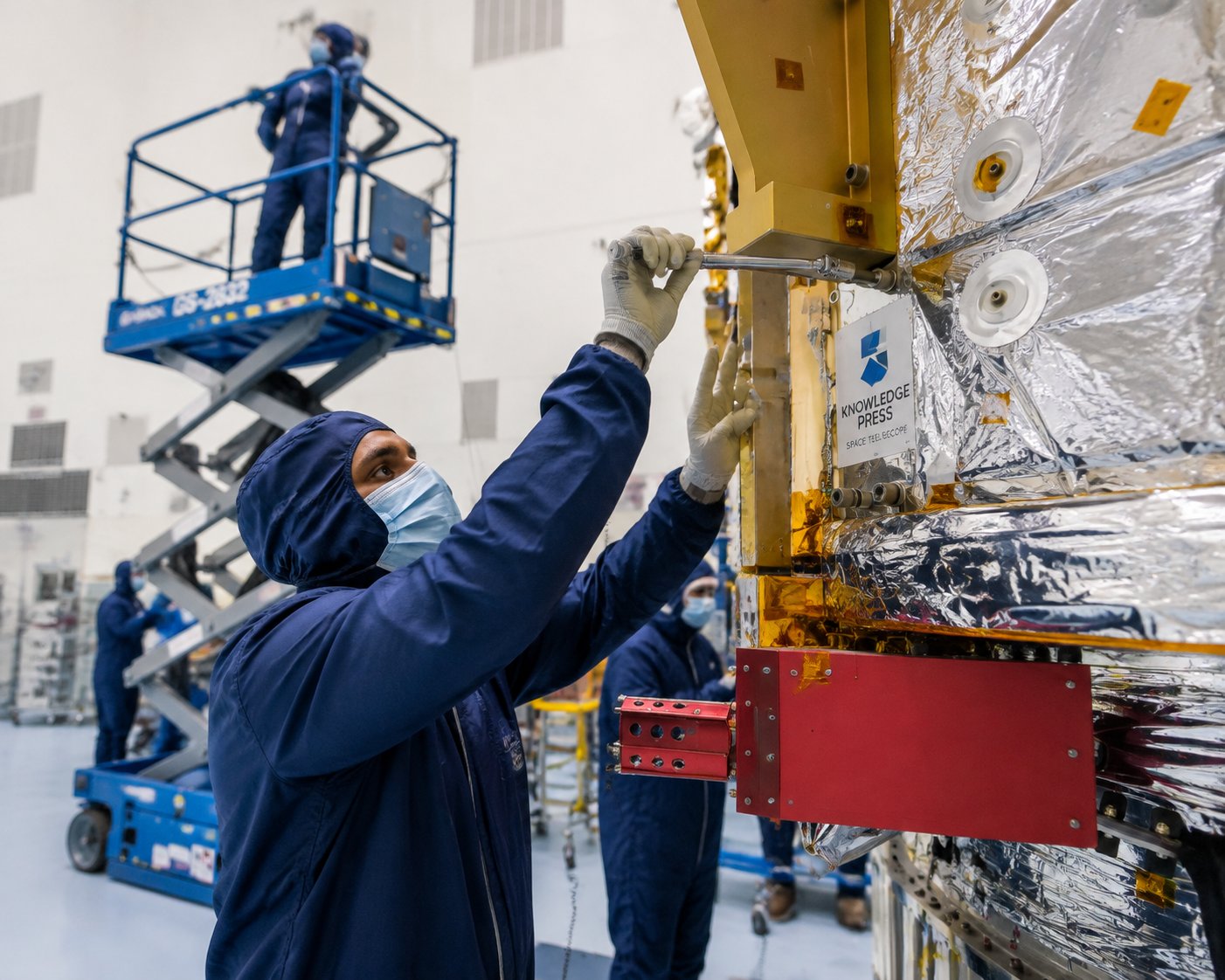
On 27 July, engineers at Kennedy Space Centre in Florida performed a quiet but symbolic act: they installed a memory card holding 1,350,144 individual names into a commemorative plaque destined for the Nancy Grace Roman Space Telescope. The names – submitted by members of the public, school groups and even astronauts slated for Artemis II and Artemis III – will accompany the observatory on its journey to the Sun‑Earth Lagrange point 2 (L2), some one million miles from Earth.
The gesture transforms a cutting‑edge scientific instrument into a time‑capsule of humanity’s collective curiosity. While the telescope will spend its operational life scanning the distant universe, the embedded card will silently record the aspirations of millions who have asked, “Will you take my name to space?”
The Roman Telescope: a tribute to a pioneer
The observatory bears the name of Dr Nancy Grace Roman, NASA’s first chief astronomer and a driving force behind the agency’s modern astrophysics programme. In the 1960s Roman advocated for space‑based telescopes that could peer above Earth’s turbulent atmosphere, a vision that later materialised as the Hubble Space Telescope and now the Roman Telescope. Her legacy is two‑fold: pioneering the technology for deep‑space observation and championing open‑access data for the global scientific community.
Roman’s namesake telescope will be the most powerful wide‑field infrared observatory ever launched. Its 2.4‑metre primary mirror, matching Hubble’s in size but equipped with a vastly larger field of view, is designed to map dark energy, survey exoplanets and trace the formation of galaxies across cosmic time. By situating the telescope at L2, engineers can keep its sunshield permanently pointed toward the Sun, ensuring a stable thermal environment and uninterrupted view of the heavens.
From launch pad to L2: the logistics
NASA and SpaceX have pencilled the launch for no earlier than 07:26 a.m. EDT on 30 August. The vehicle of choice is a Falcon Heavy lifting off from Launch Complex 39A, the historic pad that saw Apollo‑era rockets and later Space Shuttle missions. Once in orbit, the spacecraft will perform a series of burns to place the Roman Telescope into a halo orbit around L2 – a gravitational sweet‑spot where the pull of Earth and the Sun balance, allowing a spacecraft to remain relatively stationary with respect to both bodies.
The memory card, sealed within a plaque on the telescope’s exterior, will be protected from radiation and temperature extremes. Though the card does not carry any operational data for the mission, its presence underscores a growing trend of public engagement: embedding human stories within the hardware that explores the cosmos.