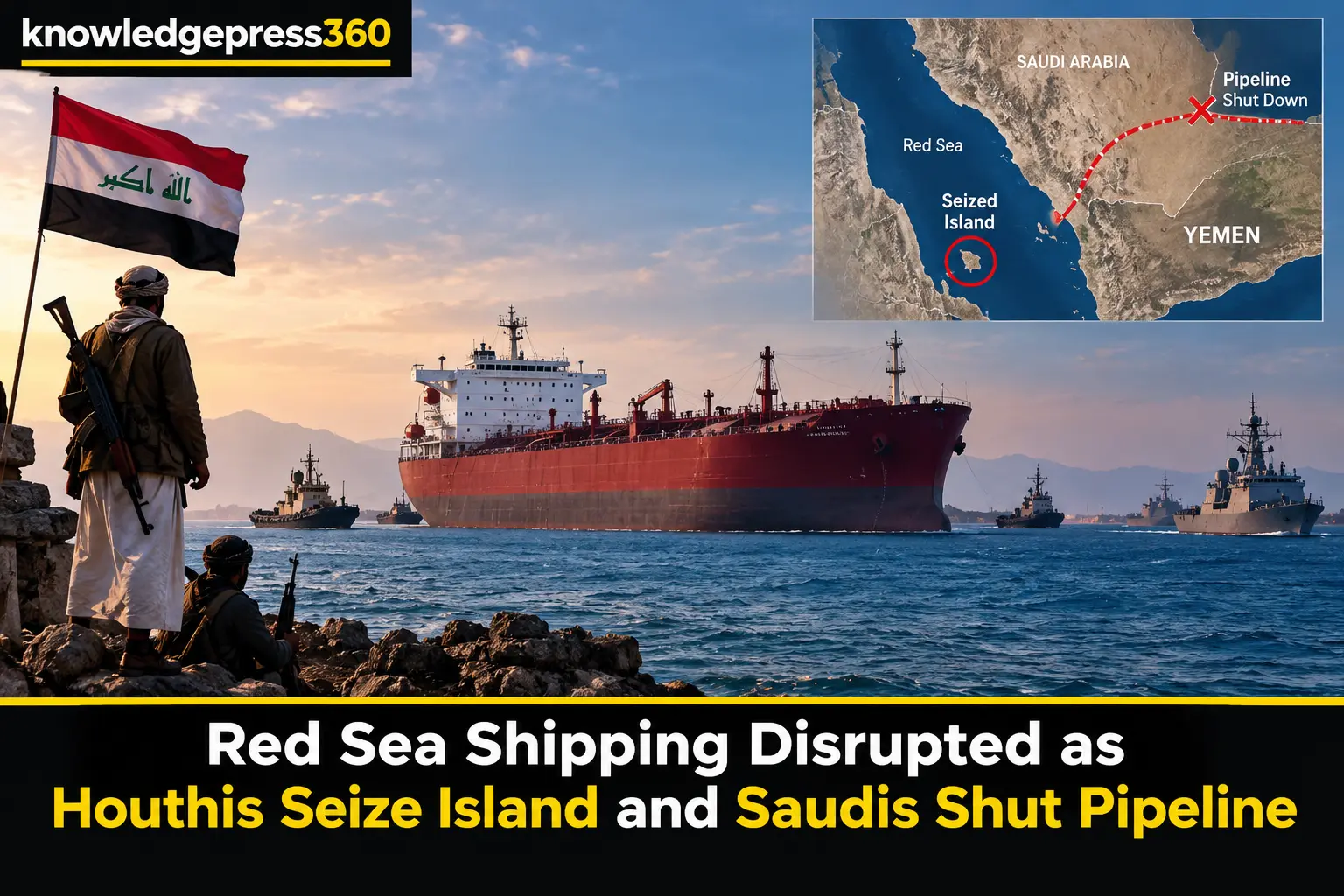
Global energy markets and maritime security face intense new pressures following a coordinated series of escalations in the Middle East. Yemen's Iran-backed Houthi rebels have executed a significant territorial advance by seizing Perim (Mayun) Island at the southern entrance to the Red Sea within the strategic Bab el-Mandeb Strait. Concurrently, Saudi Arabia announced the temporary shutdown of its vital East-West oil pipeline following a drone strike that the Saudi Foreign Ministry stated originated from Iraq. These developments have compressed critical trade arteries, driving global crude oil prices back above one hundred dollars per barrel and intensifying diplomatic pressure on regional governments and international allies. Understanding the full scope of these events requires examining the strategic geography of the region, the immediate military and political repercussions, and the persistent vulnerabilities exposed across global supply chains.
Seizing the Bab el-Mandeb Strait
The capture of Perim Island marks a major territorial milestone for the Houthi movement. Located at the narrow maritime chokepoint connecting the Red Sea to the Gulf of Aden, the island commands the southern approach through which millions of barrels of oil and commercial goods pass daily. Yemeni pro-government forces withdrew from the territory, allowing Houthi units to consolidate control over the waterway. Houthi military spokesman Yahya Sarea stated that the large-scale operation was launched in response to ongoing coalition actions, asserting that maritime navigation remains safe for general commercial traffic while explicitly maintaining threats against vessels linked to Saudi Arabia. This consolidation of power along the waterway grants the insurgent group substantial leverage over international trade routes connecting Asian manufacturing hubs with European consumer markets.
Halting the East-West Pipeline
While the maritime route faced mounting pressure, Saudi Arabia's energy infrastructure sustained a direct blow inland. The kingdom announced the temporary suspension of operations along its major East-West oil pipeline as a precautionary safety measure following a drone attack. Built during the nineteen-eighties, the pipeline serves as an indispensable artery allowing the world's largest oil exporter to transport crude directly to Red Sea terminals, bypassing Persian Gulf bottlenecks such as the Strait of Hormuz. The Saudi Foreign Ministry reported that the drones used in the strike originated from Iraqi territory. In response, Saudi Crown Prince Mohammed bin Salman personally pressed United States President Donald Trump for direct military intervention against the Houthi movement, though Washington declined direct military engagement, offering intelligence and targeting support instead.
Diplomatic Friction Across Iraq
The revelation that the strike originated from Iraqi soil triggered immediate diplomatic fallout and internal security investigations. The Iraqi government formally condemned the drone attack, announcing a comprehensive security inquiry and removing the operations commander in the Maysan governorate after confirming the launch site. Regional officials noted that the Houthis had previously coordinated with allied militias within Iraq to orchestrate similar cross-border operations. Despite these tensions, Saudi Arabia opted to withhold immediate military retaliation, choosing instead to grant the Baghdad administration adequate time to complete its investigation and take corrective action against rogue factions operating within its borders.