Maintaining a permanent human outpost in low-Earth orbit requires a continuous, carefully orchestrated flow of logistics, making every successful cargo delivery a vital milestone for station operations. The safe arrival of essential provisions ensures that scientific research and daily life aboard the orbital laboratory continue without disruption. This delicate choreography of spaceflight was demonstrated once again as a robotic resupply vehicle completed its multi-day journey to meet the orbiting complex, securing crucial supplies for the international crew currently living and working high above our planet.
Successful Orbital Docking Mission
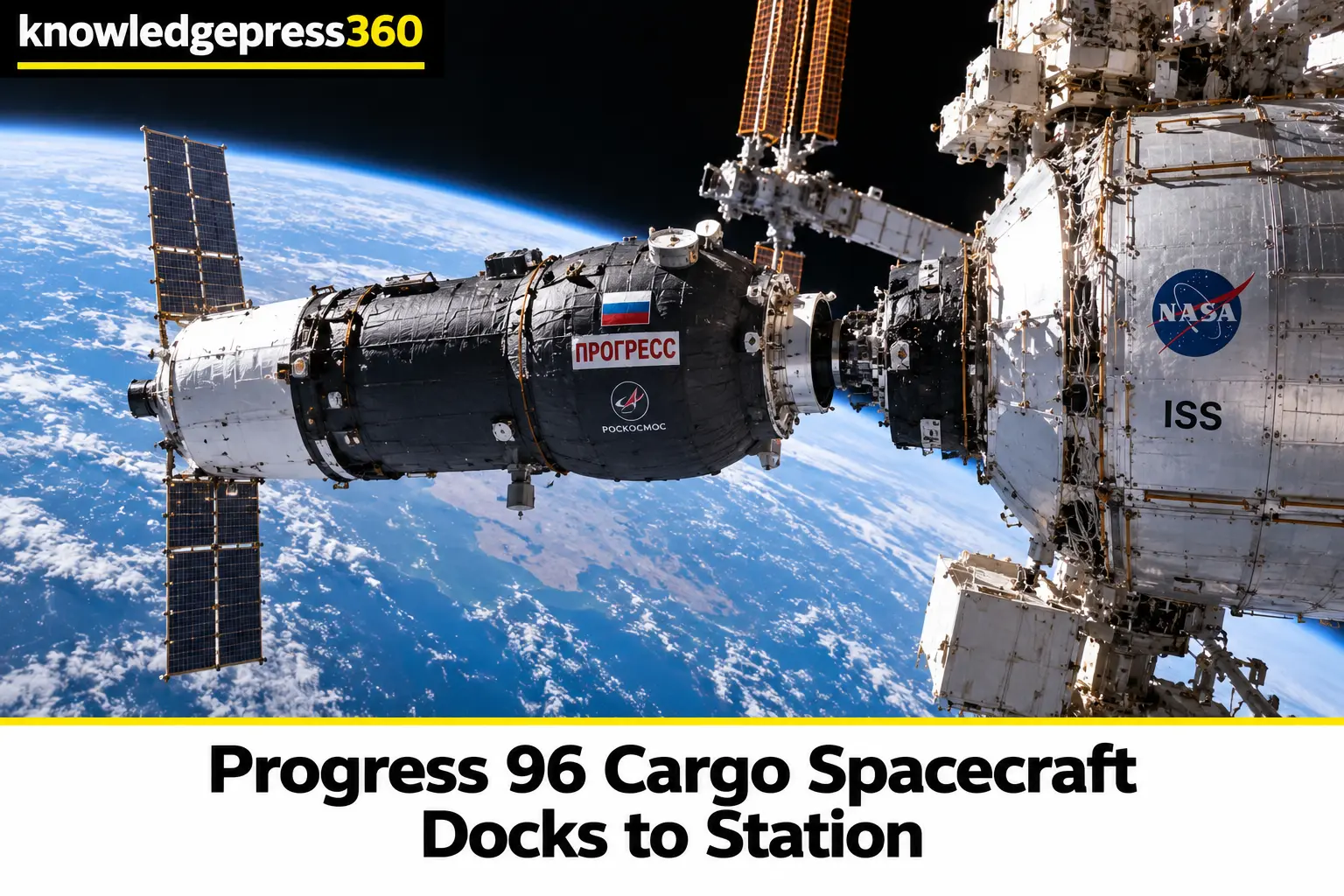
The robotic Progress 96 cargo spacecraft successfully completed its automated rendezvous with the International Space Station, establishing a firm connection with the space-facing port of the outpost's Poisk module. The precise orbital mechanics culminated on September 19, 2026, at 9:44 a.m. Eastern Daylight Time, while the two structures were travelling at high velocities approximately 418 kilometres above the Black Sea. This docking marked the end of a meticulously managed three-day chase through space following the freighter's departure from Earth. The smooth integration of the automated vehicle into the station architecture highlights the ongoing reliability of routine transport procedures used to support crewed orbital missions.
Launch and Cargo Delivery
Liftoff for the resupply mission took place on September 16, 2026, when the Progress 96 spacecraft roared away from the pad atop a reliable Soyuz rocket originating from the Baikonur Cosmodrome in Kazakhstan. Inside the pressurised cargo compartment, the freighter carried approximately three tons of vital goods, including fresh food supplies, propellant, and essential equipment necessary for the inhabitants of the orbiting complex. These provisions directly support the seven-member Expedition 75 crew currently aboard the laboratory, a diverse international team comprising NASA astronauts Jack Hathaway, Jessica Meir, and Anil Menon, European Space Agency astronaut Sophie Adenot, and Roscosmos cosmonauts Pyotr Dubrov, Andrey Fedyaev, and Anna Kikina.
Operational Constraints and Logistics
While the current mission proceeds smoothly, managing a fleet of uncrewed resupply vessels involves careful long-term planning and strict operational constraints. Unlike reusable spacecraft such as SpaceX's Dragon capsule, standard logistics vehicles like the Russian Progress, Northrop Grumman's Cygnus, and Japan's HTV-X are designed for a single use. Consequently, specific scheduling details for subsequent resupply flights must be balanced against station storage capacities and orbital traffic. Furthermore, exact timeline details regarding final disposal operations and atmospheric burn-up are established well in advance to ensure the safety of the complex and avoid orbital congestion.