The annual arrival of the Perseid meteor shower offers one of the most reliable and spectacular astronomical displays of the calendar year. Skywatchers across the globe are turning their attention toward the heavens as Earth cuts directly through a dense stream of orbital debris. For astronomy enthusiasts and casual observers alike, this celestial event represents a unique opportunity to witness planetary dynamics in real time. Favorable lunar conditions and clear weather windows in many regions have combined to create an optimal environment for stargazing, drawing public interest back to the wonders of the night sky and inspiring renewed appreciation for our solar system's active environment.
When and Where to Watch the Perseids
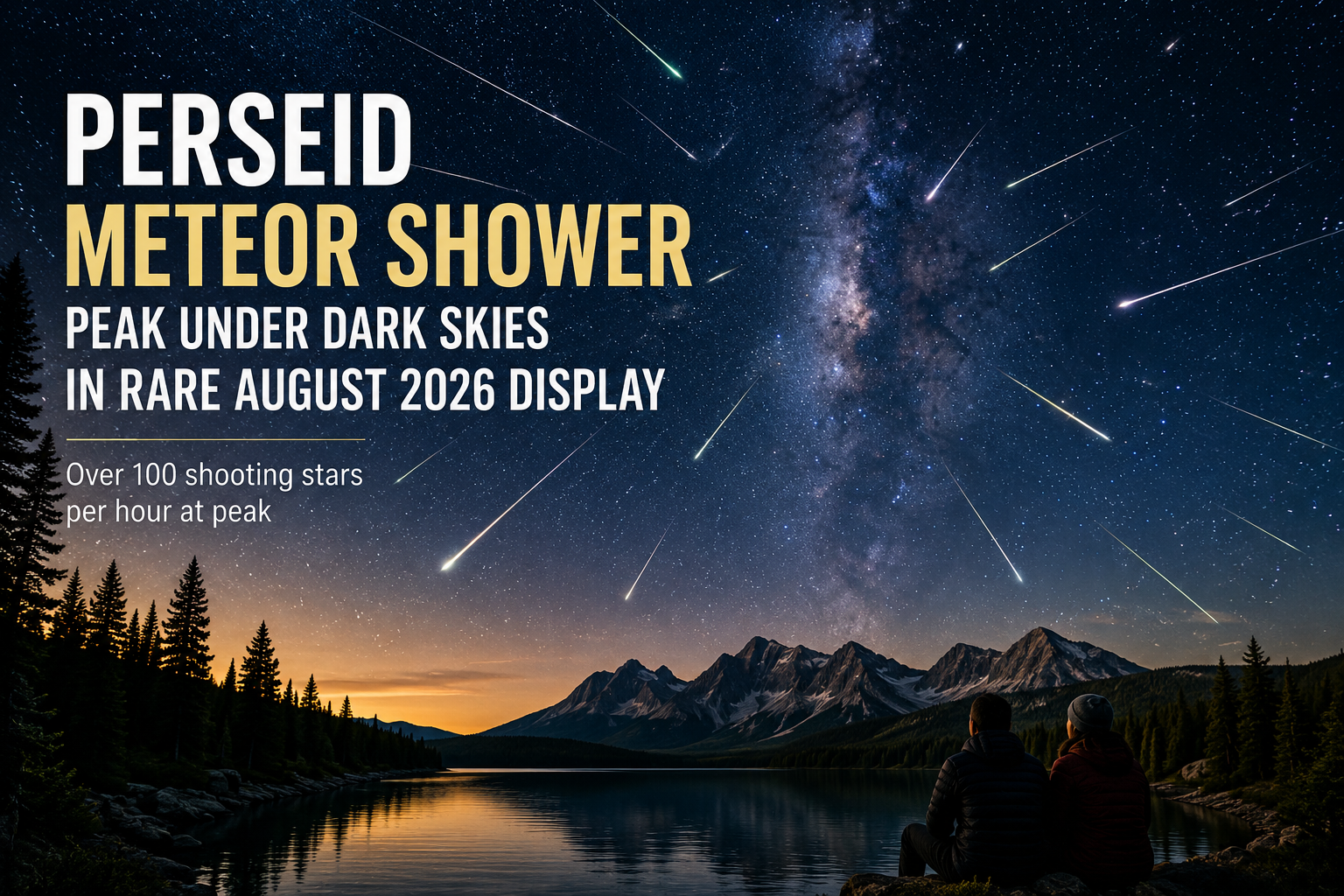
The Perseid meteor shower has returned to peak in mid-August 2026, delivering an exceptional celestial display under favorable viewing conditions. This year features a rare astronomical coincidence that significantly enhances visibility. A new moon occurring on August 12 ensures that there is no bright moonlight to obscure fainter meteors, maximizing contrast for observers equipped with dark-adapted eyes. Furthermore, in the UK, a deep partial solar eclipse occurring in the early evening of August 12 preceded the overnight meteor display, creating what scientists describe as a striking cosmic coincidence. While much of England and Wales enjoys largely clear skies with minor mist patches, parts of northern England, Northern Ireland, and Scotland face cloudier conditions and intermittent showers that challenge local visibility.
Why the 2026 Perseids Are Especially Favorabl
The Perseid meteor shower is caused by Earth passing through debris left behind by the comet Swift-Tuttle. The comet Swift-Tuttle has a solid core measuring 16 miles (26 km) across and takes 133 years to complete a single orbit around the Sun. Because of this extended orbital period, some of the rock particles burning up in our atmosphere were shed more than a century ago, acting as a slow-moving cosmic clock for the inner solar system. The peak of the 2026 Perseid meteor shower occurs in the early morning hours between midnight and dawn on August 12 and August 13. Viewers can potentially see more than 100 shooting stars per hour during the peak under optimal, dark-sky conditions. Astronomers note that specialized equipment such as telescopes or binoculars is entirely unnecessary, as the naked eye provides the widest possible field of view for spotting fast-moving streaks of light across the constellations.
How Comet Swift-Tuttle Creates the Meteor Shower
While the theoretical parameters for this year's shower are exceptionally favorable, practical observation remains subject to local environmental factors. Local micro-meteorological shifts and unexpected cloud cover can materialize rapidly on peak nights, obscuring viewing opportunities in specific regional corridors. Exact final counts of hourly meteor activity and fireball frequency vary depending on precise geographic location, atmospheric clarity, and local light pollution levels. Institutional collaborations, including tracking efforts by astronomical groups, continuously monitor these variables to understand dust trail density. However, individual observers frequently encounter localized discrepancies between broad regional forecasts and the actual cloud cover overhead during the pre-dawn hours.