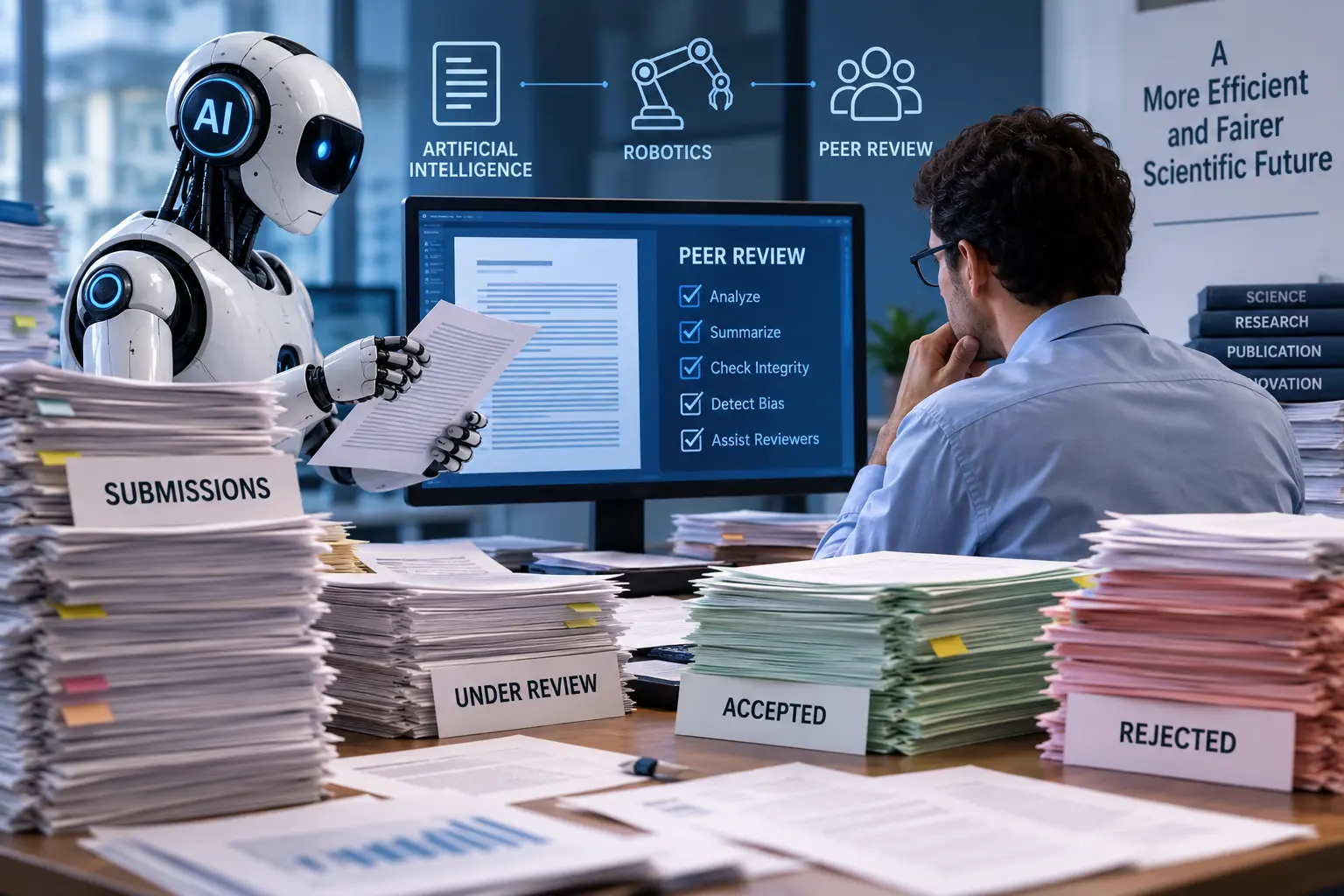
The global academic publishing ecosystem is facing an unprecedented bottleneck, driven by an exponential explosion in manuscript submissions that threatens the foundational integrity of scientific validation. As overworked researchers struggle to keep pace with an ever-expanding library of literature, the scientific community is increasingly turning to artificial intelligence and large language models for relief. While these advanced digital tools offer remarkable potential to streamline the grueling mechanical tasks of literature reviews, their integration into academic publishing introduces complex risks. From deceptive hallucinations to a manufactured sense of scientific understanding, relying on automated systems without strict human oversight presents profound challenges for the future of scholarly research.
Surviving the Paper Deluge at the International Conference on Robotics and Automation
The compounding strains of this academic overload were brought into sharp focus during a panel titled Surviving the Paper Deluge, held at the IEEE International Conference on Robotics and Automation. Chaired by Aude Billard, the discussion addressed the staggering volume of new literature flooding major publishing venues within the IEEE Robotics and Automation Society. According to data presented at the event, publication numbers have surged along a roughly exponential curve that began around 2017. Current estimates suggest that approximately 70,000 papers containing the word robotics were published in 2025 alone.
This unrelenting deluge creates a distinct vulnerability for robotics, a discipline that depends fundamentally on cross-disciplinary integration. Unlike fields where extreme specialization serves as a viable survival strategy, robotics requires the seamless synthesis of perception, control, manipulation, learning, hardware, interaction, safety, and deployment. When the volume of new research outpaces human reading capacity, scholars risk retreating into narrow silos, potentially fracturing the holistic nature of the field and obscuring critical connections between disparate domains.
Automating Literature Reviews and Evaluating Research Yield in Modern Publishing
To measure the actual depth of this publishing boom, researchers have begun conducting rigorous audits of contemporary output. A case study presented by Kunpeng Yao, funded by the IEEE RAS Science and Technology Watch Board, evaluated a targeted set of 2024 learning-from-demonstration papers. Out of 347 screened studies, the evaluation revealed that only about 20 percent, amounting to 69 papers, made notable and substantive contributions to the state of the art. The vast majority of submitted literature offered incremental, repetitive, or insufficiently rigorous advancements, highlighting how sheer volume frequently dilutes genuine scientific progress.