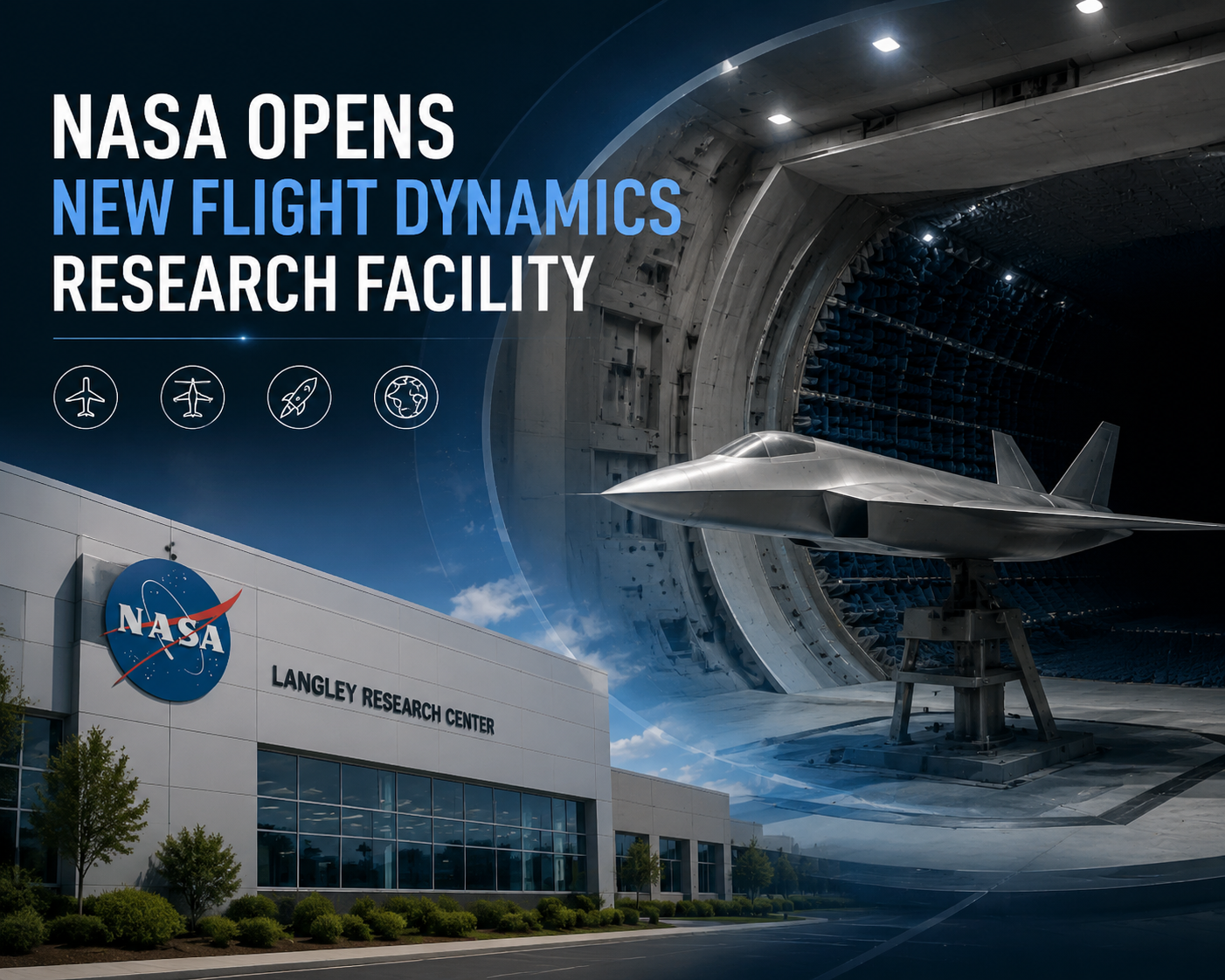
The formal opening of the Flight Dynamics Research Facility at the NASA Langley Research Center in Virginia marks a notable milestone for domestic aerospace testing. Announced at the end of July 2026, the launch signifies the first time a major new wind tunnel has been constructed at the historic Virginia installation in more than forty years. This investment arrives as modern aeronautical engineering confronts complex atmospheric and high-speed hurdles that older, decades-old testing rigs struggle to simulate with requisite precision.
Langley has served as a cornerstone of American flight research since the early twentieth century, fostering innovations that shaped both atmospheric aviation and space exploration. However, the passage of time left much of its ground-based infrastructure dated, prompting the need for modern upgrades. The newly minted facility is engineered to provide contemporary researchers and their commercial and academic partners with state-of-the-art diagnostic capabilities, allowing for the rigorous evaluation of advanced commercial aircraft, vertical takeoff and landing systems, and spacecraft navigating planetary atmospheres.
Ground-based testing assets remain vital for validating theoretical designs before flight hardware encounters actual operating environments. As the aerospace sector pivots toward hypersonic speeds and increasingly intricate flight profiles, access to dependable, high-fidelity wind tunnels becomes indispensable. The new Virginia installation directly addresses this capability gap, offering a domestic testing hub designed to meet the demands of twenty-first-century vehicle architectures.
While the facility is officially operational, specific details regarding the immediate testing schedule and the initial roster of private contractors or academic institutions slated for priority access remain unconfirmed. Managing engineer workflows and determining the precise sequencing of complex flight simulation profiles will require careful coordination as the center ramps up its operational capacity.
Future updates will likely center on the publication of initial research findings generated at the facility and announcements regarding formal testing partnerships with private industry. Observing how this infrastructure influences upcoming crewed and uncrewed vehicle programs will offer a clearer picture of its long-term impact on national aerospace development.