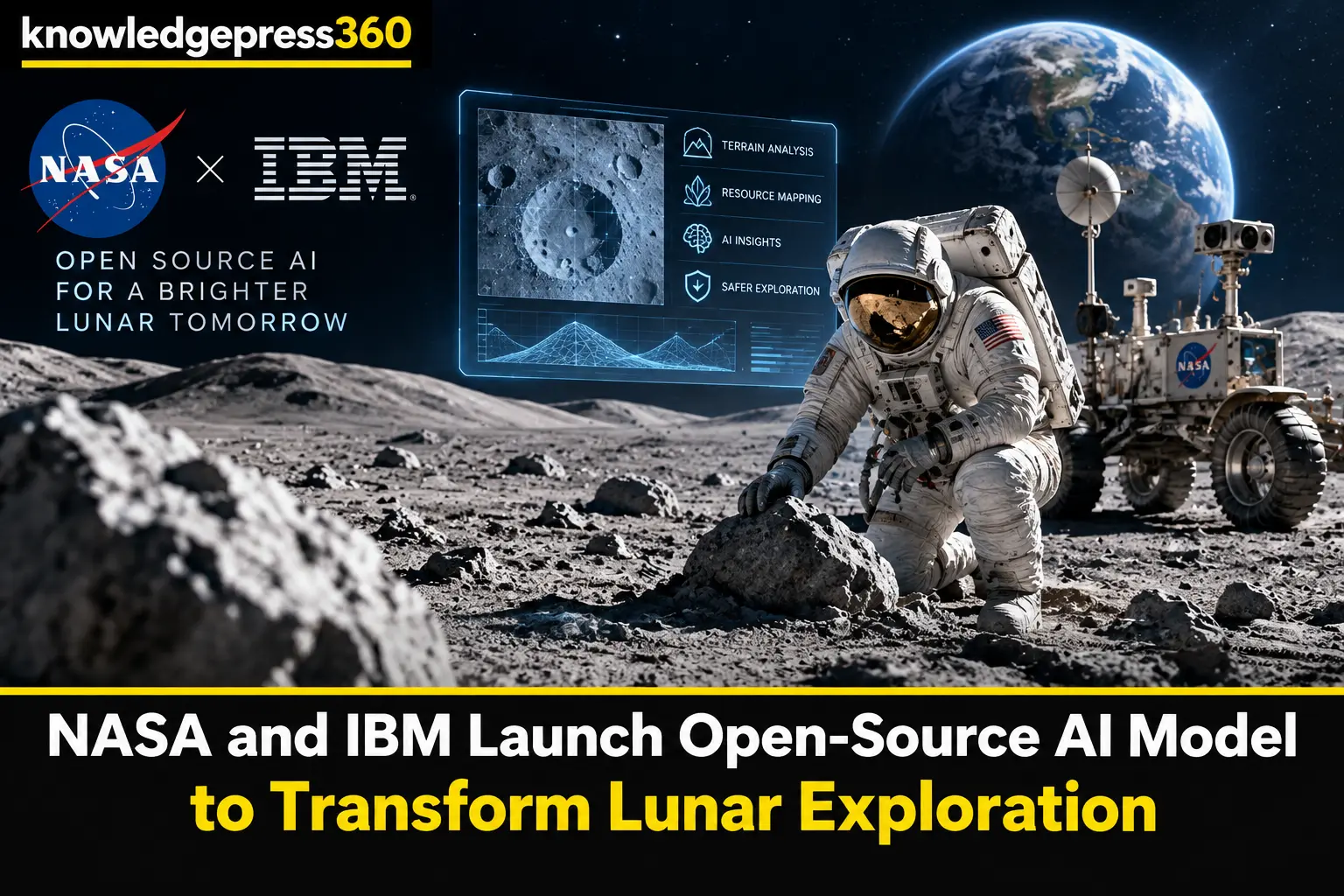
Exploring the moon has historically meant sorting through mountains of visual archives and numerical readouts by hand, a bottleneck that has slowed planetary science for generations. To overcome this hurdle, space researchers now have access to a sophisticated computational tool designed to interpret vast troves of lunar information. NASA and IBM have officially unveiled the NASA-IBM Lunar Foundation Model, an open-source artificial intelligence system built specifically to advance lunar research and support upcoming Artemis missions. Released on September 10, 2026, and hosted on the collaborative platform Hugging Face, the model represents a major leap in how space agencies process planetary data.
Training on Decades of Lunar Data
The foundation model draws its core intelligence from seventeen years of high-definition surface observations compiled by the Lunar Reconnaissance Orbiter, alongside historical archives spanning multiple missions and instruments. NASA has accumulated more information from the orbiter alone than from all its other planetary missions combined, creating an analytical backlog for scientists trying to map terrain features manually. By feeding these petabytes of historical data into an advanced neural architecture, the developers have created a versatile framework capable of recognizing complex geological patterns across diverse imaging inputs. This joint initiative builds on a collaborative partnership between the space agency and the technology corporation that extends back more than six decades to the Apollo program, following earlier joint projects centred on Earth observation and heliophysics.
Outperforming Traditional Mapping Methods
When deployed on standard tasks, the newly released system demonstrates substantial improvements over conventional machine learning approaches. According to project disclosures, the AI model outperforms widely used analytical methods by up to 23 percent in accurately identifying critical lunar geographic formations. These features include impact craters, young volcanic structures, and potential water ice deposits clustered near the shadowed regions of the lunar poles. Alongside the primary neural network, researchers published a comprehensive open-source dataset consolidating tens of thousands of maps and images gathered by nine distinct instruments across four separate moon missions. This unified resource allows scientists to bypass the tedious process of cross-referencing disparate archives.
Adopting Open Science for Space
While the technical capabilities of the model are impressive, questions remain regarding its long-term adoption rate across independent academic institutions and how different research groups will integrate the software into their existing workflows. Nevertheless, making the software and its companion dataset freely available removes financial and technical barriers that often restrict advanced planetary analysis to well-funded institutions. Space agencies globally are increasingly turning to machine learning to increase research productivity, lower operational costs, and streamline scientific discoveries. By sharing these assets with the global community, the collaboration aims to democratize space research and accelerate humanity's return to the lunar surface.