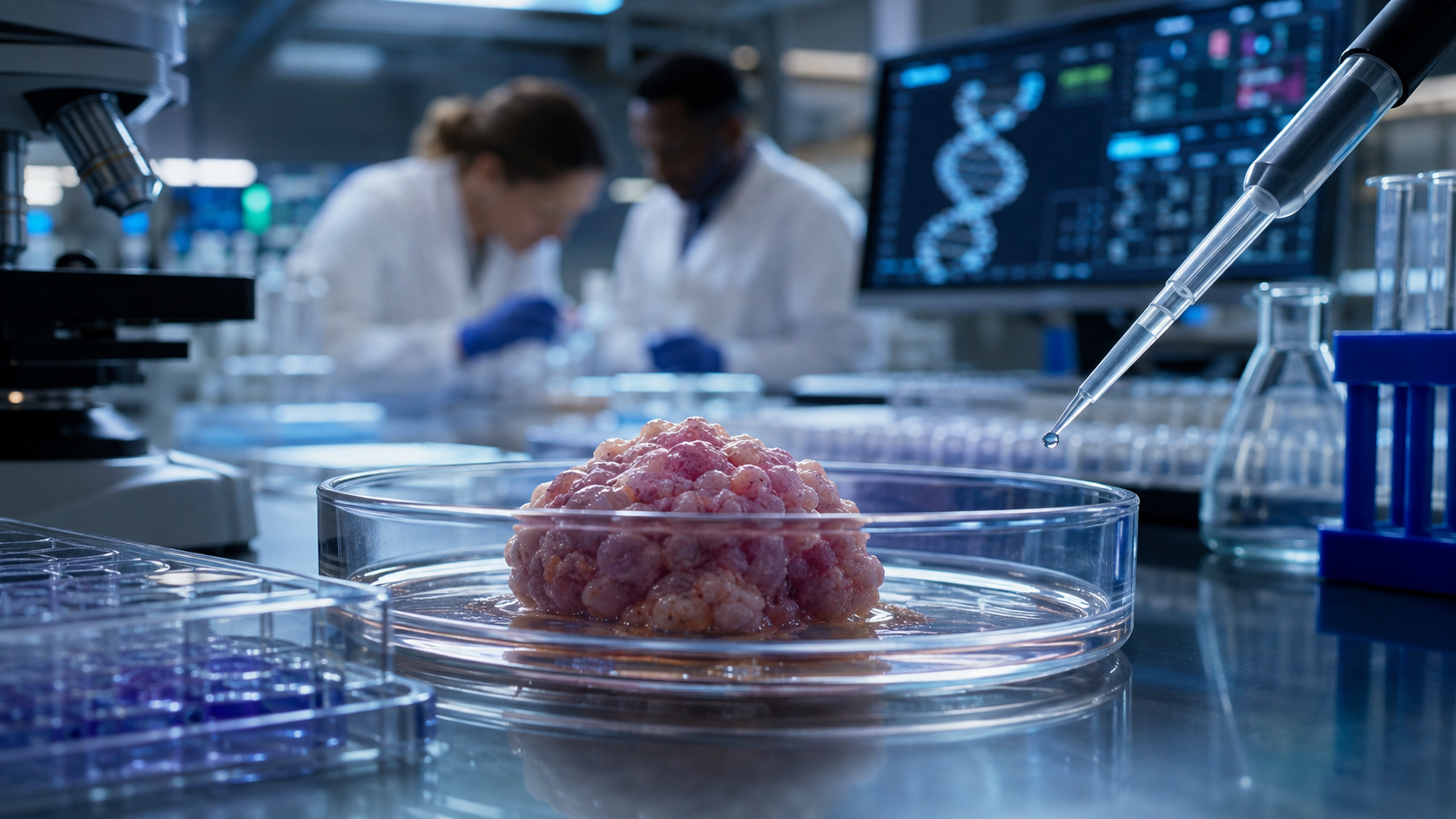
A monumental step forward in clinical oncology has arrived with the publication of comprehensive research detailing an extensive new compendium of patient-derived organoid models. Developed by an international research team led by the Wellcome Sanger Institute, the project created and characterised 256 clinically annotated tumour organoids, with genome-wide CRISPR–Cas9 screening performed across 164 models to map cancer gene dependencies. By mapping critical cancer gene dependencies, the project offers a sophisticated resource designed to bridge the persistent gap between laboratory discoveries and individualized patient treatments.
Traditional cancer research has long relied on conventional two-dimensional cell lines, which notoriously fail to capture the complex, heterogeneous architecture of human tumours. Organoid technology fundamentally alters this dynamic by growing three-dimensional miniature tissues directly from patient samples. These models preserve the intricate cellular heterogeneity and genetic diversity of original tumours, providing researchers with an unprecedented platform to observe how specific cancers function and how they react to targeted pharmaceutical interventions.
The creation of this robust biobank marks a pivotal shift in the pursuit of precision medicine. Instead of treating malignancies with generalised therapeutic approaches, clinicians can leverage these living models to identify precise vulnerabilities within individual patient tissues. Mapping cancer gene dependencies across such a diverse collection allows scientists to pinpoint exact molecular levers that drive tumour growth, offering a clearer path toward bespoke treatment strategies that minimise adverse side effects while maximising therapeutic efficacy.
Despite the remarkable promise of these next-generation models, significant challenges remain on the horizon. Independent analyses highlight persistent uncertainties regarding the scalability of these biobanks across diverse global populations, ensuring that living libraries reflect broad demographic realities rather than isolated cohorts. Furthermore, the timeline for translating these intricate gene dependency maps into fully approved clinical therapies requires rigorous validation. Questions also remain regarding how widely these resources can be adopted and reproduced across different research institutions and patient populations.
Looking ahead, the evolution of this field will depend on further validation of these mapped gene dependencies and their translation into clinical research. The publicly available organoid resource provides researchers with a valuable platform for studying tumour vulnerabilities, testing potential drug targets and expanding precision oncology research. As patient-derived organoid models become more widely integrated into cancer research, they could significantly improve how scientists investigate tumour biology and identify new therapeutic opportunities.