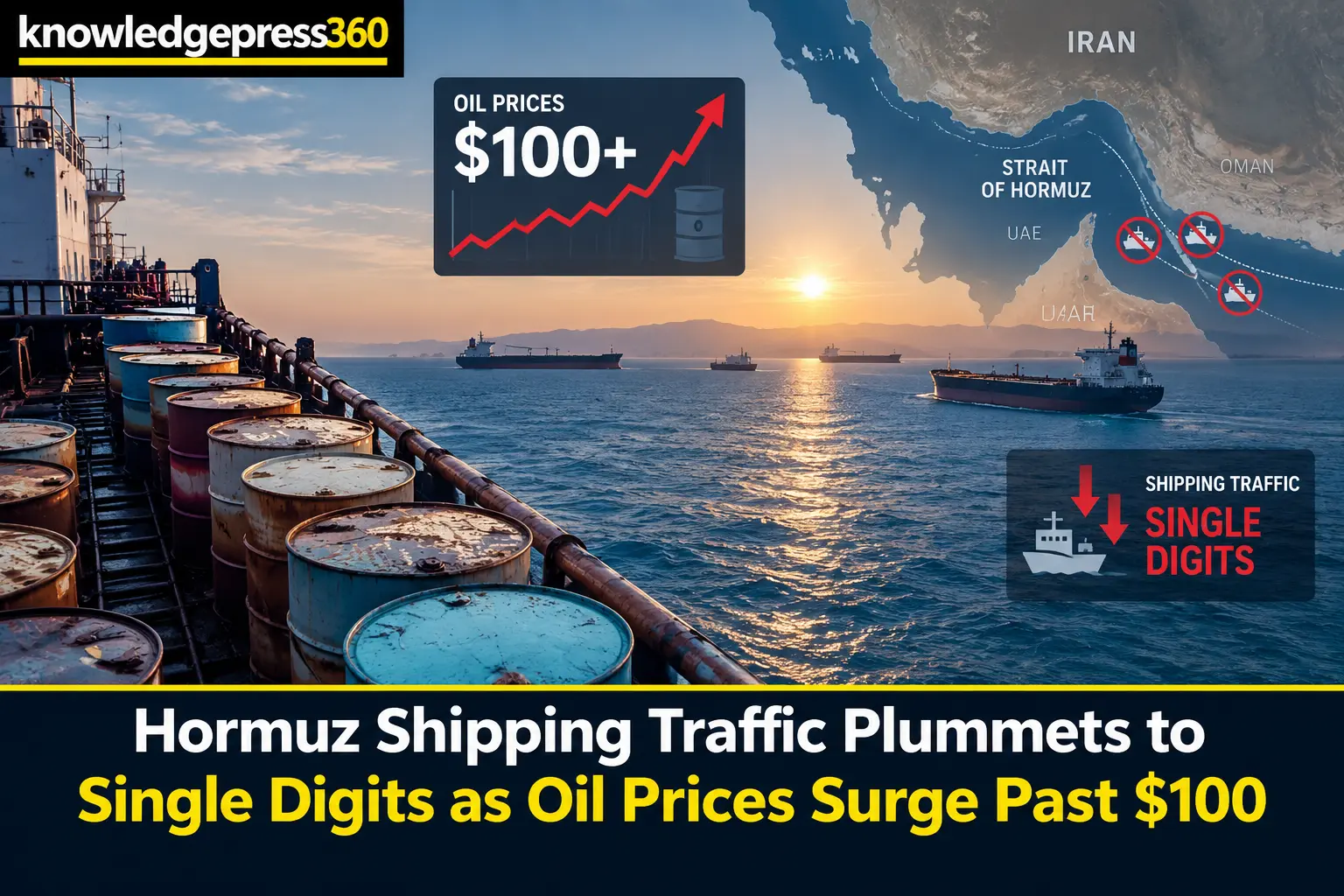
The escalation of military hostilities between the United States and Iran has precipitated a profound crisis in international maritime commerce, driving daily cargo movements through the strategic Strait of Hormuz down to single digits. Historically serving as the conduit for roughly one-fifth of the globe's maritime petroleum and liquefied natural gas trade during peacetime, this crucial chokepoint has seen vessel numbers collapse to an average of just seven to ten commercial carriers per day. This severe maritime bottleneck matters deeply because sustained disruptions in the Persian Gulf threaten to unravel delicate global supply chains, accelerate inflationary pressures, and significantly increase household energy and transportation expenses for consumers worldwide at a time when industrial economies are already struggling with persistent economic headwinds. The convergence of targeted military strikes, heightened security threats, and shifting trade routes has created a volatile geopolitical landscape with far-reaching economic consequences.
Single Digit Traffic Through Hormuz
Commercial maritime activity through the vital Middle Eastern corridor has ground to a near standstill following a series of intensifying kinetic exchanges. Data compiled from tracking services indicates that vessel transits plummeted sharply after United States Central Command forces executed strikes destroying five Islamic Revolutionary Guard Corps oil tankers. In retaliation for these military actions, regional authorities issued sweeping warnings demanding the evacuation of all oil tankers operating within Kuwaiti and Bahraini waters, while concurrent attacks targeted crucial energy installations including Saudi Aramco facilities located in Jizan. Before the outbreak of widespread hostilities, approximately 125 large commercial vessels, encompassing massive crude carriers and liquefied natural gas tankers, traversed the waterway daily. The current reduction to fewer than ten ships per day underscores the severity of the operational risks confronting commercial shipping companies operating within the Persian Gulf.
Global Energy Markets and Fuel Costs
The drastic contraction of maritime throughput has immediately reverberated across international commodities exchanges, pushing global benchmark Brent crude above one hundred dollars per barrel for the first time in nearly six weeks. Financial markets reacted swiftly to mounting supply deficits and physical damage to regional production infrastructure. Consequently, retail consumers across major economies are experiencing painful trickle-down effects as wholesale energy costs translate into higher prices at the pump. In the United States, national average petrol prices climbed to four dollars and fifteen cents per gallon, while diesel fuel soared to unprecedented heights near five dollars and ninety cents per gallon. Major financial institutions, including Goldman Sachs and Bank of America, have subsequently revised their medium-term price projections upward, warning that ongoing blockages could propel crude quotations toward even higher thresholds if the regional security situation deteriorates further.