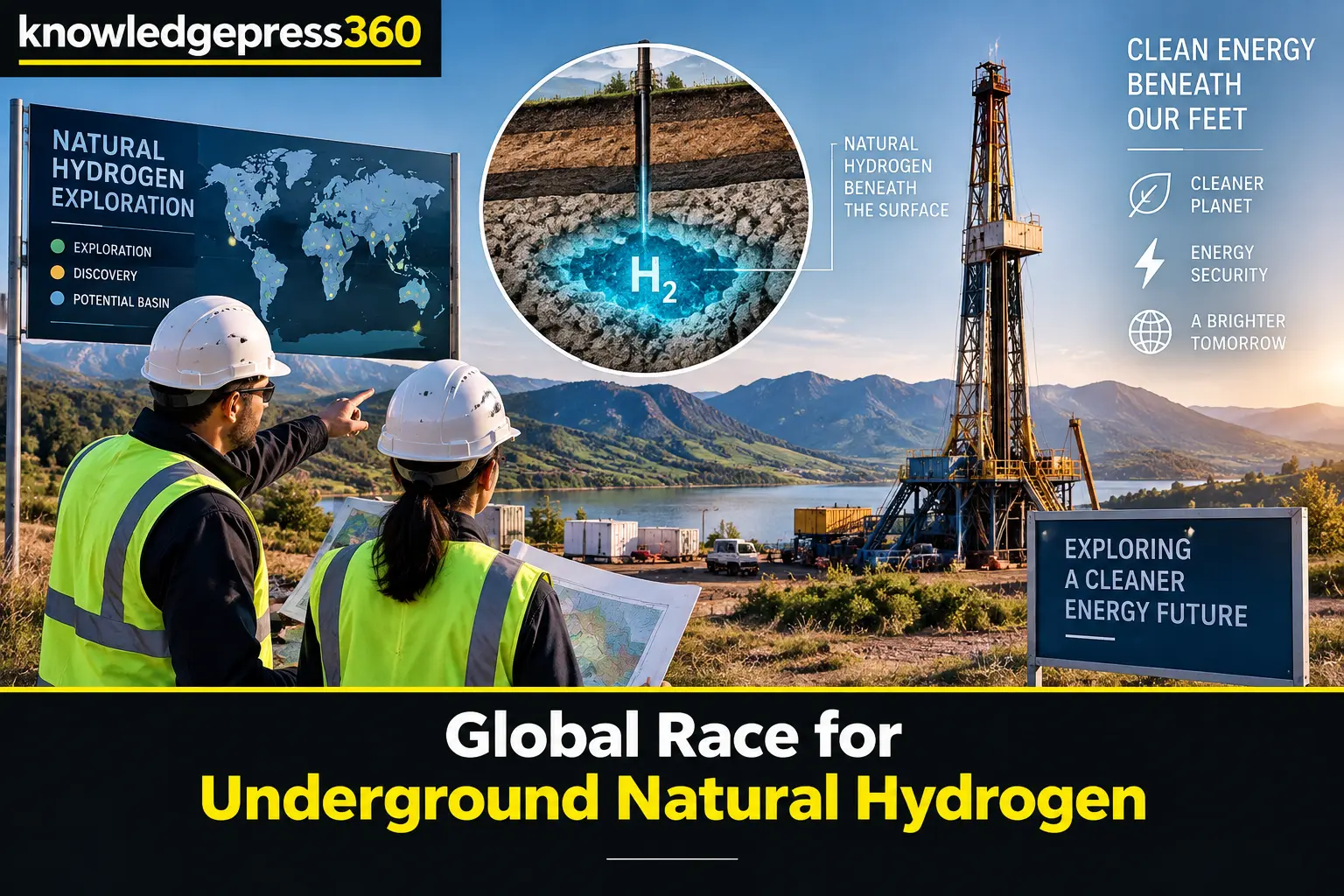
Energy prospectors operating across nearly 30 countries are urgently searching for underground deposits of geological hydrogen, hoping to unlock an abundant carbon-free fuel source that releases only water vapour when burned. This emerging global hunt represents a major shift in clean energy exploration, driven by the pressing need to decarbonise heavy industry and power generation without relying on costly manufactured green hydrogen. As international venture capital pours hundreds of millions of dollars into subterranean surveys, the scientific community remains divided over whether these elusive gas accumulations can be profitably extracted at scale, or if subterranean microbial activity will render most deposits economically unviable.
Capital Floods Subsurface Hydrogen Quest
Financial backing for natural hydrogen exploration has accelerated dramatically over recent years. Since 2023, venture capitalists have injected nearly US$500 million into startup firms and exploratory ventures aiming to locate commercial reservoirs of geological hydrogen. This financial momentum builds directly upon a comprehensive 2024 scientific analysis estimating that Earth's deep crust likely harbours tens of trillions of tonnes of the gas. If even a fraction of this subterranean reserve can be successfully tapped, proponents argue it could satisfy global clean energy demands for two centuries while matching or undercutting the production costs of traditional fossil fuels. Geological hydrogen is naturally generated through ongoing geochemical reactions, such as the interaction of iron-rich igneous rocks like olivine with water, or through radiolytic water-splitting driven by alpha particles from decaying elements.
Commercial Drilling Tests Subterranean Reservoirs
To move past theoretical estimates, exploration companies are now drilling exploratory wells across diverse geological formations spanning northern Canada, eastern Africa, South Australia, and the American Midwest. Firms such as H2Au have initiated active drilling programmes in regions like Kansas, with initial well logs and gas concentration data expected within the coming months. These early field operations are designed to provide definitive physical evidence regarding reservoir pressures, flow rates, and gas purity. Researchers and industry executives alike anticipate that these initial data releases will either validate the commercial viability of natural hydrogen or signal that the global hype has significantly outpaced physical reality on the ground.
Persistent Uncertainties Challenge Viability
Despite the intense commercial enthusiasm, profound geological uncertainties continue to temper long-term expectations. Independent geophysicists caution that nobody yet knows whether sufficiently large, concentrated accumulations of geological hydrogen actually exist in commercially accessible formations. A major complicating factor is that subsurface microbes and secondary geochemical reactions can consume massive volumes of hydrogen shortly after it is generated, leaving behind depleted pockets or entirely barren rock formations. Furthermore, the timeline required to prove out commercial fields, establish regulatory frameworks, and build dedicated pipeline infrastructure remains highly uncertain, leaving energy markets to weigh immense promise against high exploratory risk.