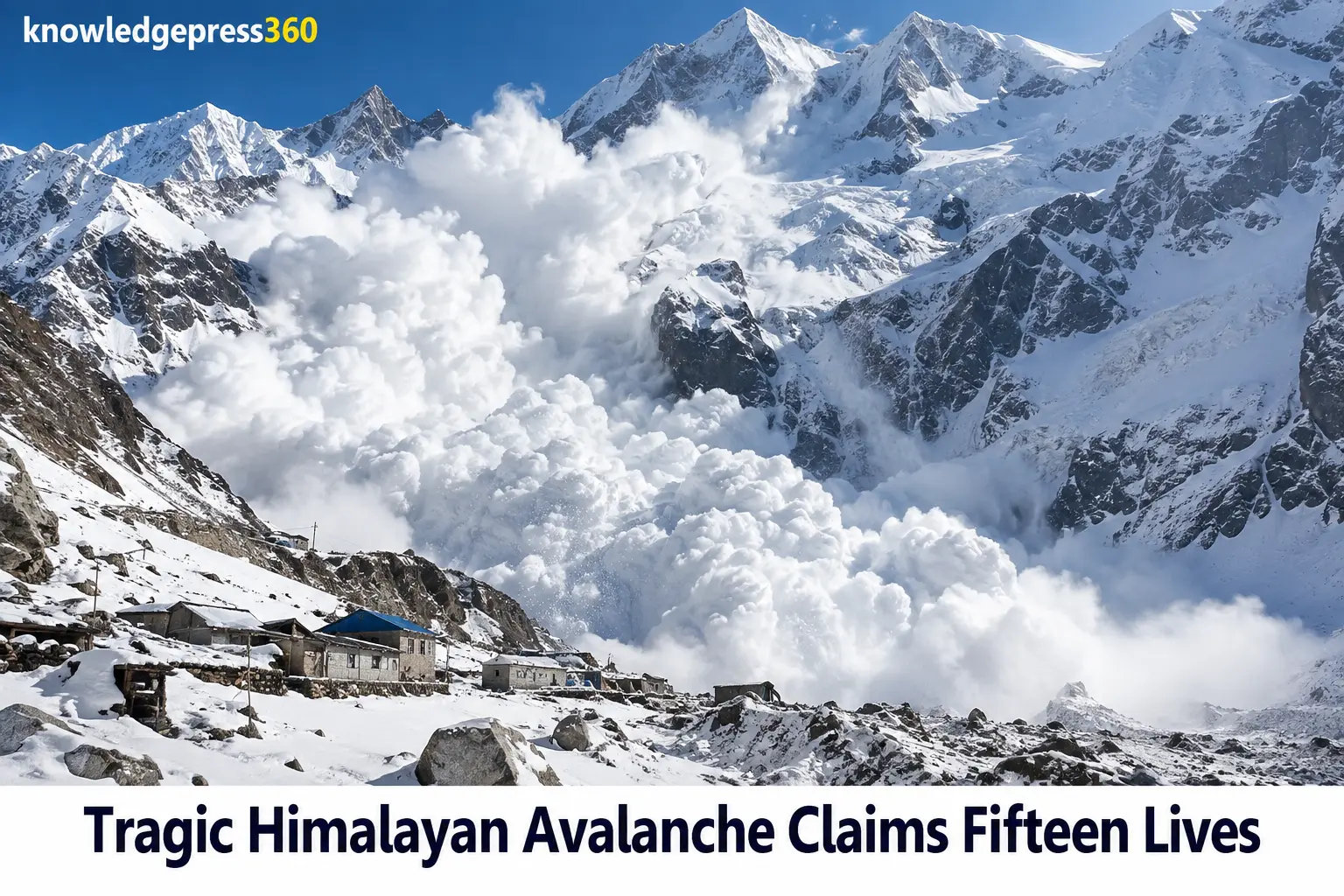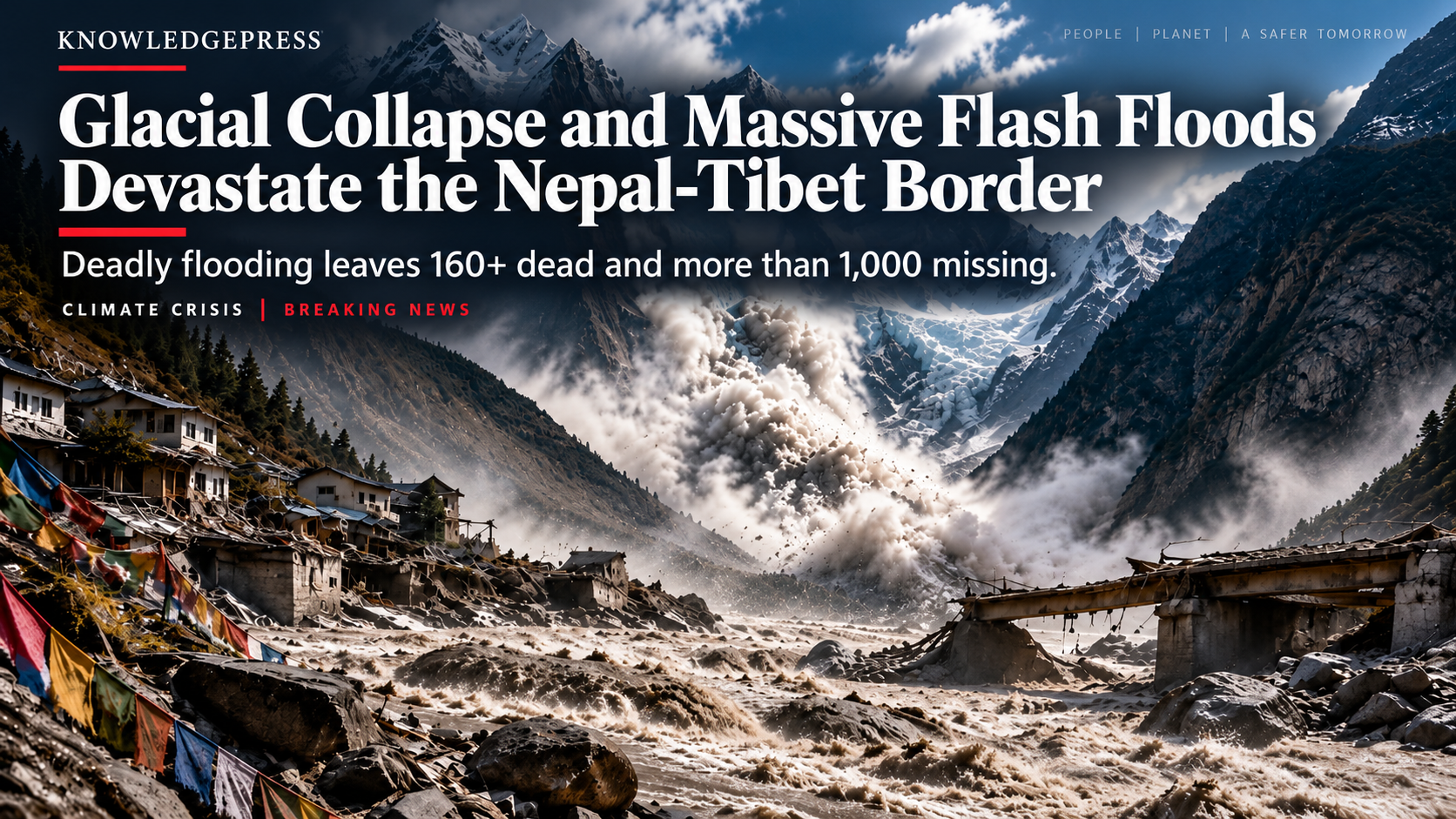
A catastrophic natural disaster struck the mountainous border region between Nepal and China's Tibet autonomous region, leaving at least 160 people dead and more than 1,000 individuals unaccounted for following a sudden and violent flash flood. The disaster highlights the acute vulnerability of high-altitude Himalayan communities to rapid glacial destabilization and warming temperatures. With hundreds of foreign tourists, pilgrims traveling to sacred sites, and local workers stranded or missing, search and rescue teams face unprecedented logistical hurdles. The sheer scale of the devastation underscores the compounding threats that climate change poses to fragile mountain ecosystems and downstream infrastructure across South Asia.
Glacial Avalanche Triggers Seismic Rumbles and Sudden Deluge Near Lhende Khola
The disaster began when a massive section of ice and rock collapsed at an altitude of approximately 5,200 meters near the Lhende Khola river system, a tributary of the Trishuli and Bhote Koshi river networks. International geological experts and the US Geological Survey confirmed that a 0.2 square kilometre chunk of ice plunged roughly 1,200 meters down into the valley floor. The impact generated an instantaneous wall of water, mud, and heavy sediment that registered on monitoring instruments as a magnitude 5.2 seismic event, clarifying initial fears that a tectonic earthquake had occurred. Water levels along the Trishuli river surged by up to nine meters within thirty minutes, obliterating everything in their path.
Destruction of Infrastructure and Villages Across Rasuwa and Gyirong County
The violent torrent swept away vital roads, bridges, local market villages, and hydropower facilities in districts including Rasuwa in Nepal and Gyirong County in Tibet. Drone footage from the affected valleys revealed buildings buried under thick layers of grey sediment resembling wet cement, cutting off remote settlements from external aid. Nepalese disaster management authorities and Chinese state broadcasters reported significant casualties, with hundreds of foreign nationals among the missing. Citizens from countries including the United States, the United Kingdom, Australia, India, Canada, and Malaysia were listed among the tourists and trekking guides caught unawares by the fast-moving deluge.
Verification Challenges and the Threat of Secondary Barrier Lakes
Emergency responders on both sides of the border face severe complications in tallying casualties and coordinating rescue operations due to destroyed infrastructure and severed communication lines. Overlapping reporting between Nepali and Chinese authorities has made it difficult to establish a definitive count, raising concerns that some individuals may have been double-counted or remain entirely unmapped in remote gorges. Furthermore, authorities have placed downstream communities on high alert for secondary flooding. The massive volume of debris carried down the mountainside has created natural barrier lakes that threaten to burst unpredictably, compounding the danger for survivors and rescue personnel alike.