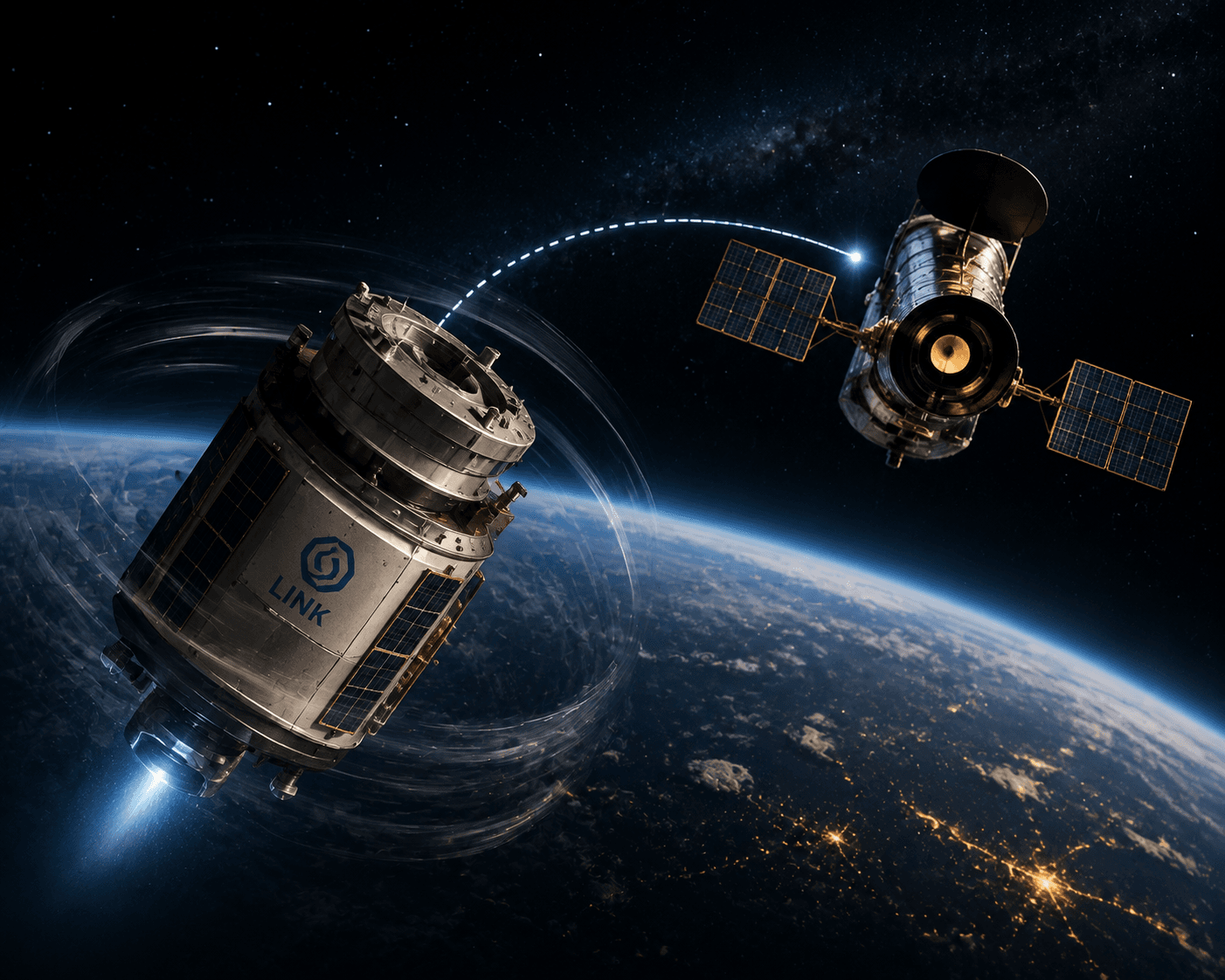
Engineering teams are facing a critical test of orbital logistics as they struggle to regain control of the privately operated LINK spacecraft. Dispatched by katalyst Space Technologies to assist NASA's aging Swift space telescope, the chaser vehicle has encountered severe mechanical and stabilization complications, developing an uncontrolled spin shortly after reaching its operational orbit. The rescue operation, which represents a vital lifeline for the high-energy astrophysics observatory, has now been pushed back to late August as ground crews work around the clock to diagnose and rectify the attitude control failure.
The stakes for this intervention are exceptionally high. The Swift telescope has served as an indispensable asset for monitoring gamma-ray bursts and transient cosmic phenomena since its launch. However, as the observatory faces operational degradation, any failure in the commercial rescue mission risks the permanent loss of a major scientific capability. The situation underscores the immense technical hurdles inherent in orbital intervention, where even minor hardware anomalies can jeopardize multi-million-dollar assets in hostile space environments.
At the heart of the current crisis is the unexpected rotational velocity of the LINK spacecraft. Operating a chaser vehicle requires absolute precision in orbital mechanics, sensor calibration, and propulsion management. When a servicing vessel begins to spin out of control, traditional stabilization protocols become vastly more complicated, often requiring telemetry adjustments from millions of miles away. While engineers have publicly maintained that they are refusing to give up on the spacecraft, the exact root cause of the excessive spin remains under intense investigation.
This unfolding emergency brings the broader paradigm of commercial space partnerships into sharp focus. As Low Earth Orbit becomes increasingly congested with active satellites and orbital debris, space agencies are leaning heavily on private sector contractors to handle complex maintenance, logistics, and rescue tasks. This reliance offers significant cost savings and operational agility, but it also introduces new vulnerabilities. When private servicing missions encounter unforeseen catastrophic hardware failures, the ripple effects directly threaten publicly funded scientific infrastructure.
Substantial uncertainty continues to cloud the timeline and ultimate outcome of the recovery effort. It remains unclear whether ground teams can successfully override the spin telemetry, or if the prolonged delay will compromise the structural and thermal integrity of the LINK vehicle before it can execute the planned boost mission for Swift. Observers and aerospace analysts are closely watching for forthcoming technical post-mortems and official status updates from both NASA and Catalyst Space Technologies to understand how these unprecedented stabilization challenges are being managed.