Deep cosmic photography continues to offer astronomers windows into stellar evolution, capturing delicate processes that shape the architecture of our galaxy over millions of years. A newly featured astronomical image highlights the intricate dynamics of the Pelican Nebula, an active stellar nursery undergoing profound shifts as intense radiation from newborn stars reconfigures surrounding gas and dust clouds. This celestial region offers researchers a vital laboratory for examining how stellar feedback mechanisms operate on a grand scale, shedding light on the fundamental physics that govern star formation across the universe.
Deep-Space Astrophotography Unveils IC 5070 and Filamentary Dust
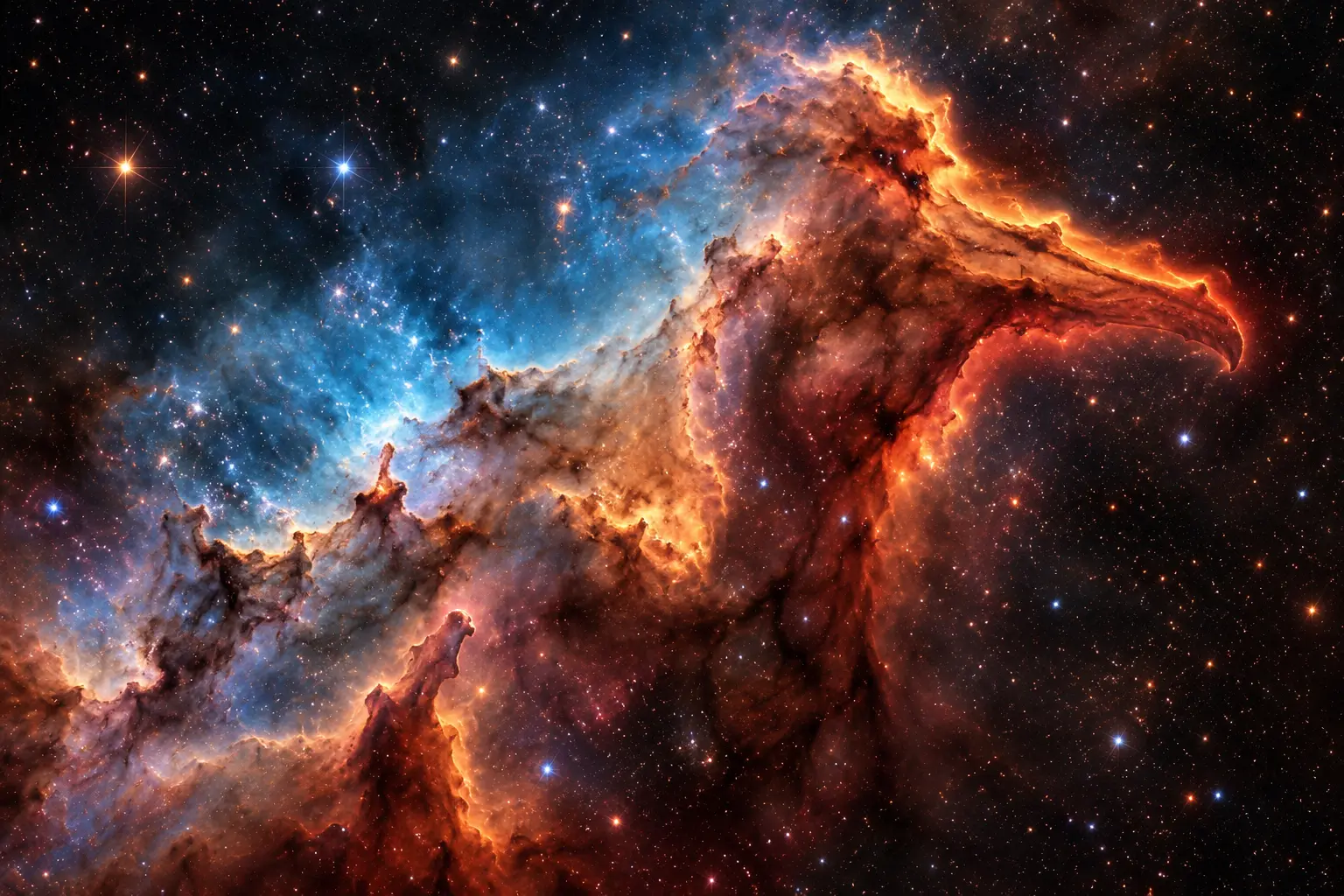
The Astronomy Picture of the Day release for September 7, 2026, focuses on the Pelican Nebula, officially designated as IC 5070 in astronomical catalogues. The featured long-exposure photograph was captured from Utah, United States, by astrophotographer Mark Killion, requiring an intensive twenty-five hours of cumulative exposure time to resolve faint structural details. This dedication allows observers to appreciate the delicate filamentary dust structures that weave through the complex. The Pelican Nebula shares its immediate cosmic neighbourhood with the larger North America Nebula, from which it is divided by an extensive molecular cloud laden with dark dust, specifically catalogued as dark nebula LDN 935.
Ionization Fronts and Stellar Feedback Within the Stellar Nursery
Beyond its striking visual symmetry, the Pelican Nebula serves as a prime site for studying the energetic interplay between massive young stars and cold interstellar matter. Radiation pouring outward from energetic newborn stars is steadily transforming the surrounding cold gas into hot gas. This ongoing boundary shift is clearly delineated by an ionization front visible in a striking bright orange hue along the upper right quadrant of the nebula. Denser tentacles of cold gas persist within the turbulent environment, resisting immediate photo-evaporation. These regions are of intense interest to astrophysicists seeking to understand how massive stars regulate the rate of star formation by either compressing or dispersing neighboring molecular reservoirs.
Long-Term Morphological Evolution and Digital Infrastructure Shifts
While the nebula provides a window into active star formation, its present configuration is entirely temporary. Over millions of years, the ongoing gravitational drift and stellar interactions will alter the spatial distribution of stars and gas so drastically that the cloud will no longer resemble its avian namesake. Alongside these cosmic realities, the daily platform showcasing these celestial vistas has undergone logistical updates, transitioning its primary hosting domain to science.nasa.gov/apod to streamline public access. While the broad strokes of stellar feedback are well understood, researchers continue to study the precise localized micro-mechanics governing the survival of dense gas tentacles against harsh radiation fields, as well as the exact timeline of future morphological shifts.