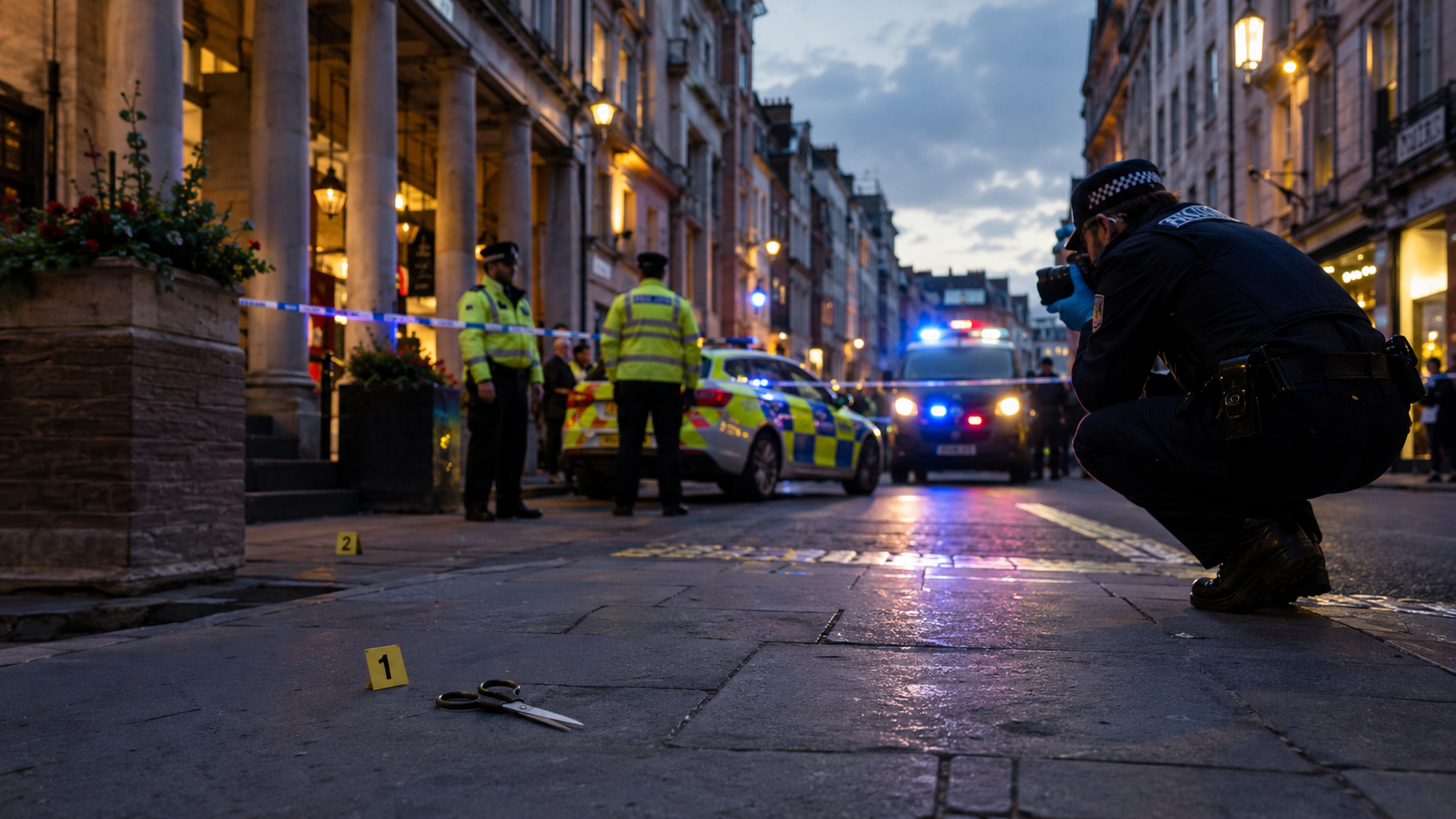
A violent multiple-stabbing incident in the heart of London has left four men hospitalised and raised pressing questions regarding public safety in high-footfall commercial districts. The attack, which unfolded in the bustling Covent Garden area, prompted an immediate emergency response, drawing heavy police deployment to one of the capital's most heavily frequented public spaces. As investigators work to piece together the sequence of events, the incident highlights the ongoing challenges of securing densely populated urban zones against sudden acts of random violence.
Emergency services rushed to the scene following reports of the assaults, securing the surrounding streets and establishing cordons to manage the unfolding chaos. According to verified accounts, four adult men sustained injuries severe enough to require hospital treatment. While emergency responders managed the immediate medical needs of the victims, law enforcement officers swiftly apprehended a woman at the scene. The suspect remains in police custody as inquiries continue, though authorities have yet to release comprehensive details concerning her identity, potential motivations, or the precise charges she will face.
Public safety operations in major London districts rely heavily on rapid mobilisation, a factor vividly demonstrated during this incident. Covent Garden routinely draws massive crowds of shoppers, diners, and tourists, making it a challenging environment for proactive threat mitigation. Eyewitness and regional reports have drawn attention to the intervention of local bystanders during the attack. Most notably, accounts from the scene highlighted the actions of a local barber who stepped in to confront the suspect and assist in managing the dangerous situation before professional emergency units fully secured the area. Such civic intervention, while praised for preventing further escalation, also underscores the inherent unpredictability of public safety in open commercial zones.
Despite the swift apprehension of a suspect, significant gaps remain in the public record regarding the incident. Official sources have not yet clarified the underlying motive for the attacks, leaving investigators to explore various possibilities while interviewing witnesses and reviewing local CCTV footage. Furthermore, details concerning the exact medical conditions of the four hospitalised men have been kept limited, though ongoing updates from medical facilities are anticipated as treatments progress. Minor discrepancies between official police timelines and localized micro-narratives, such as the exact sequence of the barber's intervention, remain typical of fast-moving breaking news scenarios but will likely be ironed out as formal judicial proceedings begin.
The aftermath of the Covent Garden stabbings will likely reignite broader discussions regarding urban security and policing strategies in central London hubs. As Metropolitan Police inquiries advance, observers will be watching closely for official statements detailing the formal charges brought against the detained woman and subsequent court appearance schedules. Additionally, municipal authorities and local business groups are expected to review current security protocols to determine whether additional measures are required to protect high-traffic public areas from unpredictable threats. The focus now shifts toward the victims' recoveries and the judicial steps necessary to address an assault that has shaken a prominent London community.