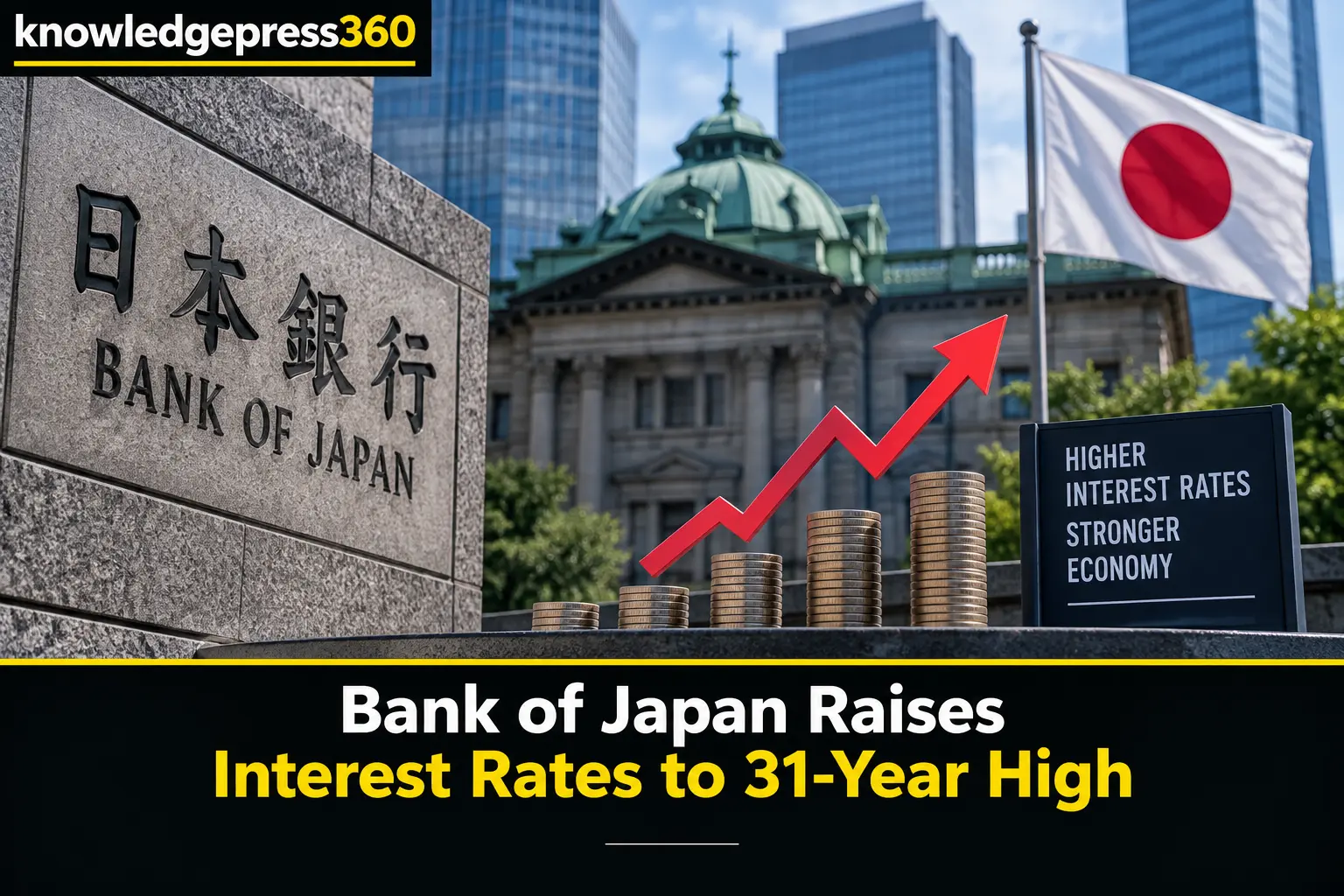
The global financial landscape shifted on Friday as the Bank of Japan escalated its monetary tightening campaign, pushing borrowing costs to their highest level in over three decades. This decisive shift marks the sixth rate increase in two and a half years, signalling a definitive departure from the era of ultra-low and negative interest rates that long defined the nation's financial policy. As central banks worldwide grapple with complex inflationary pressures, Tokyo's latest move underscores how domestic demographic strains and volatile international commodity markets are forcing a fundamental reassessment of monetary management. Observers note that this policy pivot not only alters domestic lending conditions but also reshapes currency markets and global funding strategies that relied on the Japanese yen for decades.
Thirty-one year high reached in Tokyo
The central bank confirmed an increase in its benchmark interest rate by 25 basis points, elevating the rate from 1% to 1.25% on September 18, 2026. This adjustment places borrowing expenses at a peak not observed since 1995. The decision followed a series of structural adjustments initiated in March 2024 when policymakers began dismantling the negative interest rate framework. Officials pointed to persistent upside risks surrounding consumer price growth as the primary catalyst for the adjustment. While official data released prior to the announcement indicated that Japan's core inflation rate for August eased slightly to 1.7% from 1.8% in July, policymakers remain vigilant against potential overshoots that could destabilise the broader economic recovery. The accelerated cadence of this tightening cycle reflects mounting urgency within the institution to guide borrowing costs toward levels deemed neutral for sustainable economic growth.
Split board votes amid global shocks
The policy adjustment was not unanimous, revealing internal divisions within the central board. The final vote was split 7-2, with board members Toichiro Asada and Ayano Sato dissenting against the hike. These dissenting members argued that current economic indicators, particularly core inflation remaining below the formal 2% threshold, did not justify immediate tightening and instead advocated for maintaining the existing policy stance. Beyond domestic figures, external pressures heavily influenced the broader consensus. Global energy markets experienced severe disruptions throughout 2026 driven by the ongoing conflict involving the United States and Iran, which severely restricted shipments through the vital Strait of Hormuz. These geopolitical frictions sent oil and gas prices surging, compounding imported inflation burdens for resource-dependent nations like Japan. Furthermore, acute weakness in the Japanese yen—which plummeted to a 40-year low in August and prompted a historic joint currency intervention by Tokyo and Washington—created immense pressure to narrow international yield differentials and support the national currency.