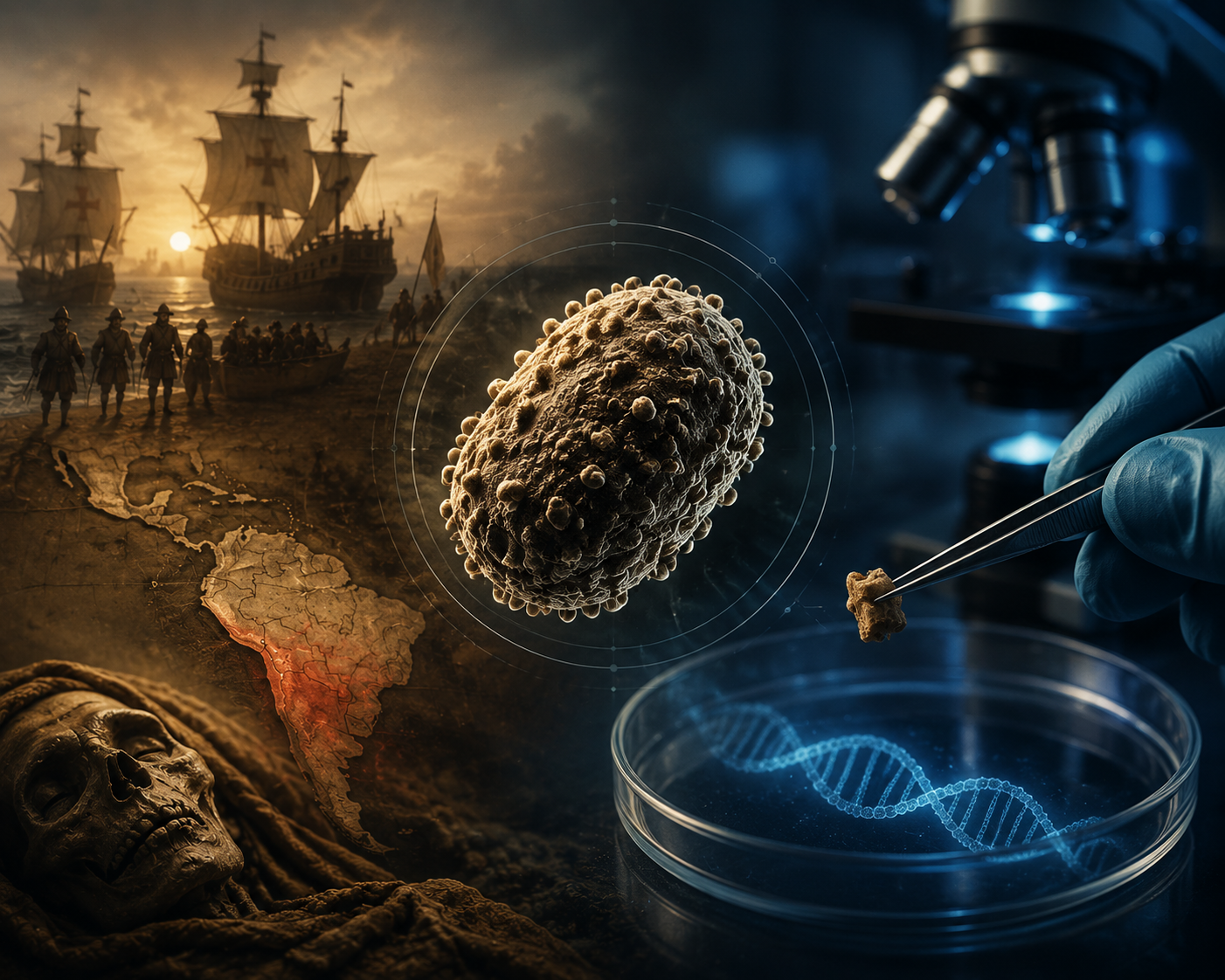
Recent scientific findings have provided the first direct genomic evidence tracing the arrival of smallpox in the Americas directly to early European colonization. Published across prominent scientific literature, the research centres on the analysis of ancient pathogen DNA extracted from two mummies discovered in Chile. This breakthrough replaces decades of circumstantial historical assumptions with hard biological data, resolving long-standing debates about the exact vector of the catastrophic epidemics that reshaped the Western Hemisphere following initial contact in the late fifteenth century.
While historical documentation has long pointed toward European explorers and settlers as the source of devastating outbreaks among Indigenous populations who lacked immunological exposure, securing direct physical proof has historically remained difficult. Ancient viral genomes degrade rapidly, and authenticating trace amounts of viral DNA from fragile archaeological remains presents immense technical hurdles. By successfully extracting and sequencing genetic material from the Chilean remains, researchers have yielded definitive signatures matching early European strains of the smallpox virus, grounding historical timelines in verifiable molecular evidence.
The profound demographic collapse experienced by societies across the Americas following European contact represents one of the most critical turning points in global history. Epidemics swept across populations that had never encountered the pathogen, causing unprecedented mortality and fundamentally altering political, social, and economic structures. Despite broad scholarly consensus regarding the origins of these outbreaks, physical confirmation from the earliest contact periods was previously scarce. The new genetic data bridges the gap between historical narrative and biological reality, demonstrating how modern advancements in archaeological genomics are actively rewriting the history of human disease.
Even with these definitive genomic matches, certain historical and epidemiological questions remain open for investigation. Researchers continue to examine the precise timing of multiple introductions, questioning whether distinct strains arrived simultaneously in different regions of North and South America. Furthermore, tracking the exact pathways of transmission across local Indigenous trade networks following initial contact events requires further granular analysis. Scientists are also working to determine whether minor genetic variations among early American strains point toward intermediate animal hosts or specific geographic points of origin within Europe.
Future research will likely focus on expanding genomic databases of ancient pathogens to map the broader geographic spread of the virus with greater precision. As scientists and historians monitor whether additional archaeological sites yield preserved smallpox DNA, the emphasis will shift toward understanding viral evolution during colonization. Tracking how the pathogen mutated as it moved through immunologically naive populations will provide deeper insight into the complex dynamics of early modern pandemics, ultimately transforming our understanding of disease ecology in the ancient world.