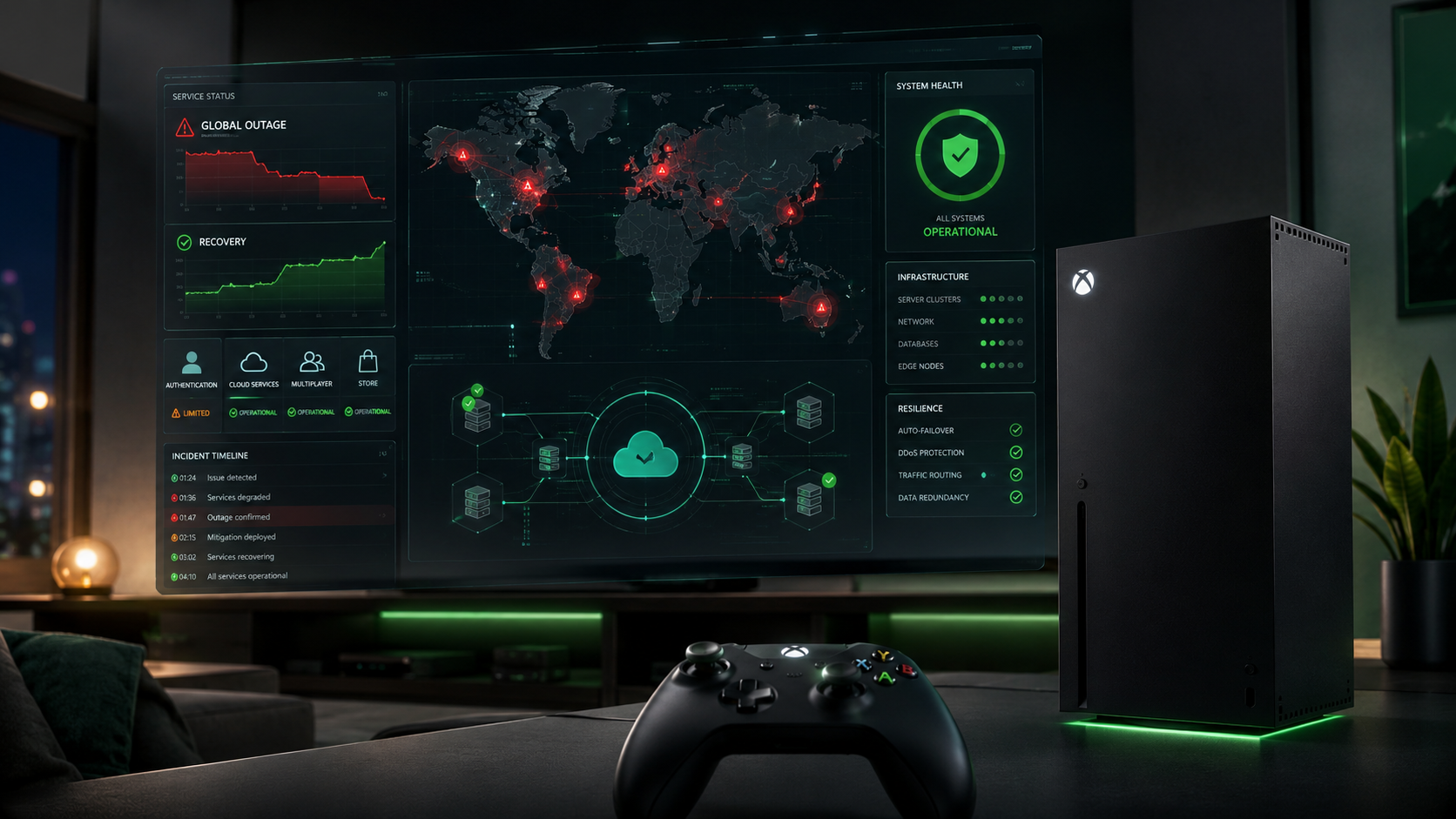
The resilience of modern digital gaming ecosystems faced a severe test following a twenty-hour global server outage that disrupted core player experiences across the Xbox platform. When online services abruptly failed, many players discovered they were temporarily unable to launch their libraries, affecting both digital purchases and physical disc-based media. This widespread disruption highlights the fragility inherent in highly interconnected digital infrastructures, where minor external faults can rapidly cascade into major platform failures. In response, platform leadership has initiated an intensive review and structural overhaul aimed at fortifying digital architecture against similar future incidents.
Inside the 20-Hour Xbox Outage
The severe service disruption occurred on July 28, persisting for approximately twenty hours and impacting users across multiple regions. During this window, players encountered persistent errors when attempting to verify ownership of digital content, use home console sharing features, or authenticate physical media. The outage drew immediate attention from the gaming community, prompting a series of detailed public updates from Xbox Chief Technology Officer Scott Van Vliet. Rather than concealing the technical background behind generic status messages, engineering leadership opted for an unusually transparent post-incident review to explain the exact chain of events that led to the platform-wide failure.
How a Licensing Failure Took Xbox Services Down
Technical disclosures from the post-incident review reveal that the primary catalyst was an unresponsive update within an external licensing service operating outside the core Xbox architecture. This foundational service, which manages vital authentication tasks for Game Pass titles and digital library entitlements, entered an unresponsive state following an automated update. Unfortunately, this external failure collided with a previously undetected bug tucked away within the Xbox client software stack. When the initial licensing check failed, the client software failed to handle the exception gracefully, triggering cascading secondary authentication failures. This compounding error loop resulted in widespread library enumeration issues and prevented players from launching their games, regardless of whether those titles were acquired digitally or through physical discs.
Microsoft’s Plan to Prevent Another Failure
To prevent similar cascading failures from crippling the platform again, Microsoft has initiated a significant structural shift in operational ownership. Management of the underlying licensing service is being transitioned directly to the internal Xbox engineering team, granting them tighter oversight and operational isolation. Furthermore, a dedicated client bug fix designed to prevent future software stack crashes during authentication timeouts began rolling out on August 10, with mandatory enforcement scheduled for August 17. While these measures represent a robust response to the July incident, industry observers note that uncertainties remain regarding whether internalising external services will completely insulate the ecosystem from edge-case dependency failures during simultaneous global traffic spikes.