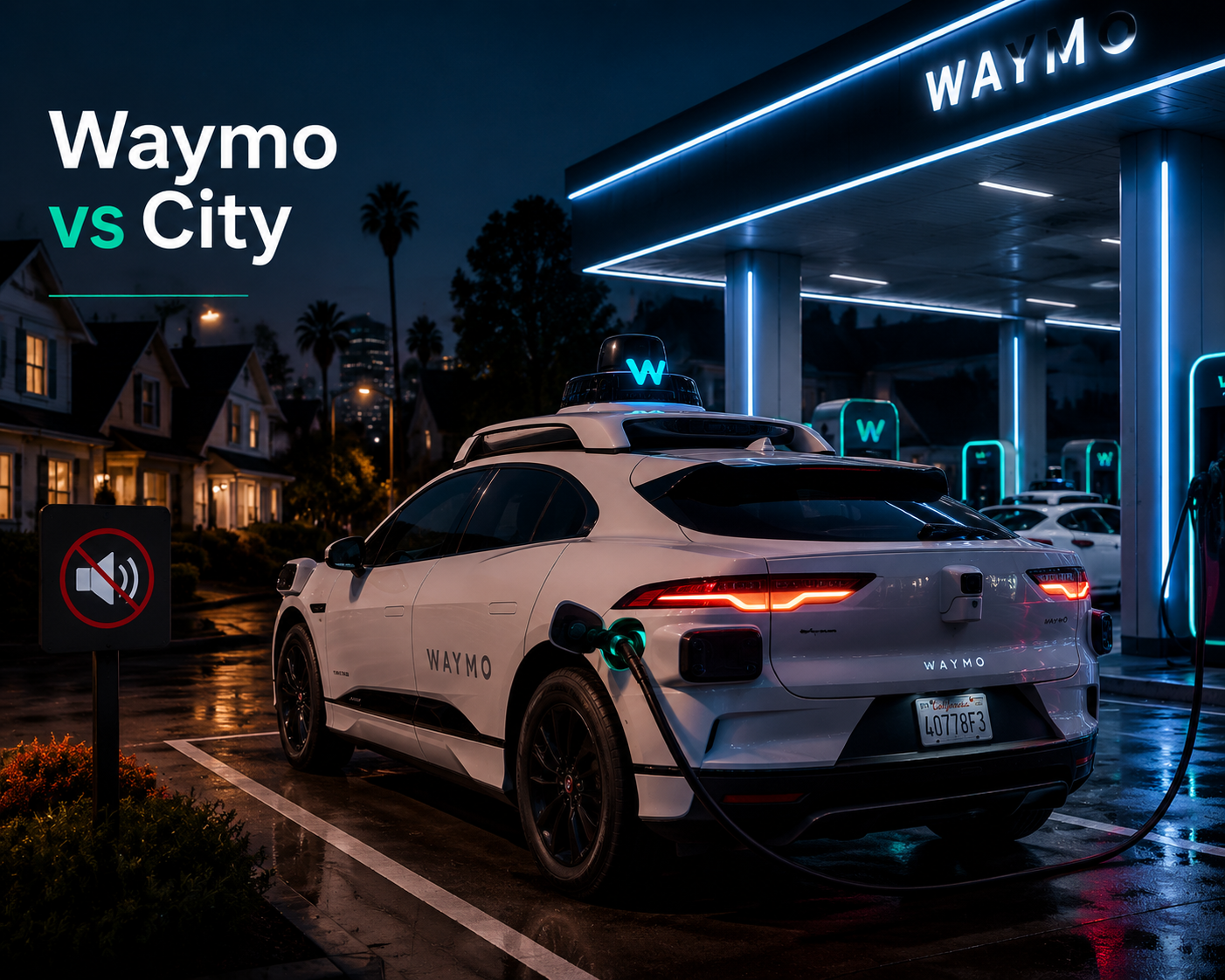
A judicial ruling in California has forced autonomous vehicle operator Waymo to halt overnight recharging operations at two facilities in Santa Monica. The injunction follows persistent complaints from local residents regarding continuous disturbances that disrupted sleep in the surrounding neighborhoods. This legal setback brings a prominent urban friction point into sharp focus, illustrating how the physical infrastructure required to scale driverless fleets often collides with municipal livability standards and residential zoning expectations.
While public discourse surrounding autonomous vehicles typically centres on software safety, passenger transport, and road integration, the supporting real estate footprint presents an entirely separate regulatory hurdle. Maintenance depots, cleaning yards, and high-capacity recharging hubs must operate within the strict boundaries of local noise ordinances and zoning laws. The situation in Santa Monica underscores a growing tension between municipal authorities tasked with protecting community welfare and technology firms attempting to scale commercial operations to meet expanding consumer demand.
In response to the court order, Waymo has initiated a legal appeal seeking to overturn or modify the restrictions placed on the two affected locations. Significant uncertainty remains surrounding the long-term operational impact of the ban on the company service fleet, the timeline of the judicial proceedings, and whether alternative infrastructure can be established swiftly enough to prevent service disruptions. The core challenge lies in balancing the heavy electrical demands of an expanding autonomous fleet with the peace and quiet expected in densely populated residential areas.
Future developments will likely hinge on how courts handle Waymo's legal filings and whether engineering solutions can be deployed to dampen facility noise. If modifications to charging equipment or physical acoustic barriers prove insufficient, operators may face mounting pressure to relocate heavy infrastructure to industrial zones. As autonomous fleets expand into new metropolitan areas, municipal regulators across the country will be closely watching the outcome of this dispute to establish precedents for managing industrial-scale support facilities within urban neighbourhoods.