Commercial Cybercab Rides Begin in Austin, Texas
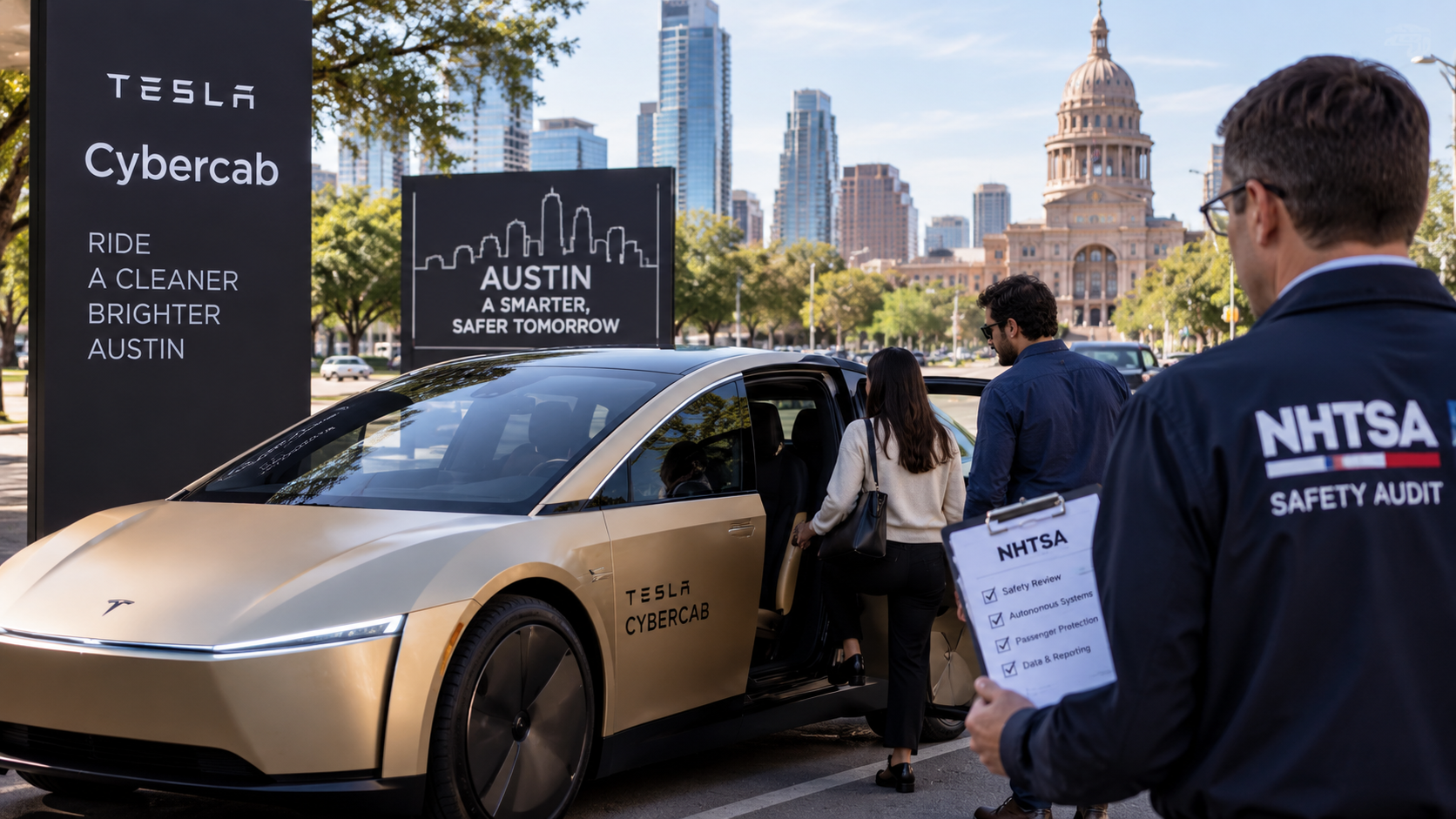
Tesla has launched commercial rides for its purpose-built Cybercab robotaxi service in Austin, Texas. The vehicle is designed entirely without a steering wheel, pedals, or rearview mirror. Just as paid operations commenced, the National Highway Traffic Safety Administration (NHTSA) opened an audit covering approximately 1,000 Cybercab vehicles to examine how Tesla justified that the autonomous vehicles comply with federal vehicle safety standards. Production of the Cybercab began at Giga Texas following a prototype unveiling, with regulatory steps including an Environmental Protection Agency Certificate of Conformity.
The commercial rollout in downtown Austin brought together fans, observers, and industry watchers as the butterfly-door vehicles joined existing robotaxi operations. The deployment highlights Tesla's core strategy of emphasizing self-driving software and robotics within its broader vehicle lineup, drawing significant public and industry attention to how autonomous vehicle networks scale in major metropolitan areas.
The Self-Certification Approach Versus Federal Standards
Unlike competitors who typically seek formal exemptions from decades-old Federal Motor Vehicle Safety Standards—which restricts production volumes—Tesla controversially chose to self-certify that the Cybercab meets all relevant regulatory requirements. This development matters because if Tesla's self-certification approach is validated, it could establish a precedent allowing automakers to widely deploy unconventional driverless vehicles without traditional manual controls at scale, bypassing standard regulatory exemptions.
Industry experts and safety advocates have questioned whether a vehicle lacking standard manual controls can reasonably be interpreted as compliant with existing rules written primarily for human-driven cars. Meanwhile, newly disclosed federal crash databases have revealed previous incidents involving Tesla's remote-driving safety monitors and teleoperators in Austin. These records highlight the critical role of human backstops who remotely monitor robot cars and intervene when they encounter difficulties on public streets.
Regulatory Uncertainties and Operational Challenges
Significant uncertainties persist over whether NHTSA will officially accept Tesla's self-certification or rule it invalid, an outcome that could result in formal reviews, recalls, fines, or enforced production halts. The agency's ongoing audit serves as a primary regulatory test for unconventional autonomous vehicle designs deployed without prior government clearance.
The long-term legal and operational viability of deploying steering-wheel-free vehicles under self-certification remains a central question for the broader autonomous vehicle industry. As federal regulators review the safety justification documentation provided by the manufacturer, market participants continue to evaluate the potential friction between rapid technological deployment and established federal oversight frameworks.