As modern computing architecture shifts towards unprecedented levels of density, managing the immense heat generated by tightly coupled server nodes has emerged as a critical engineering challenge. Artificial intelligence accelerators and high-performance processing units now push thermal outputs to unprecedented heights, rendering traditional cooling infrastructure obsolete. The ability to efficiently dissipate thermal energy dictates not only the physical design of modern facilities but also the long-term operational viability of next-generation infrastructure. Consequently, industry experts are closely examining advanced thermal management systems to sustain high-performance computing without running into severe hardware constraints.
Overcoming Air Cooling Limits
Traditional air-cooling techniques are rapidly approaching their practical thermal limits as individual modern artificial intelligence accelerators now exceed 1,000 watts of power dissipation. Furthermore, individual server racks routinely dissipate more than 100 kilowatts of heat, creating thermal loads that conventional fans and air-conditioning units simply cannot remove efficiently. When processors experience excessive heat, semiconductors frequently resort to thermal throttling, a defensive mechanism that intentionally reduces hardware performance to prevent catastrophic failure. Relying on air movement alone in these high-density environments leads to constant performance throttling, decreased hardware longevity, and inflated energy costs associated with running industrial cooling fans at maximum capacity.
Mechanics of Direct Cooling
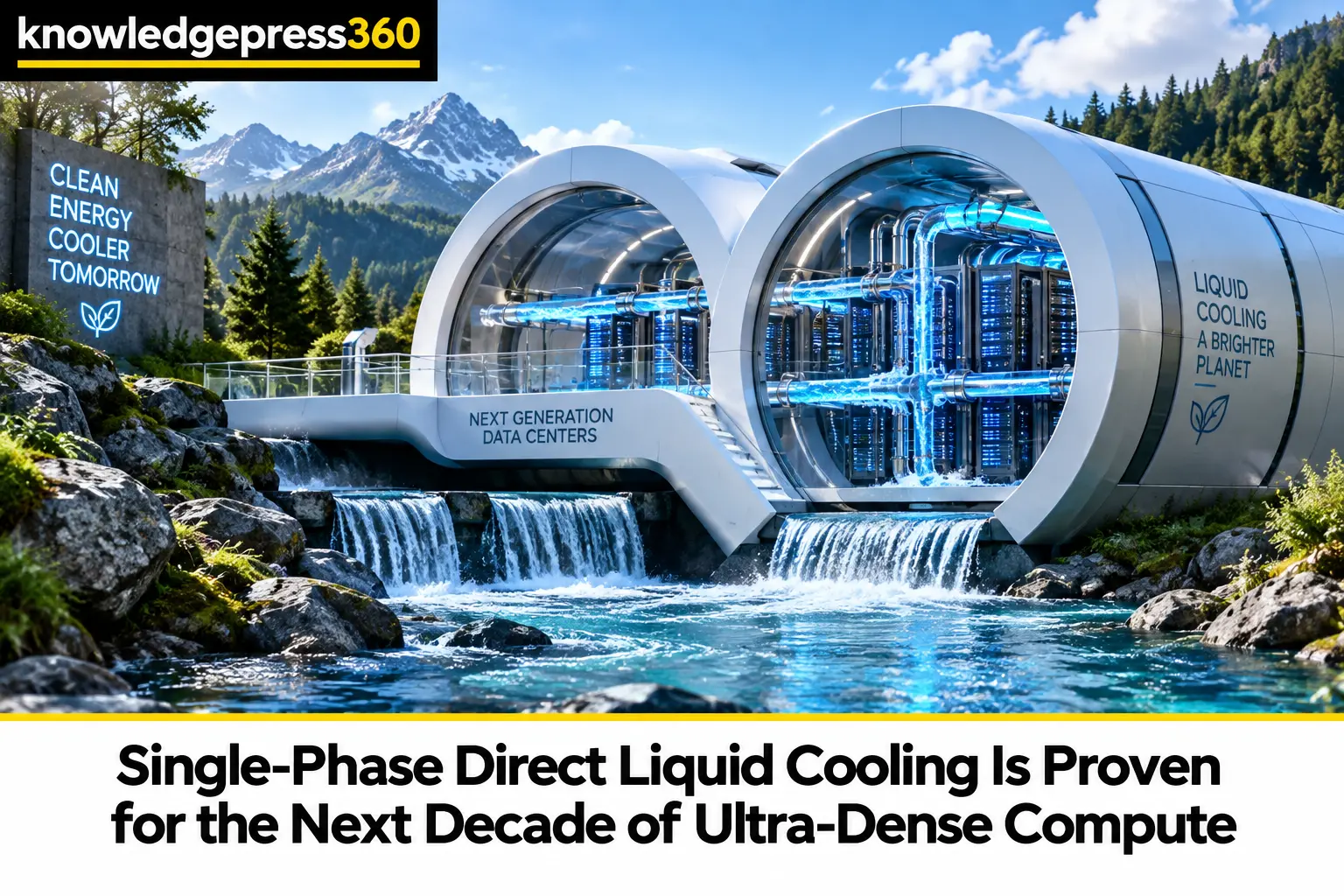
To bypass the physical limitations of ambient air, single-phase direct liquid cooling circulates water or a water-glycol coolant through coldplates mounted directly on high-heat components in a closed loop. This specialized liquid absorbs thermal energy rapidly and transports it away from sensitive silicon through dedicated tubing to a coolant distribution unit. Because liquid media possess a significantly higher heat capacity than air, they can remove thermal output at a much faster rate while occupying a substantially smaller physical footprint within the server chassis. By maintaining a stable and optimal operating temperature, this closed-loop methodology effectively eliminates semiconductor thermal throttling, thereby preserving maximum processing performance margins and significantly extending the operational lifespan of expensive hardware components.
Infrastructure and Deployment Realities
While the thermodynamic advantages of liquid loops are well documented, data center operators must navigate complex operational considerations when transitioning away from legacy air-cooled designs. Exact adoption rates and capital expenditure timelines vary significantly across the industry, driven by differences in existing facility layouts, budget allocations, and risk tolerance for liquid-based infrastructure inside server halls. Moreover, facility managers must carefully evaluate long-term reliability and maintenance variance between competing thermal technologies, weighing direct liquid systems against alternative strategies such as two-phase setups and immersion cooling methodologies.