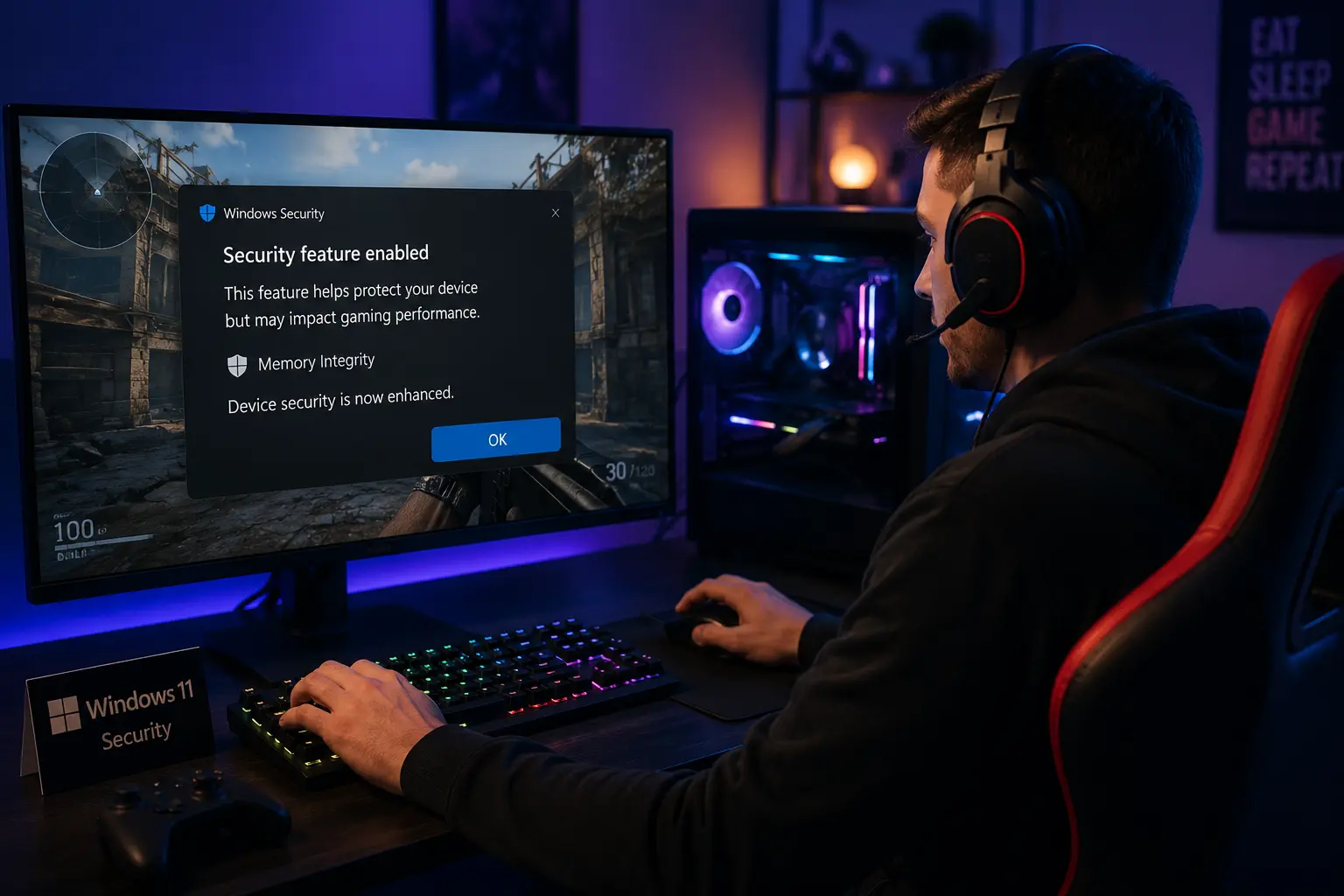
Microsoft is preparing to roll out automated quality updates for Windows 11 that will automatically activate the memory integrity security feature on eligible devices where it was previously inactive [1, 2, 3]. This upcoming change, scheduled to begin in October 2026, marks a significant shift in how the operating system balances default consumer security with system performance [1, 2, 3]. By making advanced defenses standard across a broader range of hardware, the technology giant aims to fortify machines against sophisticated kernel-level threats and malicious drivers [1, 2, 3]. However, because the underlying architecture demands dedicated computing resources, the modification has raised discussions among personal computer gamers and hardware enthusiasts regarding potential trade-offs in frame rates and overall system responsiveness [1, 2, 3, 4].
Automated Memory Integrity Activation on Windows 11 Systems
The core mechanism behind this upcoming rollout is memory integrity, also widely referred to as Hypervisor-protected Code Integrity, or HVCI [1, 3]. This security capability relies heavily upon Virtualization-based Security to isolate kernel code verification into a secure, virtualised environment [1, 2, 3]. By doing so, the operating system ensures that only verified, trusted system components and certified drivers are permitted to run, effectively closing off common vectors exploited by advanced malware and tampered software . Peter Waxman, group program manager at Microsoft, noted that these incoming quality updates reflect a corporate commitment to establishing a computing environment that is secure by design and secure by default . Nevertheless, the continuous background verification required by Virtualization-based Security consumes tangible CPU cycles, meaning that systems must dedicate a portion of their processing power strictly to maintaining this isolated defense perimeter .