The smartphone industry is witnessing a rapid convergence of ultra-premium multi-panel engineering and advanced user-protection software as manufacturers push past conventional form factors. Huawei has officially unveiled its latest mobile hardware flagship in China, introducing an innovative device that merges complex multi-fold mechanics with specialized screen-shielding technology. This release signals a significant pivot in how high-end mobile developers approach both physical device resilience and personal visual security in public spaces.
Huawei Announced the Mate XT 2 in China as Its Third Trifold Phone
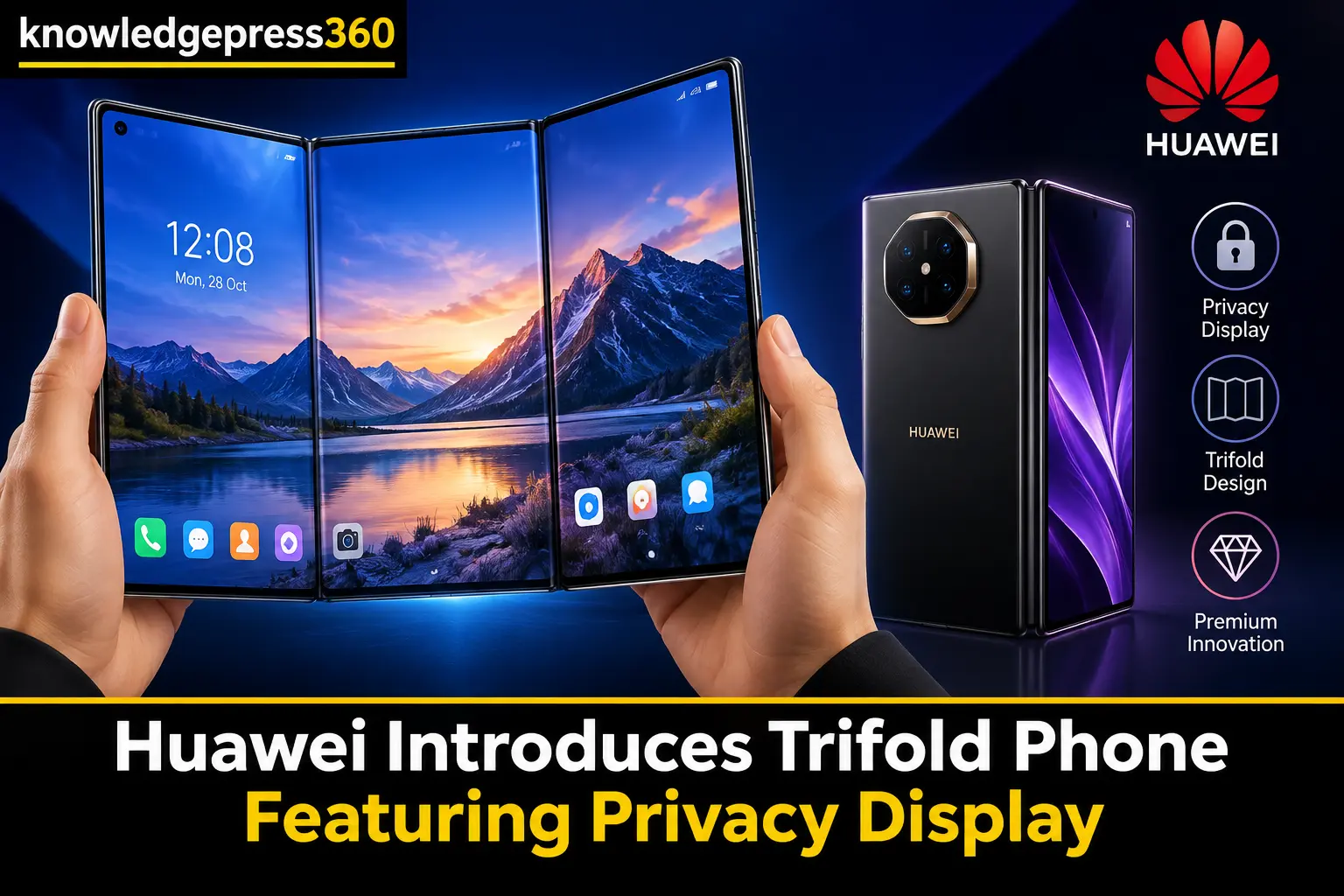
Huawei has officially announced the Mate XT 2 in China, marking the company's third trifold phone release and its first major entry in this specific category in two years. The launch event detailed a device built to challenge existing industry paradigms surrounding foldable screen durability and daily usability. The original Mate XT relied on an accordion-style folding configuration that left portions of the delicate internal display permanently exposed to potential scratching and environmental wear. By contrast, the Mate XT 2 features an inward-folding design for its expansive 10.2-inch flexible screen, a structural shift that mirrors concepts seen in other leading multi-panel prototypes. This dual-sided inward fold protects the primary display panels from external hazards while closed, offering a more traditional outer screen experience when fully retracted to its 6.5-inch single-unit dimension.
The Mate XT 2 Features an Inward-Folding Design and Optional Privacy Display
Beneath the refined mechanical housing, the Mate XT 2 integrates high-end computing components alongside a novel visual security enhancement. The device is powered by Huawei’s proprietary Kirin 9050 Pro chipset and operates on HarmonyOS 7, providing robust processing capabilities tailored for multitasking across the sprawling tablet-sized canvas. Furthermore, the hardware houses an upgraded triple rear camera array featuring a 50-megapixel main sensor with variable aperture, a 50-megapixel telephoto lens supporting 3.5x optical zoom, and a 40-megapixel ultrawide camera, all backed by a 5,600 mAh battery with 66W wired and 50W wireless fast charging. Environmental protection has also been elevated, with the device securing water and dust resistance ratings. Most notably, the device includes an optional privacy OLED display feature that restricts light emission to narrow angles, a technology conceptually similar to the screen privacy implementations introduced on Samsung's S26 Ultra earlier in the year. When this mode is engaged, the pixels adjust to prevent side-angle viewing, ensuring the content remains legible only to the user directly facing the panel.