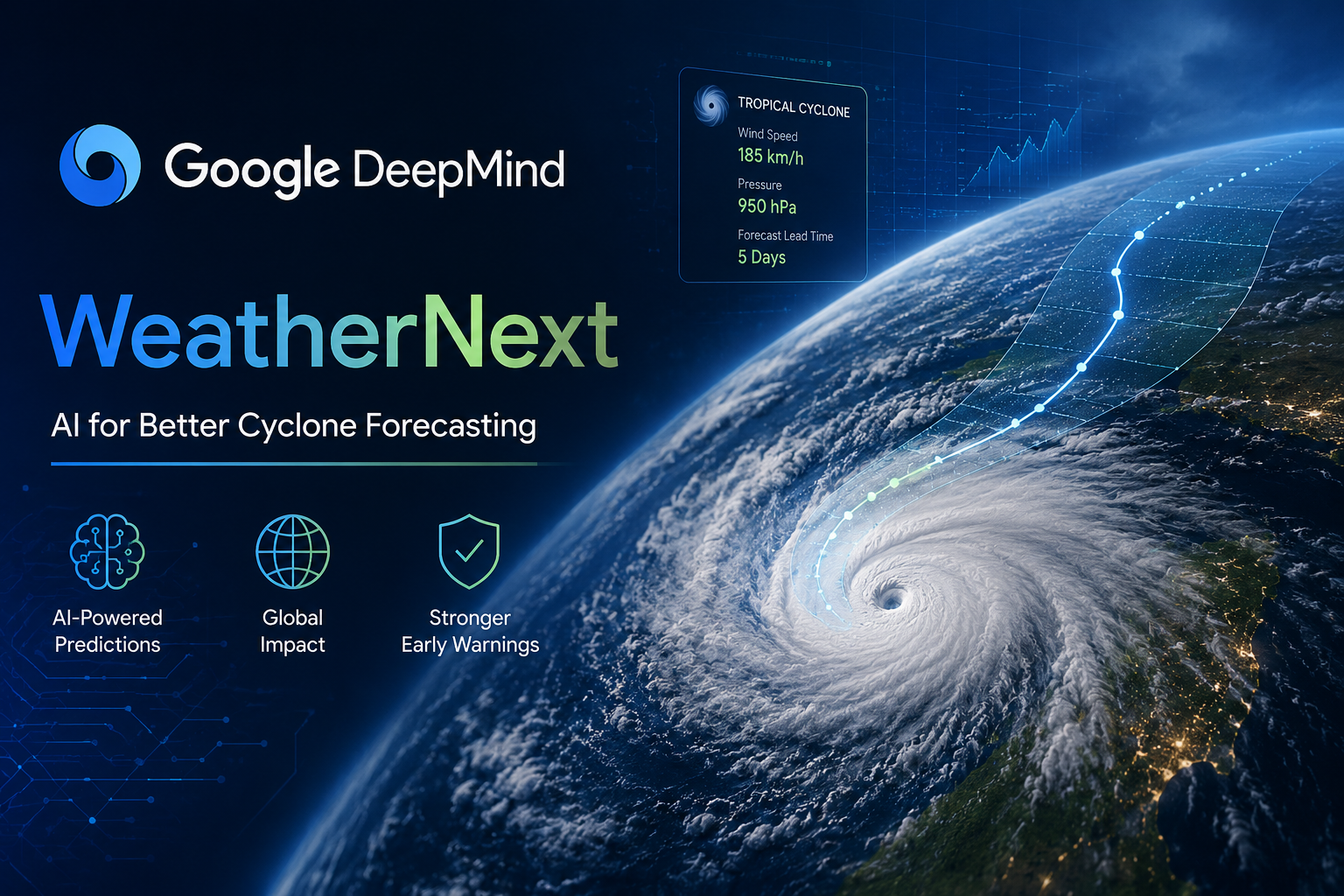
As intensifying climate dynamics drive increasingly severe meteorological phenomena, coastal populations face escalating threats from destructive tropical cyclones. Traditional weather forecasting relies heavily on complex numerical prediction models that demand immense supercomputing resources and substantial processing time to map atmospheric mechanics. These conventional systems have frequently struggled to anticipate rapid intensification phases, leaving emergency planners with dangerously narrow margins for response. In response to these persistent vulnerabilities, a significant computational breakthrough has emerged from Google DeepMind with the introduction of WeatherNext, a machine learning model designed to revolutionise how meteorological agencies predict cyclone trajectories and intensities.
The scientific validation of WeatherNext has been established through peer-reviewed research published in Nature, offering rigorous academic scrutiny of its predictive capabilities. Unlike standard numerical simulations that crawl through billions of atmospheric equations sequentially, machine learning architectures like WeatherNext leverage historical data patterns to generate rapid, high-accuracy forecasts. This methodological shift allows meteorologists to process complex atmospheric variables in a fraction of the time traditionally required. By streamlining the computational pipeline, the model bridges a crucial gap in operational forecasting, providing a clearer picture of storm development long before landfall occurs.
A pivotal element of this release is Google DeepMind's decision to open-source the WeatherNext framework, making the technology freely accessible to global meteorological agencies, independent researchers, and disaster management organisations. By removing proprietary barriers, the initiative empowers national weather services in vulnerable regions to integrate advanced artificial intelligence directly into their daily operational workflows. This democratization of forecasting tools is intended to extend lead times for hurricane warnings significantly, granting local authorities and endangered communities vital extra hours to execute evacuation strategies and secure critical infrastructure.
Despite the promising capabilities of WeatherNext, important uncertainties remain regarding its real-world implementation. Meteorological experts note that machine learning models must prove their reliability across diverse geographic regions that exhibit unique regional weather patterns. Furthermore, questions persist regarding how the system will perform under unprecedented atmospheric conditions driven by accelerated global heating, as well as the practical challenges of retrofitting legacy meteorological infrastructure to accommodate cutting-edge artificial intelligence workflows.
The trajectory of operational meteorology now hinges on the willingness of national weather services to formally adopt and adapt machine learning frameworks like WeatherNext. Over the coming storm seasons, independent evaluations will test the model's accuracy during high-stakes tropical weather events, revealing whether artificial intelligence can consistently outperform conventional supercomputing. Observers will also monitor how Google DeepMind and the wider open-source community update and refine the software, setting the stage for a new era in disaster preparedness and public safety.