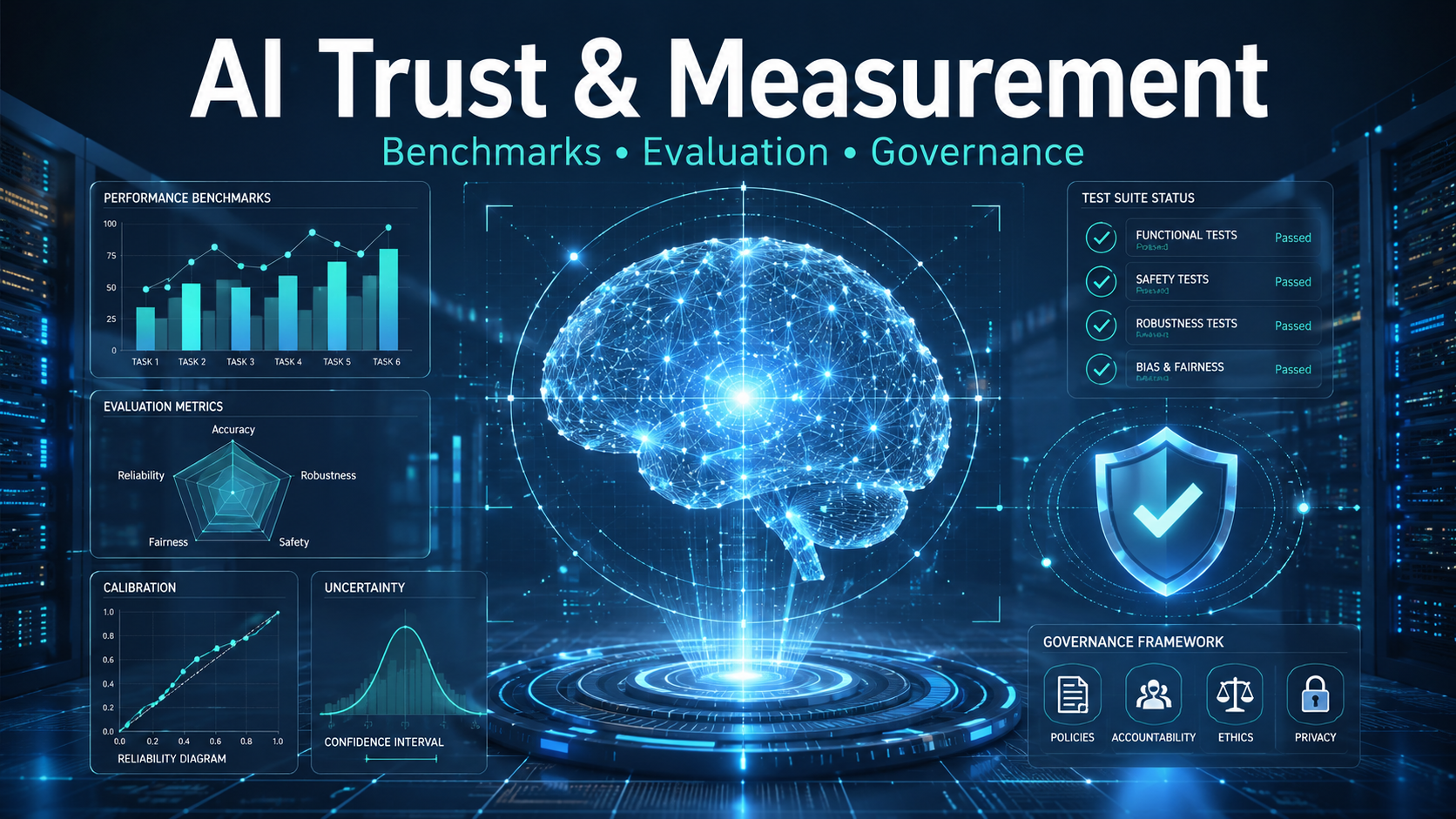
The rapid ascent of artificial intelligence systems capable of complex reasoning, continuous learning, and autonomous action has introduced profound governance challenges. As these technologies permeate critical infrastructure, economic markets, and daily life, the imperative to establish robust scientific foundations for measurement and risk management has never been more urgent. Building machines that act intelligently requires more than sheer computational power; it demands a systematic approach to evaluation that ensures systems remain reliable, transparent, and aligned with human values.
At the heart of this developmental push lies the challenge of establishing universal benchmarks and validation protocols. Traditional software engineering relies on deterministic outcomes, whereas advanced computational models operate through probabilistic reasoning and pattern recognition. This fundamental divergence necessitates innovative testing methodologies that can assess model behavior across diverse operational scenarios. Researchers and standards organisations are actively working to formulate precise evaluation frameworks, focusing on software resilience, hardware limitations, and human-computer interfaces. Without standardized testing procedures, verifying the safety and efficacy of complex architectures remains extraordinarily difficult.
Beyond technical benchmarks, governance models must adopt a risk-based philosophy to balance innovation with public safety. Institutional frameworks that prioritize risk mitigation seek to identify vulnerabilities before deployment, addressing issues ranging from data privacy to unexpected agentic behavior. By utilizing structured risk management paradigms, developers can anticipate failure modes and implement safeguards without stifling creative breakthroughs. This non-regulatory, collaborative approach encourages industry stakeholders to adopt voluntary guidelines that promote accountability, fostering a culture where safety is engineered from the ground up rather than appended as an afterthought.
Furthermore, the physical infrastructure underpinning modern computational models introduces distinct security and measurement demands. High-performance data centers, which serve as the primary engines for training and inference, represent vital nodes of economic and national security. Ensuring the physical and digital resilience of these computing hubs requires cross-disciplinary cooperation between research bodies, government agencies, and industry leaders. As technical standards for data center architecture evolve, they must integrate seamlessly with broader AI governance strategies to protect against emerging vulnerabilities.
Looking ahead, the long-term viability of intelligent systems depends on bridging the gap between theoretical capability and practical verification. As evaluation science matures, the establishment of transparent, interoperable benchmarks will likely become the cornerstone of responsible deployment. By committing to rigorous measurement and collaborative governance, the technology sector can foster public trust while continuing to push the boundaries of what machine intelligence can achieve.