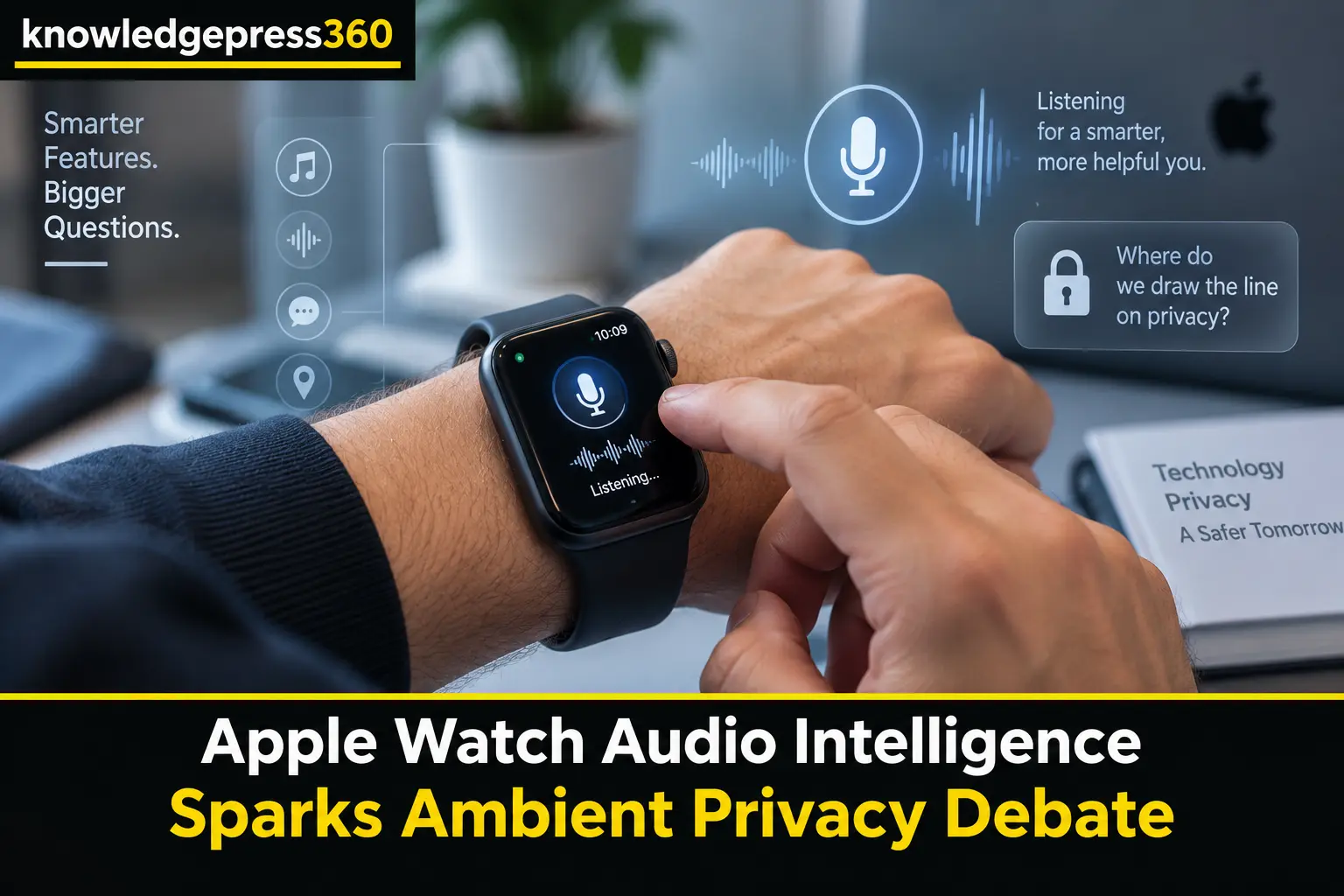
The integration of ambient artificial intelligence into mainstream consumer technology has crossed a significant threshold, forcing a collision between modern convenience and interpersonal privacy. Apple has introduced a suite of advanced Audio Intelligence capabilities for its latest hardware generation, turning wristwatches into continuous listening devices. While the company frames these tools as helpful productivity aids, they are capturing conversational snippets from unsuspecting bystanders without explicit dual consent. This development matters because it highlights the rapid normalisation of pervasive audio monitoring in public spaces, raising urgent legal and ethical questions that manufacturers and regulators have yet to resolve.
Advanced Audio Tools On New Watch Models
Apple introduced Audio Intelligence features on the Apple Watch Series 12 and Ultra 4, including Live Rewind and Siri Recap. Powered by the S11 chip and its secure hardware enclave, the new smartwatches expand the boundaries of wearable computing by continuously processing environmental sounds. Live Rewind allows a user to double-press the Digital Crown to view a text transcription of the previous 15 seconds of ambient environmental audio. Meanwhile, Siri Recap generates high-level textual summaries of daily conversations using ambient listening and local processing on the user's paired iPhone. Apple maintains that raw audio files are never retained, permanent verbatim transcripts are avoided, and all speech-to-text conversion occurs locally to safeguard user data.
Privacy Criticisms Over Nonconsensual Capture
Privacy advocacy groups, including the Electronic Frontier Foundation, have criticised the features for capturing conversational snippets without explicit consent from bystanders. Although the smartwatch emits a subtle audible tone and displays a visual cue when Live Rewind or ambient listening is active, critics argue these indicators offer little practical defence. Bystanders lack meaningful mechanisms to opt out or prevent the capture of their dialogue in shared physical spaces. This dynamic creates acute friction with established legal frameworks, notably all-party consent wiretapping laws enforced in eleven United States jurisdictions. Legal scholars note that ephemeral text processing does not automatically exempt device manufacturers or wearers from statutory recording prohibitions.
Regulatory Uncertainty And Compliance Hurdles
Substantial uncertainties remain regarding how courts and state regulators will interpret multi-party consent statutes in the context of wearable artificial intelligence. Because these devices perform local, ephemeral text summarization rather than saving traditional audio files, traditional enforcement definitions are severely tested. Furthermore, the practical effectiveness of the watch's warning chime and visual indicators in alerting transient bystanders remains entirely untested at scale. Observers point out that ambient noise in public environments can easily mask the audible alert, rendering it functionally imperceptible to affected individuals who never agreed to participate in AI training or logging.