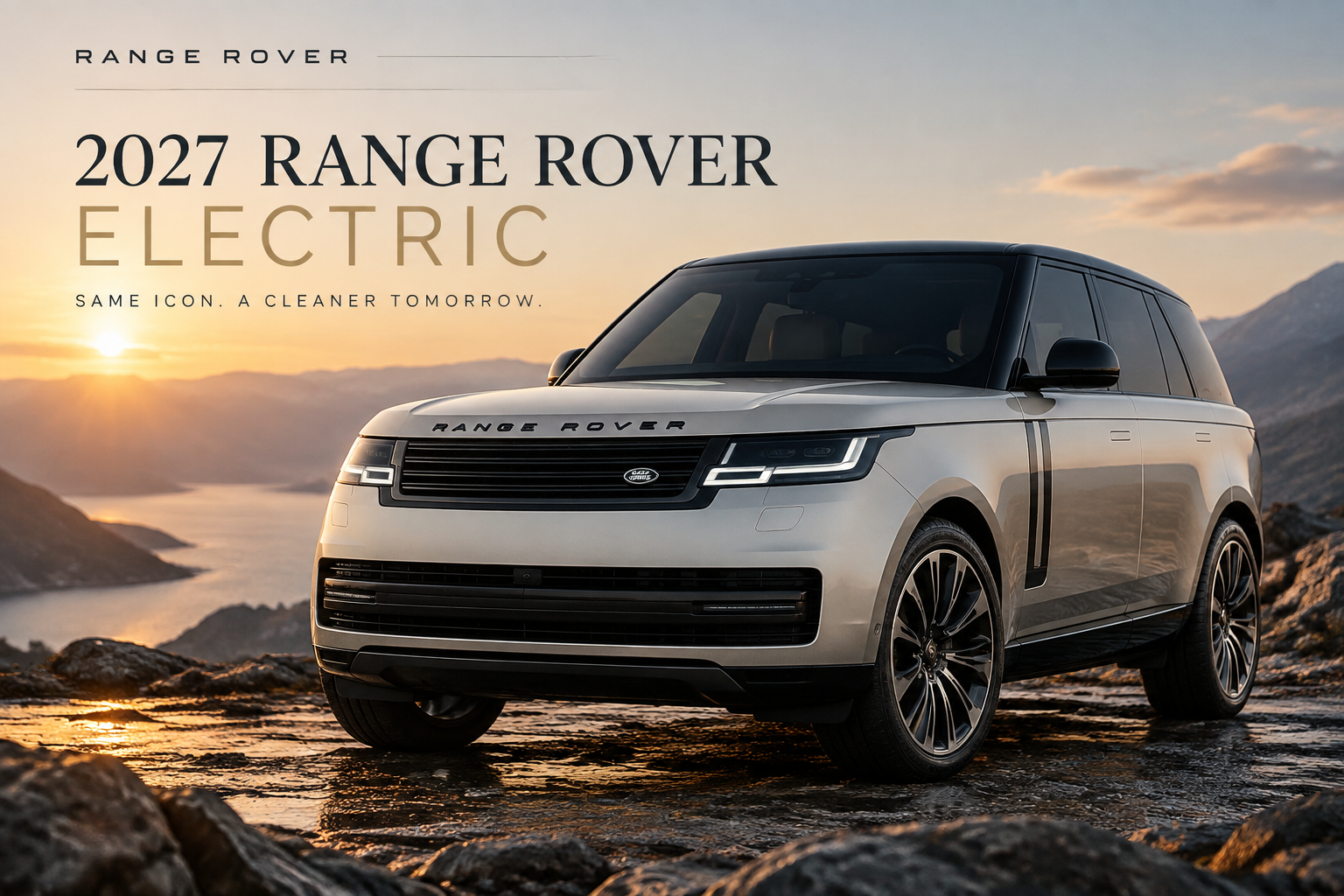
The automotive landscape is undergoing a profound shift as legacy luxury brands transition their flagship nameplates to battery power without sacrificing the craftsmanship and capability expected by discerning buyers. JLR has officially pulled the cover off the 2027 Range Rover Electric, representing a watershed moment for both the Land Rover and Range Rover stables as their very first fully electric production vehicle. Following extensive development trials that pushed back an initial 2024 rollout, this long-awaited luxury sport utility vehicle has finally opened for orders. As high-end automotive segments navigate shifting consumer preferences, the debut of an electric flagship carrying such legendary heritage provides a crucial test for whether zero-emission propulsion can truly match the prestige of traditional internal combustion.
Engineering Powertrain Performance and Battery Architecture
Beneath its familiar exterior styling, the 2027 Range Rover Electric packs an advanced technical specification designed to rival or exceed its V8 predecessors. The vehicle is propelled by dual 260-kilowatt electric motors that together generate 542 horsepower and 850 newton-meters of torque. This robust output enables the heavy luxury cruiser to accelerate from zero to 60 mph in a swift 4.3 seconds, delivering immediate throttle response paired with refined power delivery. JLR engineers have incorporated silicon-carbide inverters alongside copper-hairpin motor windings, achieving a design that the manufacturer claims is 24 percent more efficient than previous propulsion units.
Energy storage is handled by an 118.5 kWh net double-stacked battery pack utilizing nickel-manganese-cobalt chemistry sourced from AESC. Operating on an 800-volt electrical architecture, the battery system supports rapid DC fast charging at up to 350 kW. This capability allows drivers to replenish between 125 and 137 miles of driving range in a mere 10 minutes, or complete a 10-to-80 percent charge cycle in approximately 22 minutes. Under strict Worldwide Harmonised Light Vehicle Test Procedure standards, the vehicle achieves a maximum estimated range of 372 miles, while real-world distance estimates under United States Environmental Protection Agency testing anticipate around 333 miles per charge. Furthermore, an innovative ThermAssist heat management system captures waste energy to boost overall driving range by 7 percent while reducing cabin heating energy consumption.
Maintaining Off-Road Capability and Structural Rigidity
Transitioning a vehicle famed for its mud-plugging prowess into a battery-electric platform presented unique engineering challenges, particularly regarding weight management and chassis dynamics. By positioning the massive double-stacked battery pack securely within the floor structure, engineers achieved a chassis that is 56 percent stiffer than traditional variants while lowering the vehicle center of gravity by 3.4 inches compared to the V8-powered model. This balanced weight distribution enhances both on-road stability and agile cornering behavior.