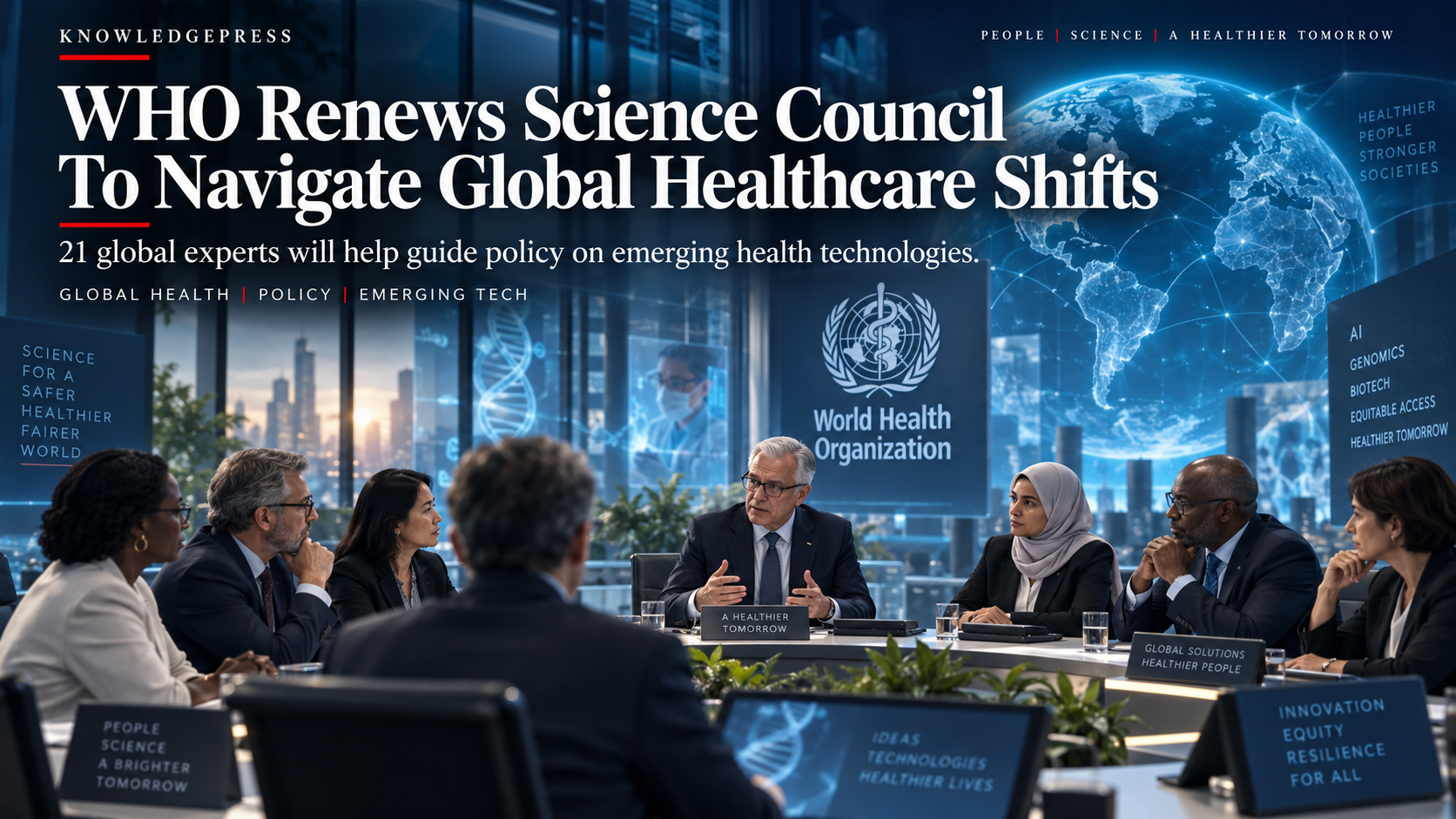
The World Health Organization has announced the formal renewal of its flagship Science Council, appointing twenty-one prominent international scientists and researchers to steer global health policy through an era of technological disruption. As breakthroughs in artificial intelligence, synthetic biology, and precision medicine accelerate worldwide, multilateral institutions face pressure to harness these innovations safely and equitably. The newly constituted panel is designed to provide independent foresight, helping member states anticipate emerging biological risks and translate complex scientific discoveries into robust, practical public health strategies.
Composition and Multidisciplinary Expertise of the Renewed Council
The refreshed advisory body brings together a diverse spectrum of expertise spanning epidemiology, biomedical research, health systems administration, engineering, and ageing. In an effort to ensure global representation, the selected members hail from all designated World Health Organization regions, bridging the gap between high-income research hubs and resource-constrained health systems. Furthermore, the inclusion of two youth representatives, chosen through the World Health Organization Youth Council, injects generational perspectives into long-term strategic deliberations.
This membership overhaul forms part of the organization's broader institutional Transformation initiative, which established the dedicated Science Division to institutionalise rigorous foresight methodologies. By embedding youth advocacy alongside seasoned academics and clinical specialists, the agency seeks to create an inclusive advisory framework capable of addressing complex, multifaceted health crises. Observers note that this diverse roster is relevant for future regulatory guidelines, particularly as novel medical technologies transcend traditional national borders and legal jurisdictions.
Strategic Advisory Mandate for Emerging Technologies and Breakthroughs
The Science Council functions as the organization's principal external advisory panel, tasked with scrutinising high-priority scientific developments that possess the potential to reshape healthcare delivery. Director-General Dr Tedros Adhanom Ghebreyesus has highlighted the velocity of modern scientific discovery, pointing to gene editing, robotics, and advanced biotechnology as fields requiring intense multilateral oversight. Without structured external guidance, these powerful tools risk widening existing health disparities rather than closing them.
The council's core mandate involves identifying transformative trends before they destabilise health infrastructures, allowing international health authorities to draft safety frameworks. Whether evaluating the clinical utility of artificial intelligence diagnostics or assessing the biosafety of synthetic biology applications, the panel provides the evidence-based assessments required by governments navigating technological waters.