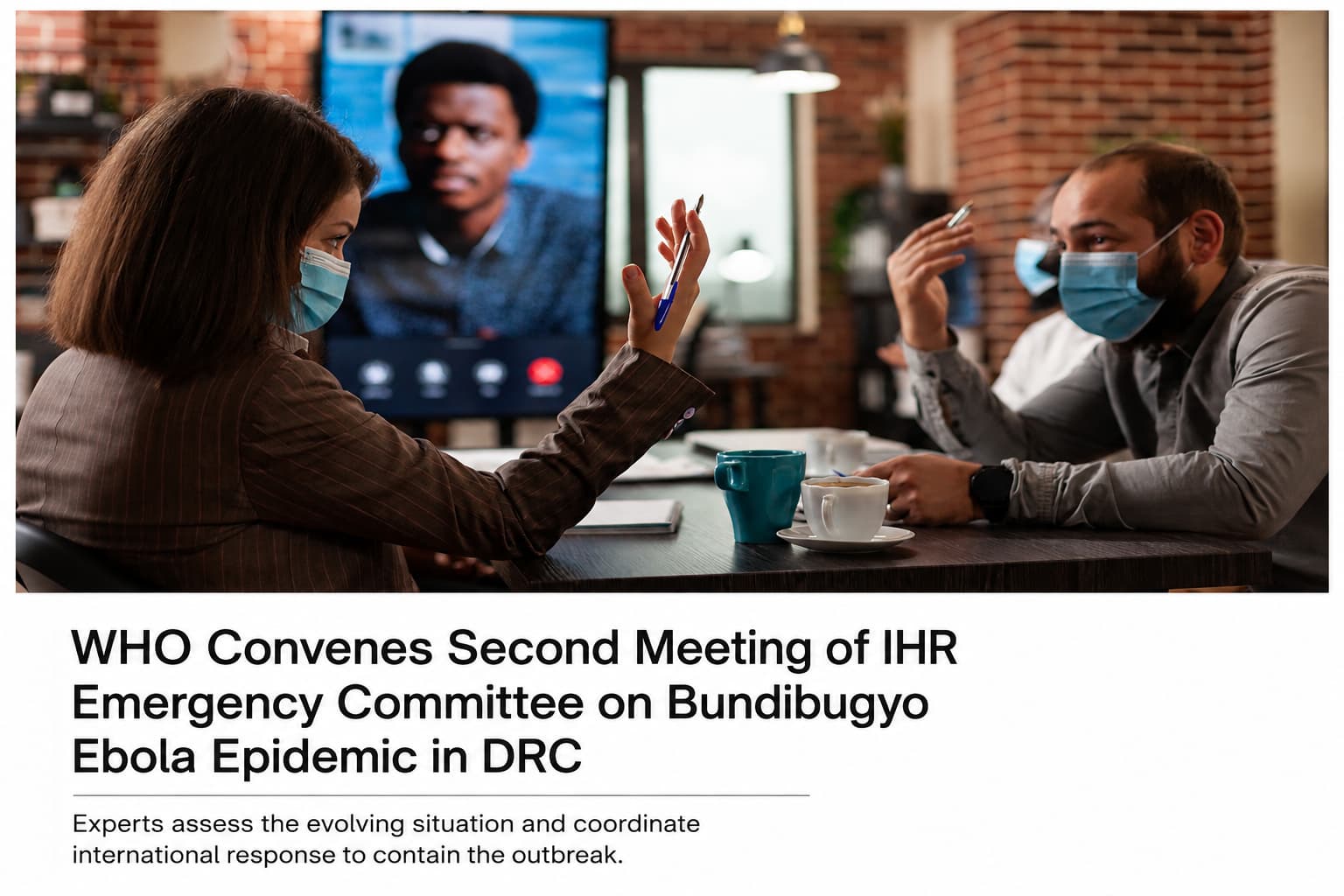
The global public health community faces an escalating crisis in Central Africa as the World Health Organization evaluates the rapid expansion of a severe viral outbreak. The World Health Organization International Health Regulations Emergency Committee convened its second session to review the intensifying epidemic of Ebola virus disease caused by the Bundibugyo virus in the Democratic Republic of the Congo. While health authorities have successfully halted transmission across neighbouring borders, the situation within the Democratic Republic of the Congo demands immediate and sustained international intervention to prevent a catastrophic regional health disaster.
International Health Regulations Emergency Committee Review and Global Status Determination
The World Health Organization International Health Regulations Emergency Committee held its crucial second meeting regarding the Bundibugyo Ebola virus epidemic in the Democratic Republic of the Congo on August 18, 2026. During this session, health experts and advisors scrutinized the accelerating transmission rates and geographical spread of the pathogen. Following the deliberations, the World Health Organization Director-General confirmed that the outbreak continues to constitute a Public Health Emergency of International Concern. However, officials determined that the event currently does not meet the specific epidemiological criteria required to be classified as a pandemic emergency.
While the global health body maintained the highest level of international alarm, the committee formally commended the Government of Uganda for its swift and effective public health response. Neighbouring Uganda successfully controlled its transmission pathways, recording no new cases since July 16, 2026. This stark contrast highlights the challenges faced in other jurisdictions, as the committee expressed profound apprehension regarding the relentless case growth and expanding footprint of the virus inside the Democratic Republic of the Congo.
Official Case Totals and Mathematical Modelling of Under-Ascertainment
As of August 18, 2026, official figures presented to the committee indicated that approximately 5,000 Bundibugyo Ebola virus cases had been documented within the Democratic Republic of the Congo. This staggering total reflects weeks of intense viral transmission across multiple affected zones. Yet, public health analysts warn that official tallies may paint an incomplete picture of the true epidemiological burden on local communities.
Sophisticated mathematical modelling suggests that substantial under-ascertainment is occurring across the affected regions. Epidemiologists estimate that the actual cumulative number of infections could be three to four times higher than the officially reported statistics. This alarming discrepancy stems from restricted diagnostic capabilities, overwhelmed local clinics, and the severe operational constraints that prevent healthcare workers from reaching isolated populations. Without a dramatic shift in disease detection and clinical management, experts caution that the outbreak risks eclipsing historical epidemics in scale and severity.