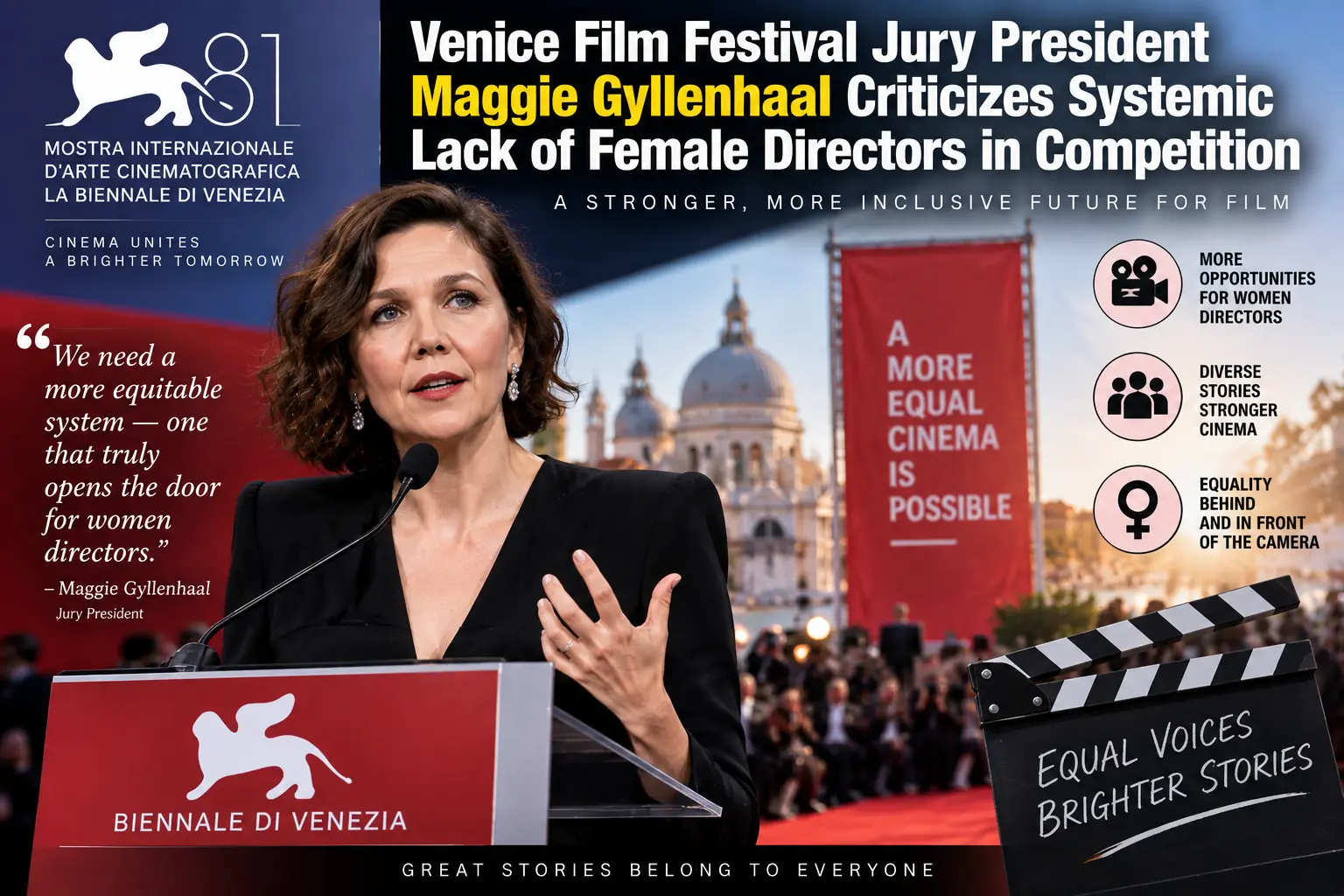
The opening press conference of the 83rd Venice Film Festival quickly shifted from celebratory remarks to intense industry introspection when main competition jury president Maggie Gyllenhaal directly challenged the glaring gender imbalance within the official selection. Addressing an international gathering of journalists, Gyllenhaal pointed out that the paucity of female filmmakers vying for the prestigious Golden Lion is not merely a coincidence of a single calendar year, but rather indicative of deeper structural failures across the cinematic landscape. Her remarks immediately established a provocative tone for the festival, bringing long-standing concerns regarding equity, financing hurdles, and artistic gatekeeping to the forefront of the global entertainment conversation. This development matters because it thrusts institutional accountability into the spotlight at one of the world's premier cinema showcases, forcing festival organizers and studio executives to defend selection protocols that continue to marginalize women's voices.
Maggie Gyllenhaal Confronts Gender Disparity at the Venice Film Festival Opening Press Conference
When the initial lineup for the Golden Lion competition was announced, industry observers noted a stark regression in representation. Only one film out of the initial twenty contenders—Danish-Egyptian director May El-Toukhy's drama Woman Unknown—was solely directed by a woman. This figure represented a sharp decline from previous years, dropping significantly from the six female-directed titles featured in the main competition the prior year. Amid growing outcry from Italian industry groups and cultural campaigners, festival organizers later moved to incorporate NAZA, a documentary co-directed by Yuval Abraham and Rachel Szor, bringing the total number of female-co-directed competition films to two.
Faced with pointed inquiries from the press corps, Gyllenhaal did not shy away from addressing the controversy. Asserting that a systemic problem plagues the industry, she explained that securing financial backing remains substantially more difficult for female creators. Furthermore, she raised critical questions regarding whether artistic gatekeepers routinely undervalue narratives rooted in women's distinct life experiences, wondering aloud if stories reflecting different modes of being alive in the world are dismissed as lacking high art value. Venice artistic director Alberto Barbera defended the final selection, insisting that choices were made without prejudice, despite having previously remarked in July that the volume of high-quality submissions from female directors was insufficient.
The Intersection of Art, Empathy, and Geopolitical Tensions in Modern Cinema
Beyond the debate over representation, the press conference navigated the turbulent waters of international politics. Confronted with questions about whether cinema should remain neutral against the backdrop of ongoing conflicts in Gaza and Ukraine, as well as broader social unrest, Gyllenhaal argued that films are fundamentally and unavoidably political. She contended that movies serve as vital conduits for empathy, offering audiences an opening to understand perspectives and individuals they might otherwise find alien or challenging.